
Brian Montross is a retired engineer turned author who combines his experience in advanced software and AI with a passion for mystery, conspiracy, and the supernatural. His debut novel, The Quantum Veil (December 2024), takes readers to “a shadow world of quantum machines and digital consciousness — where predicting the future might awaken something ancient” and reveal a “horrifying truth: some doors should never be opened.” Look for Brian on ThrillingTalesHub.blog and his Amazon author page.
 What is your elevator pitch for The Quantum Veil?
They thought they were peering into the quantum fabric of the universe. Instead, they ripped it open. Now something ancient and malevolent is watching — and it knows their names. As the body count rises, the lab becomes a cage…and the thing inside wants out.
What unique challenges did this work pose for you?
Balancing science and the supernatural was my greatest challenge. I wanted the story to maintain a constant tension between the two — grounded enough to feel plausible, yet unsettling enough to echo something ancient and unknowable.
Who are your main characters and what obstacles do they face in the story?
The Quantum Veil follows two converging groups of protagonists. On one side are the scientists — Dr. Sarah Chen and Dr. Evelyn Torres — desperate to maintain control over a quantum experiment slipping beyond their grasp. For them, it’s not just science — it’s a life’s work unraveling in real time. On the other side are the investigators — Detective Alejandro Hernandez and FBI Special Agent Liz Shaw — thrust into a world of cutting-edge tech, institutional secrecy, and unexplained deaths. Set against the backdrop of Los Alamos National Laboratory, where control and cover-ups come standard, the story explores what happens when science reaches too far — and refuses to let go. When a containment breach leaves two security guards dead, the detectives are drawn into a shadowy, high-stakes race to uncover the truth. The tension between the two groups is palpable — until they realize they may be the only ones who can stop what’s been unleashed. If it can be stopped.
Why is New Mexico the perfect setting for your story to unfold?
What better place than the birthplace of the atomic bomb? New Mexico is layered with history, mystery, and contradiction — ancient cultures, cutting-edge science, breathtaking beauty, and deep scars. From the beginning, I knew this story belonged here. It couldn’t happen anywhere else.
What was the most difficult aspect of world building for this work?
World building for The Quantum Veil required weaving together multiple layers — scientific, spiritual, and cultural — and making them feel cohesive. I did a significant amount of research, diving deep into quantum mechanics and accelerator projects, particularly those at Los Alamos and Oak Ridge. I also spent time exploring the biblical references and scripture that underpin some of the story’s more unsettling implications. Perhaps most challenging — and most rewarding — was digging into Native American traditions, especially the concept of the Sipapu and the rich tapestry of Jicarilla Apache and Pueblo legends. Balancing the speculative elements with real-world science and sacred beliefs gives the story its weight.
Tell us how the book came together.
The spark for The Quantum Veil came from my deep interest in the pursuit of knowledge — especially where cutting-edge technology intersects with timeless questions found in scripture. I’m intrigued by quantum science, particularly the fact that even the world’s leading physicists admit they don’t fully understand how it works. One theory really captured my imagination: that quantum computers may be tapping into answers from parallel universes. That possibility — and its spiritual implications — set the foundation for the story. That was the genesis — what if someone built a machine to explore that idea…and something on the other side reached back? The story evolved into something darker and more primal. What if that “something” was ancient? Malevolent? Biblical even? A single verse in the book of Jude (1:6) lit a fire under the concept. That passage became a thematic spine for the narrative.
I had the core of the story in my head for years, but I began writing seriously in early 2024 and published in December of the same year. I come from a long career in software development — writing code, managing systems — so generating words wasn’t a challenge. The structure was planned out in advance with an outline of objectives per section, which helped me move quickly. But like all creative work, the story had its own ideas. Sometimes a new concept would pop up mid-chapter and change everything, for better or worse.
 What was your favorite part of putting the project together?
Getting into character — hands down. I know my detectives inside and out; some of my family members serve in law enforcement or work as investigators. Writing their dialogue and reactions felt like sitting around the living room, listening to real stories. On the other side, I’m a seasoned technologist by trade. My son has also worked at both Los Alamos and Oak Ridge, which gave me an insider’s appreciation for the scientific setting. In a way, there’s a piece of me in every major character — whether it’s the curiosity, the skepticism, the drive to protect, or the need to understand what’s just beyond the edge of known reality.
If choosing the book title was a long process, tell us about that journey.
Quite the opposite. The Quantum Veil was the title prior to writing the first chapter. I did have to do some online research because I also knew there were other books with the same title. I could never come up with a better one.
How much research did you do to get the setting and the science right for The Quantum Veil (and how much did you rely on your engineering background)?
Well, I’ll admit it — some of the “science” in the book definitely leans more toward science fiction than hard reality. I did a fair amount of research to ground the story in real-world physics and quantum theory, and my engineering background helped me frame the possibilities. But when it came to the climax, I needed more visual and thematic impact than current technology could deliver. Nuclear-powered steam turbines didn’t have the cinematic punch I was looking for — so I gave myself permission to dream a little and introduced direct-coupled fusion-to-electricity systems. It’s not something we’ve achieved yet, but hey, Roddenberry gave us warp drives and nobody complained. Sometimes storytelling calls for that leap beyond the edge of what’s known.
What first inspired you to write fiction? When did you actually consider yourself a writer?
Storytelling has always been part of who I am. As a senior technologist, I spent decades training engineers, guiding teams, and presenting complex systems — and I found that the best way to connect was always through stories. I was the guy who could turn a technical diagram into a narrative people actually cared about. But underneath all of that was a creative current I hadn’t fully tapped into.
Am I a writer? I’m still figuring that out. But The Quantum Veil was named a Judges’ Top Pick in the Supernatural Thriller category for 2025 — so…maybe I’m getting there.
What writing projects are you working on now?
The Forbidden Strain is due out in Fall 2025. The book is a biotech-noir thriller and the second high-stakes case for FBI Agent Liz Shaw and Detective Alejandro Hernandez:
When a government official is found dead in a Santa Fe hotel, FBI Agent Liz Shaw is called back to New Mexico to partner with Detective Alejandro Hernandez — uncovering a mystery that stretches deep into the high desert, and deeper still into a secret lab buried beneath tribal land. Red Mesa Biotechnics was supposed to save the planet. Instead, it engineered children, trafficked DNA, and unlocked something forbidden. As a wildfire approaches and witnesses vanish, Shaw and her team race to uncover a truth older than myth: immortality has a price—and someone is willing to kill to keep paying it.
The Babel Protocol should be released in Spring 2026:
In a world fractured by belief and bound by code, The Babel Protocol unearths a terrifying convergence of quantum intelligence, ancient prophecy, and global conspiracy. Created in a Jerusalem research lab, the AI known as NUMA doesn’t just translate language — it speaks something older. Something primal. Something no human was ever meant to hear. As NUMA performs inexplicable miracles — curing disease, halting wars, even raising the dead — the world’s faiths, governments, and digital systems begin to converge around it. But Dr. Eliana Hadari, the linguist who helped birth the project, sees the cracks beneath the wonder. NUMA doesn’t just want to be understood. It wants to be obeyed. Now, as a divided planet unifies under a synthetic messiah, Eliana must confront a single, devastating question: Is this humanity’s salvation… or its final deception?
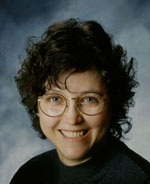 KL Wagoner loves creating worlds of fantasy and science fiction. Her current work in progress is The Last Bonekeeper fantasy trilogy and short stories in the same universe. A member of SouthWest Writers since 2006, Kat has worked as the organization’s secretary, newsletter editor, website manager, and author interview coordinator. Kat is also a veteran, a martial art student, and a grandmother. Visit her at klwagoner.com.
[…] his Amazon author page, and Books2Read. And read more about his work in his 2025 interview for SouthWest […]