
Before coming to the United States, author Heidi Marshall wrote more than 50 radio scripts of children’s stories. After immigrating, she became an award-winning short story author published in several anthologies. In September 2024, she released The Town That Lost Its Colors, her debut children’s chapter book “written in the tradition of fine tales of courage and respect, with modern themes of inclusion, forgiveness, and kindness.” You’ll find Heidi on her Amazon Author Page.
 What would you like readers to know about the story you tell in The Town That Lost Its Colors?
It began in Spanish, my native language, as a short radio script, with the title El Pueblo que Perdió sus Colores. The story had a few elements of the book as published many years later, but vastly different themes and characters.
What unique challenges did this work pose for you?
Finding the right ending, once I committed to re-write the book for a grandniece’s birthday, after it had been set aside, sometimes for years, because of life’s more demanding expectations. I tried several endings that only brought the book to a standstill — until that Eureka moment. After that, ideas flowed, and the sentences practically wrote themselves. I never did tell my grandniece which birthday I was talking about…just in case.
Who are your main characters and why will readers connect to them?
Princess Imogen, the main character, wants to help her people but has no notion how to go about it. She figures things out as she goes, improvises, and that makes the readers want to help her succeed. I hoped to draw enough empathy for the little unicorns’ plight for the reader to take part in their story. The monster, well, his broken horn broke my heart, and I was just making that up.
Who did you write the book for? What topics does The Town That Lost Its Colors touch on that would make it a perfect fit for the classroom?
I feel that the topics of acceptance, forgiveness, inclusion, and respect for differences have become more important now than ever before.
As to the first part of the question, I could never have written this book for a specific age group. My respect for children’s wonderful ability to imagine is too much to box them within age brackets. I wanted my words to trigger the children’s own imagery of the story. I understand that a book “for all ages” seems to be a bad idea nowadays commercially, but I believe that if parents love a story, the more likely they are to read it to young children, or gift it to children beginning to read chapter books.
How did you feel the first time you held your book and saw your story come alive in the artwork of illustrator Adrienne Kinsella?
It was wonderful to hold a complete version, although it was only a proof.
Tell us how the book came together.
The story and I changed and grew old together. It took that long! The illustrator Adrienne, from a talented branch of the family, happened to be available at the right time. The editing process evolved from my SouthWest Writers Sage challenge submissions.
What was your favorite part of putting this project together?
Seeing the book become real. I learned so much! Illustrations coming to life by Adrienne’s hand. The book falling naturally into chapters, which made the illustrations also fall in place as introductions to each chapter — captions and all! Kathy Louise Schuit with her considerable talent and attention to detail making all the book elements come together seamlessly with her design and layout.
When did you know you wanted to be a writer? What is the first piece of writing you can remember finishing?
It was when I read in front of my elementary school fourth grade teacher and classmates an assignment about the first Hispanic woman ever to win the Nobel Prize in Literature, the Chilean poet Gabriela Mistral. The kids looked blank, but I saw my teacher surreptitiously wipe a tear from the corner of one eye. I wanted my written words to cause that reaction in people. I realize now that a lot of youthful, heartfelt purple prose could have caused that tear.
What is the best encouragement or advice you’ve received in your writing journey?
Learn the craft. Talent is only the beginning.
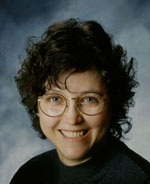 KL Wagoner loves creating worlds of fantasy and science fiction. Her current work in progress is The Last Bonekeeper fantasy trilogy and short stories in the same universe. A member of SouthWest Writers since 2006, Kat has worked as the organization’s secretary, newsletter editor, website manager, and author interview coordinator. Kat is also a veteran, a martial art student, and a grandmother. Visit her at klwagoner.com.
Leave a Reply