
Kathleen A. Hessler is an attorney, retired registered nurse, and author. She spent most of her legal career representing long-term care providers while navigating her own mother’s journey with early-onset Alzheimer’s. Her dual careers and specialized knowledge have earned her national recognition as a speaker at premier healthcare and legal conferences. Beyond her work life, Kathleen is an award-winning nonfiction writer featured in various anthologies. In her book Promise Me, Daughter: A Nurse Attorney Navigates Her Mother’s Early-Onset Alzheimer’s (October 2025) she weaves her professional expertise and personal experience into a poignant narrative of caregiving. Promise Me, Daughter is available on Amazon in digital and paperback and can be found on other retailer sites.
 When readers turn the last page in the book, what do you hope they will take away from it?
I hope readers feel an immediate urge to recommend the book to others because the story moved them. Specifically, I want the book’s vulnerability and relatability to leave a lasting impact, offering genuine insights for anyone, especially those caring for a loved one with progressive memory loss or chronic illness.
One reader, Caryl Peterson, wrote: “I just finished your book and ‘WOW’ is all I can say. You are an amazing writer who is able to express everything so well. I can’t remember another book that has meant so much to me.” Hearing that others have gifted or recommended the book to friends or family is truly the greatest compliment.
When did you know you wanted to write about your journey and your mother’s story? What prompted the push to begin the project?
I knew I had to write this book when I began representing long-term care companies as an attorney. While advising healthcare providers on legal and ethical issues, I was simultaneously navigating those exact care challenges as a daughter. It was an extraordinary parallel: I was holding nursing homes accountable at work while pushing for better care for my mother at the facilities where she resided.
What challenges did this work pose for you? Were you surprised by any aspect of the project as it unfolded?
The process elicited emotions that I thought were long buried. While this is my journey and my mother’s story, it is also a shared experience with my siblings. Writing honestly required me to include our interactions, which was challenging. Throughout the writing process, I stayed in touch with my siblings to compare recollections. Two of my siblings and a brother-in-law read the full manuscript months before publication. I took their honest critiques seriously, making significant changes while also adding some of their reminiscences into the manuscript.
During the process of writing Promise Me, Daughter, it must have been difficult to relive your experiences and wrestle with revealing too much of yourself or your loved ones. How did you work through those emotions and move forward?
Yes, the emotions ran the full range of renewed grief, anger, humor, vulnerability, intense self-doubt, and resolution. In order to move forward, I reminded myself that transparency was the key to helping others feel less alone—whether they are currently struggling or looking back on a past experience. Staying on course was a given because of my strong belief in the value of the subject matter. My unique perspective on Alzheimer’s—my simultaneous roles as a daughter, nurse and attorney working in long term care—would offer both comfort and information.
The editing expertise and encouragement of my critique groups also propelled me forward. In the years before publication, when I actively worked on writing the book, I collaborated with two different critique groups. I took their feedback to heart, rewriting chapters after every meeting. My early critique group challenged me to share my emotions and cut the legalese; I believe the final narrative successfully bridges the gap.
Tell us how the book came together.
The project spanned several years, but it wasn’t until the final six months that I committed to writing every day. Early on, balancing a full-time legal career with family obligations was a constant struggle, but successes with standalone articles gave me the confidence to weave it all into a book.
Did you discover anything surprising while doing research for this book?
While my boxes of saved photos, letters, medical records, and legal documents provided factual information, and talking with my siblings confirmed or spurred recollections, the most surprising discovery was the rush of vivid memories that surfaced once I sat down and started to write.
What was the most rewarding aspect of putting this project together?
The most rewarding aspect was holding the final product in my hands and receiving feedback that readers found the book engaging and important. It was wonderful to hear they wanted to turn every page to find out what happened next; to my delight, several people even called it a “page-turner.”
If choosing the Promise Me, Daughter book title was a long process, tell us about that journey.
When I decided to self-publish, my biggest realization was the importance of choosing a title and subtitle that would optimize marketing. I constantly asked myself: how do I choose a title for a difficult subject, yet encourage people to lean in, rather than turn away? Because of the subject matter, some people hesitate to read the book. They fear it will be depressing, or written in “legalese” or “medical-speak.” What they don’t realize it is a story—a narrative journey about family struggles and resolutions. Many who have read it say it is not what they expected, and once they started reading, they couldn’t put it down.
Looking back to the beginning of the project, what do you know now that you wish you’d known then?
Looking back, I regret waiting until I was finished writing and rewriting the book before sending queries out to agents and publishers. Despite taking many wonderful SouthWest Writers classes on writing, editing, and publishing over the years, I didn’t fully grasp how much time the querying process takes. I also did not realize that for nonfiction, it is acceptable to send queries before finishing the manuscript.
After briefly working with an agent, I decided to self-publish. I wish I had understood the sheer volume of work required for that path. While Rose Kern at RMK Publications was a huge help in formatting the book, assisting in the cover design, and preparing pictures, a self-publishing author must seriously consider hiring a reputable editor. You also need to meticulously review your book for factual accuracy and consider whether you need a legal analysis.
Do you prefer the creating or editing aspect of writing?
I enjoy both the creating and editing aspects of writing. Rewriting is relaxing. It feels like painting or drawing a picture. There are so many ways to express yourself or your characters. Unlike fields such as engineering and mathematics, there is no single right way to craft a story. (Except of course, when it comes to grammar and punctuation.)
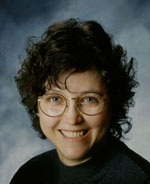 KL Wagoner loves creating worlds of fantasy and science fiction. Her current work in progress is The Last Bonekeeper fantasy trilogy and short stories in the same universe. A member of SouthWest Writers since 2006, Kat has worked as the organization’s secretary, newsletter editor, website manager, and author interview coordinator. Kat is also a veteran, a martial art student, and a grandmother. Visit her at klwagoner.com.
Leave a Reply