
Mike Kimmel is a film, television, stage, and commercial actor and acting coach. He is also a screenwriter and playwright, as well as the author of over a dozen books across two series focused on the performing arts. His December 2025 release, 50 Secrets Nobody Tells You in Hollywood: The Working Actor’s Guide to Avoiding Pitfalls and Supercharging Your Career (The Professional Actor Series, Ben Rose Creative Arts), is a “guide that prepares you for rejection, equips you with perspective, and reminds you to keep your integrity intact.” Look for Mike on MikeKimmelAuthor.com, on IMDb.com, and on Facebook, Instagram, Twitter/X, and YouTube. His books are available through his Amazon author page and other major bookstores.
 Give us your elevator pitch for 50 Secrets Nobody Tells You in Hollywood.
Show business is not for the faint of heart—and even the best actors will hear “No” more often than “Yes” throughout their careers. Most actors don’t know what they’re up against until it’s too late. Even those with great talent and potential don’t truly understand how difficult this industry is when they’re first getting started. I wanted to create a book to help actors answer all the questions they didn’t know they needed to ask. You can’t win a fight you don’t know you’re in.
What unique challenges did this work pose for you?
I wanted to find ways to encourage actors on their creative path, and help them find specific strategies to succeed. I didn’t want to sugarcoat the industry or gloss over all the difficulties actors will encounter—particularly when they touch down in Los Angeles, the largest and most competitive market in the entertainment industry. In spite of the difficulties, though, people book acting jobs every day. New stars are discovered every year. I believe there’s always something actors can do to move their careers forward. I wanted very much to instill a sense of optimism and hope into this book despite the harsh realities of the industry I was revealing.
My challenge was to present the real-life truths of the industry and offer practical suggestions to help actors stay in the business, enjoy long careers and thrive—and without losing themselves or compromising their integrity in the process. The only way to fail in show business is to quit, and I believe most actors give up much too soon.
What hole does the book fill in the performing arts market? Who else besides the acting community might enjoy reading the book?
This book is intended to fill in the gaps between what you’ll learn in acting class and what you’ll need to know to land substantive speaking roles out in the real world. This book is practical. It contains advice, strategy, and guidelines to help actors avoid the common traps and pitfalls that have sabotaged careers since the early days of silent film. There are also many suggestions for building your credits and careers while protecting your heart, your soul, and your sanity in Hollywood. I’ve always said that not everyone can be a star, but everyone can learn the rules that govern our industry, hone their craft, build their credits and enjoy a fabulous long-term career in film, television, theater, commercials, hosting, voice-over, and print.
The strategies and mindset shifts suggested in 50 Secrets will also be helpful to artists in any other medium, and to anyone pursuing work in a creative field.
Tell us how 50 Secrets came together.
I’ve been working on this book for ten years on and off. I published other books in the performing arts during that time, but kept working away at this one in between all of the others. I wanted to create a book of lasting value that will help actors navigate one of the most competitive industries on the planet. Because the entertainment industry is so competitive, there are many secrets and bits of advice people will be reluctant to share with aspiring actors. Being unaware of the unspoken show business rules, unfortunately, can still negatively impact a performer’s career.
I also wanted to make the book as accessible and relatable as possible. I’ve found that people learn best through stories and anecdotes. Therefore, I sprinkled many real life Hollywood stories throughout the book. These are stories of wonderful successes and embarrassing failures from my personal experiences and those of trusted friends and colleagues. It’s extremely important to have a solid support system in Hollywood—and to learn from those who have traveled this path before us. There’s simply not enough time, money, and Kleenex to figure it all out on your own.
 Do you have a favorite quote or secret from the book that you’d like to share?
Yes. I arrived in Hollywood with ten years of solid experience as a New York actor. I had strong credits, training, and audition skills. However, I still found there was a great deal to learn that was specific to the Hollywood market.
In Hollywood, things work very differently from New York, where I grew up and began my acting career. In New York, you always know where you stand with agents and casting directors. Believe me, if a fellow New Yorker doesn’t like you, you will know it. Subtlety is not our strong point. In Hollywood, industry professionals will tell you “No,” but seldom to your face. Hollywood runs on fear and uncertainty. Who will be the next big star? Who will sign the next big deal? Who will be the next TV series regular? It could be you. New stars are discovered—and created—every year. Many Hollywood insiders will be reluctant to tell an actor “No” today because they may want to piggyback off the success someone else helps that actor achieve tomorrow. For this reason, many newcomers express a vague feeling of being “strung along” and “never knowing where they stand.” As you can imagine, this only fuels the overall sensation of fear, uncertainty, and hyper-competitiveness running rampant throughout the city.
I also had the experience of being hired—and then “un-hired” right before filming began by someone I thought was a very close friend. That’s not unusual either—even among our biggest stars. Lauren Bacall said it best: “I’ll miss Hollywood. Of the twenty friends I thought I had, I’ll miss the six I really had.”
Was there anything surprising you discovered while doing research?
Yes, I’ve been putting ideas together for this book for a very long time. I’ve been a working actor for more than thirty years. I try to keep in touch with actors I’ve worked with and respect. I keep a file in a desk drawer of cast lists and contact sheets from productions I’ve worked on through the years. From time to time, I go through them and pick up the phone to reconnect with actors I worked with on those long-ago projects. I’m always surprised, and more than a little disappointed, at how many old friends and colleagues have quit the business. The reason is usually the same. My former cast-mates would tell me that they always considered themselves very good at handling the inevitable rejection. And then one day, they received particularly harsh criticism from someone whose opinion they respected—someone considered an industry expert. I believe these actors quit much too soon. Their stories prompted me to write a chapter in 50 Secrets titled “The Experts Aren’t Always Right.”
What was your favorite part of putting this project together?
I’ve known that I wanted to be an actor and writer since I was five years old. When I finally started acting in my twenties, I promised myself that if I were someday able to break into the business and build a career, then I would do everything I could to teach everything I’ve learned to others. We don’t gain much in life from holding back.
50 Secrets is the fulfillment of the early promise I made to myself. As I grow older, I realize that the things I regret most in life are the promises I failed to keep to myself or others. I’m glad this is one of the promises I’ve kept.
What prompted you to switch gears from releasing books in The Young Actor Series to focusing on The Professional Actor series?
I like to work on three books at a time. Whenever I get stuck on one title, I switch gears and move on to another. This process has worked well for me since 2014, when I published my first book, Scenes for Teens. I tend to switch back and forth, but in recent years I’ve focused on the books in The Professional Actor Series, the books for adult actors. I have another adult book coming out next, but after that I’m planning to do a new book of two-character scenes for our youngest actors—children from age six to twelve.
Of all the books you’ve written, which one was the most challenging?
50 Secrets Nobody Tells You in Hollywood has definitely been the most challenging. I wanted to create a book that would be equally valuable for newcomers and veteran actors alike. I wanted this book to be accessible enough for newcomers while still providing enough solid content to give actors with many years of experience their own “Aha” moments.
GiGi Erneta, the actor who wrote the wonderful foreword, is a lifelong friend and trusted colleague, so I also wanted to make sure 50 Secrets would be a book she’d be proud of contributing to for many years to come. That was very important to me.
 If the stars aligned, what past or present television or movie series would you love to be involved with (in any capacity)?
If I could jump back in a time machine, I would love to play a supporting role on The Dick Van Dyke Show. I believe that was the best TV sitcom of all time. Yes, including I Love Lucy and Seinfeld. What I really liked about that show was that most episodes contained a life lesson or optimistic spin woven throughout the scripts. I try to do the same thing with my books. Pete Seegar, the old-time folk singer, said that we have to look for the optimistic stories in life and bring them out into the world.
Interestingly too, The Dick Van Dyke Show started out as a flop. Carl Reiner wrote a pilot called Head of the Family for CBS. The network didn’t want it, and nobody else in Hollywood would touch it. Carl Reiner spent a year reworking that script and turned it into The Dick Van Dyke Show. There’s a lesson there for all of us.
I was always a big fan of the Indiana Jones franchise too. I was fortunate enough to meet Karen Allen, who played Marian Ravenswood in the films, several times. We have a great deal in common and hit it off really well. It seems like they’re always coming out with a new Indiana Jones movie, so I’m maintaining a good attitude and keeping hope alive for the future. Maybe someday I’ll get to crack that whip.
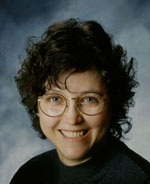 KL Wagoner loves creating worlds of fantasy and science fiction. Her current work in progress is The Last Bonekeeper fantasy trilogy and short stories in the same universe. A member of SouthWest Writers since 2006, Kat has worked as the organization’s secretary, newsletter editor, website manager, and author interview coordinator. Kat is also a veteran, a martial art student, and a grandmother. Visit her at klwagoner.com.
Leave a Reply