
Author, artist, and teacher Nancy Schrock (writing as N. J. Schrock) is a retired corporate researcher with degrees in chemistry and English who has published across genres. Her newest release, Morning of a Crescent Moon (Indigo River Publishing, January 2026), is historical fiction that “recreates a pivotal labor battle that fortified the United Mine Workers of America and inspired future union activism.” The novel “is a heartfelt tribute to the ordinary people who shaped the labor movement and a reminder of the power of unity in the face of adversity.” Look for Nancy on her website NJSchrock.com, and on Facebook, Threads, GoodReads, Blue Sky, and her Amazon author page.
 What would you like readers to know about the story you tell in Morning of a Crescent Moon? What do you hope they take away from it?
People in 1898 weren’t very different from us today. Sometimes, we still have reasons for citizens to unite, and our power as citizens lies in unity. I hope readers connect with the characters, find some scenes humorous, and finish the book with optimism.
A summary by Samantha Olsen with Chicago Book Reviews captures what the book is about: “Morning of a Crescent Moon by N. J. Schrock is a quietly powerful work of historical fiction that unfolds with patience, empathy, and deep respect for the people whose lives it portrays. Set in Virden, Illinois, during the tense months surrounding the 1898 coal miners’ strike, the novel balances labor history with intimate, human-scale storytelling. Rather than relying on spectacle, Schrock allows meaning to build through small, carefully observed moments that reveal how social unrest touches every corner of a community.”
What challenges did this work pose for you?
The first challenge was that I didn’t live in 1898. My father and grandfather worked at the coal mine where the Battle of Virden took place, but decades later. To create characters and a setting that readers could become invested in, I had to recreate what the town and the people were like. I read academic articles about the battle, but those don’t cover the everyday lives of the townspeople. So, I located and read the local newspapers. By understanding the town—shopping, pastimes, entertainment, food, political issues, marriages, and many other things—I could then build fictional characters to inhabit that place and time.
I encountered one challenge with the old newspapers that I’m working to solve for the future. The town had two papers at the time, and only one (the Republican-leaning paper) had been microfilmed. The other newspaper (the Democrat-leaning paper) had never been microfilmed, and it covered more labor issues. I managed to locate paper copies of it on the top floor of an old building that still publishes a paper. I read and photographed many pages before arranging to have the papers sent to the Abraham Lincoln Presidential Library and Museum in Springfield for microfilming and preservation. I’m now pursuing the digitization of all these papers because they document so many people’s lives, and I want to make researching the town much easier for anyone who wants that information in the future.
Who are your main characters and why will readers connect to them?
The main character is Cate Merry, a young woman who left nursing to become a teacher. Her arrival is how the reader learns about the town through her experiences. As Cate learns about the brewing trouble and becomes emotionally entangled with the people and events, I hope the reader does also. Cate meets one of the coal miners, a young man responsible for caring for his half-siblings. Through him, the reader gains an appreciation for what this conflict is about and what’s at stake.
Tell us more about how the book came together.
I recently wrote a blog about writing the story. It’s posted on my publisher’s website: https://indigoriverpublishing.com/author-resources/writing-historical-fiction-based-true-events/
What brought about this labor dispute was the mine operator’s intention to lower labor costs by bringing in Blacks from Alabama, who were unaware of the labor unrest. When I worked in industry, I saw companies going to China and India for cheaper labor and laying off workers in the U.S. and Europe. In some ways, history was repeating itself. I felt a connection with this town because I grew up there. I felt that the story needed to be told because of its relevance to today. I collected information for about two years before I started writing the story. I had to be able to imagine the town in 1898 before characters and a story could take form. I learned a lot from the process, and writing the sequel will happen much more quickly.
Regarding getting it published, I was thinking about self-publishing when Indigo River Publishing (IRP), the publisher of my first novel, Incense Rising, contacted me to ask if I had anything new coming along. IRP was a pleasure to work with the first time, so I signed with them again. I already had feedback from several early readers, so the publishing process with IRP started with developmental editing on the novel’s beginning to pick up the pacing and on the ending to improve flow. Then, it underwent line editing, copy editing, and cover design. I felt IRP did a thorough job on editing, and I was very happy with the cover design.
How and why did you choose the title of the book?
On the morning of the Battle of Virden, October 12, 1898, the skies were clear, according to The Virden Record, and a waning crescent moon rose in the east, according to lunar calendars. A crescent moon appears before and after a new moon and is associated with new beginnings. The main characters note the rising crescent moon, and although they don’t know how the day will unfold, they know that history will be made and that they and the town will be changed by the events. One way or another, that day would be a new beginning for them. And, historically, the Battle of Virden was a new beginning. It was a turning point for the United Mine Workers.
Share a few of the most surprising facts you discovered while doing research for the book.
I was surprised by how modern—in some ways—this society was. Some of the wealthier citizens went on vacations all over the country. And they did this by train. Without cars, people depended on the rail system.
Some of the newspaper ads were surprising and humorous. Ads for medicines claimed to cure all kinds of ailments. The government office that became the FDA wasn’t formed until the early 1900s, so anyone could claim to have a product that cured a disease. A common ingredient was alcohol. Wine of Cardui will cure any female ailment. Wine of Pansies prevents baldness. Duffy’s Pure Malt Whiskey was “unequaled for its strengthening and invigorating tonic effects.”
What was the most rewarding aspect of putting this project together?
I’m always glad to hear from people who say they enjoyed the book, and some readers know they have family connections to events in the novel. I am also pleased with the reviews that the novel received. From reviews, such as the Chicago Book Reviews, Feathered Quill, Literary Titan, and Readers’ Choice, I can tell that the story accomplished what I intended. I wanted it to be character-driven, historically accurate, and relevant to today.
What sort of decisions did you make about portraying historical figures or events in order for Morning of a Crescent Moon to work?
I made an effort to accurately portray historical figures. For example, in Chapter 23, I have a miner named Alexander Bradley give a speech. I read articles about what he told his fellow miners during a strike the previous year, and he was known for giving speeches. Accounts place him at the battle a few days prior, so he likely gave a speech similar to his previous speeches. I gave a few historical characters, such as a doctor, the school principal, and a pastor, dialog consistent with their professions.
At the back of the novel, I list by chapter what is historically accurate and where the information came from. Readers can know that, for example, a few days prior to August 19, a shopper actually did find a live tarantula in a bunch of bananas at Lorton’s grocery store, and Dr. Boyer preserved it in alcohol. I didn’t make that up. I think many readers will appreciate knowing what was not fictional.
Do you prefer the creating or editing aspect of writing? How do you feel about research?
I love doing research. I worked as a chemist for twenty-five years, and I’m used to digging into details and facts. So, writing historical fiction is something I enjoy doing. Several years ago, I wrote science fiction, but I’m enjoying historical fiction much more. It feels more rewarding.
As for writing, the first draft is definitely the hardest part of the process. I don’t always know what I’m going to write until I sit down and write it, which was a totally foreign way to write for me as a scientist. But I know now that the first draft is just something to get out so I can start the more enjoyable part: editing to make the characters, settings, and plot real for readers.
What are the hardest kinds of scenes for you to write, and what do you do to get over this hurdle?
The hardest scenes are ones that I don’t know anything about until I research them. I have now started the sequel to Morning of a Crescent Moon, and it takes place during 1917–1919. I need to know what the American Expeditionary Force, including the medical personnel, experienced in France. So, I’m reading books written during World War I by people who experienced it. It’s fun. I enjoy this preparation for writing.
What advice do you have for beginning or discouraged writers?
For beginning writers, my advice is this: TRAIN. You can start by studying other writers in the genre you want to write. Writing poetry is different from fiction, which is different from nonfiction. I want my writing to be both engaging and considered “well written,” so I try to identify writers who are celebrated for those qualities and read their works. When I decided to write fiction, I read books on the craft and attended workshops. And I’m always on the lookout for successful books with a plot that I’m interested in.
As far as advice for discouraged writers, I had to recognize that writing is a process. The first draft may be garbage, but at least I have something to work with. It becomes non-garbage through revision. I think of writing this way: I wouldn’t go to the gym and expect to lift 100 pounds or run five miles—unless I’d been training to do that. Writing also takes practice.
What writing projects are you working on now?
I’m working on a sequel to Morning of a Crescent Moon. It takes place during the years 1917–1919, in which a lot of history was being made that is still relevant today. I have a science fiction anthology that should be done within the next few months, and I’m about 40,000 words into a novel that takes place in Southern Illinois.
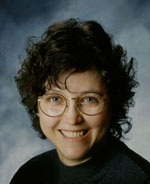 KL Wagoner loves creating worlds of fantasy and science fiction. Her current work in progress is The Last Bonekeeper fantasy trilogy and short stories in the same universe. A member of SouthWest Writers since 2006, Kat has worked as the organization’s secretary, newsletter editor, website manager, and author interview coordinator. Kat is also a veteran, a martial art student, and a grandmother. Visit her at klwagoner.com.
Leave a Reply