
Dr. Wendy Johnson is a clinician, public health expert, teacher, and mentor, as well as an activist and author. Her 2025 book release, Kinship Medicine: Cultivating Interdependence to Heal the Earth and Ourselves (North Atlantic Books), “maps a way forward to a sustainable, hopeful future with wise and compassionate directives, encouraging us to step into wild places, engage in community-building partnerships and endeavors, and be informed and inspiring activists in the creation of a better world.” You’ll find Dr. Johnson on WendyJohnsonMD.com, Facebook, Instagram, and Substack. Look for Kinship Medicine at North Atlantic Books and major retailers including Amazon.
 Why did you write Kinship Medicine, and who did you write it for?
The impetus to start writing Kinship Medicine came out of a lifetime of frustration in my chosen field of medicine. I always felt that Western Medicine’s focus was too narrow and if we could know patients better and employ “treatments” that were broader than procedures or pills — interventions that were social as well as biological — we could have a much bigger and earlier impact in the course of their illnesses, and in many cases prevent them altogether. My hunch about this led me to discover the community health movement and the field of public health, but again, I felt frustrated because there was no way to apply all I learned about the effects of environment and social context on health within the confines of our profit-based healthcare system. I wrote the book for all those folks, health care workers and patients, who feel the same frustration with our healthcare system, or with commonly dispensed wellness advice, and think there’s something missing. I hope this is part of that missing piece.
Tell us about the journey from inspiration to completed book.
The idea for the book probably popped into my head over 10 years ago, and I may have even sketched out an early outline, but the book changed substantially over time. The first and most important spark that really got the book going was my friend Nassim Assefi. Nassim is a fellow global health physician and novelist, so I went to her with the beginnings of a book proposal and asked her advice. I had always been a writer on the side, and had majored in English as an undergrad, but mostly op-eds, academic papers and one book chapter, but a book was a whole other endeavor. This was around 2018 or so. Nassim loved the idea and she helped improve the proposal. With her encouragement, I got a couple of essays published in literary journals that eventually turned into chapters. Also, with her encouragement, I applied for a Hedgebrook residency and, miracle of miracles, I got it. That was really the turning point and made me feel like a “real writer.” Our cohort of six was the last group to complete a three-week residency before COVID shut things down in March of 2020. Five years later, the group still meets monthly on Zoom to workshop each other’s work.
I started writing the book in earnest during that residency, sitting at a desk where so many amazing writers sat before me. I did another important residency at Mesa Refuge in 2022. Being a part of those communities of writers has been critical for the development of the book. I sought out many other mentors and developmental edits along the way, including book coach extraordinaire Carolyn Flynn, Lesley Poling-Kempes and Robin McLean, David Martin of Middle Creek Publishing, The Writer’s Hotel (Shanna McNair and Scott Wolven), and Hugo Houses’ Book Lab taught by Sonora Jha. All helped improve the book immensely.
Finding my publisher was a funny serendipitous story. Rosh Joan Halifax had recommended me to her agent (Stephanie Tade) and she took me on and tried to place the book for about a year or so without luck. Almost a year after we parted ways, she sent me an email saying one of the publishers had asked to see my manuscript, but for some reason I didn’t see the message for another year. I had just finished Hugo House’s year-long Book Lab and was ready to start querying again, so I dug up all my old rejections to see what I could glean from them and lo and behold found the old email from Stephanie. I contacted Tim McKee at North Atlantic Books and he was still enthusiastic to look at the manuscript. In the end, I feel like it was fate. It was a much better book after the Book Lab. Tim loved it, felt it was ready to go, and so it was less than a year from signing my contract to pub date. I couldn’t be happier with my publisher — they are a non-profit social-justice-oriented publisher and no one there makes more than 2.6x the lowest paid employee. I feel that it’s the perfect fit.
How is the book structured and why did you choose to put it together that way?
I try to take the reader on a journey of discovery that mirrors my own and answer the questions — how did we get here and what might be the path forward? The chapters are building blocks to understanding and encompass public health, anthropology, sociology, ecology and many other fields. Woven through are examples from my own life and those of my patients.
The book starts off by grounding the reader a little in my life, my career, but also in New Mexico. I really began to understand the importance of the natural world and community to my own health over this past decade being a parciante in an acequia system and living in Chupadero. The introduction and first chapter are both set in New Mexico and use local examples to illustrate the principals I talk about throughout the book.
In the following chapters, I make the case that we seem to be stuck. After many decades of advances in health and well-being for humans, we seem to be backsliding as a species, and our healthcare system doesn’t seem to have the answers. At the same time, we’re harming the very environments we depend on for our well-being. I discuss the roots of our disconnection from each other and the natural world and how we began to think of ourselves as hierarchical beings ruling over nature. I explain that we are nature and show how even our bodies are ecosystems of symbiotic beings that must work together for all to flourish.
The last part of the book takes the reader through a process that I hope will shift their thinking from “human-centric” to “life-centric” and inspire them to take collective action through that new way of looking at the world.
Share a few surprising facts you discovered while doing research for Kinship Medicine.
I loved learning about Lynn Margulis’ contributions to how we understand evolution. Her thesis was that cooperation and “symbiosis” was a much more important contribution to evolution than competition. She was a woman scientist working in the 1960s and had these revolutionary ideas about how cells gained complexity by joining together symbiotically, not by “conquering” each other. She was unable to publish her first papers, getting rejected by more than 15 journals, but she kept at it. In the end, all her significant hypotheses were proved true using genetic evidence. It just turns our entire idea of who we are and how we came to be on its head when you let go of “survival of fittest’ as the myth that it is.
Another fun thing I discovered was about the first scientists who developed the germ theory of disease, including Louis Pasteur and Elie Metchnikoff. They both had far more nuanced ideas about germs than I was led to believe in my medical school classes. They understood that some were harmful and cause illness, but thought that others were helpful and necessary to our well-being. Their interpreters for the most part decided that if germs cause disease, then all germs must be bad, so our century of declaring war on all things microbial ensued. Of course, some of that was wildly beneficial, but the overuse of antibiotics and pesticides has also had a dark side.
What was the most rewarding aspect of putting this project together?
That’s easy. My friend Robin McLean says writing is a team sport and I have been blessed with a wonderful team. Getting to be a part of the community of writers, especially women writers, has enriched my whole life.
Do you have a favorite chapter in the book?
I am most fond of the chapters set in New Mexico that have a lot of my own stories in them. Which is surprising because the book started out devoid of much of that. I like the introduction, “Out of the Fire,” the first chapter, “The Wild Tithe,” chapter 11, “The Path Forward” and the epilogue, “The Coyote and the Cottonwood” best (that’s way more than one!)
Amazon lists Kinship Medicine in three categories: Sociological Study of Medicine, Nature Writing & Essays, and Sociology Reference. If you didn’t have the limitations of Amazon categories, how would you characterize the book?
I think it’s kind of sad we have such atomized categories. But if I did, I would say it’s a new genre – a “collective-help book” (rather than self-help, it’s anti-self-help).
Why did you choose this moment in time to write/publish Kinship Medicine?
The moment chose me, I think!
Do you have a favorite quote from the book that you’d like to share?
“We are at a crossroads. Will humankind continue down a path of separation from nature, of domination and destruction, or will we harness our intelligence toward finding new ways of achieving integration, reciprocity, and sustainability?”
When you tackle a nonfiction project, do you think of it as storytelling?
Yes, absolutely.
Which creative medium would you love to pursue but haven’t yet?
I have dabbled in photography. I think next is using photographs as a base for encaustic painting.
Do you have a message or a theme that recurs in your writing?
My parents instilled in me my sense of fairness and justice and that comes through in my writing, I hope.
What writing projects are you working on now?
Thinking about the next book — maybe more focused on the healthcare system and how we could reverse engineer it to address that 80% of our health is dependent on our social context and community connections and environment.
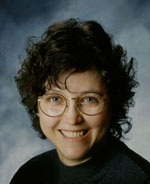 KL Wagoner loves creating worlds of fantasy and science fiction. Her current work in progress is The Last Bonekeeper fantasy trilogy and short stories in the same universe. A member of SouthWest Writers since 2006, Kat has worked as the organization’s secretary, newsletter editor, website manager, and author interview coordinator. Kat is also a veteran, a martial art student, and a grandmother. Visit her at klwagoner.com.
Leave a Reply