
Before retiring to pursue writing historical romance, author Sharon Kayne had a 30-plus year career as an award-winning writer/editor of non-fiction, working as a journalist for print and television broadcast, as a humor columnist, and as a communications director of a nonprofit advocacy organization. Her newest release, Variations on a Romance: A Second-Chance Historical Romance (December 2025), is set in 1898 Colorado and “takes readers on a journey through loss, uncertainty, perseverance, and ultimately—second chances. It’s a reminder that while love may be tested, sometimes it leads us back to exactly where we need to be, however unexpected.” Look for Sharon on her website SharonKayne.com, as well as on Facebook, Instagram, Substack, and her Amazon author store. Read more about Sharon’s work in her 2025 interview for SouthWest Writers.
 What would you like readers to know about the story you tell in Variations on a Romance?
Variations on a Romance is a historical second-chance romance because the main female character has a riding accident that gives her partial amnesia, with her memory loss covering the entire time she’d known her husband. As she works to accept her situation—and a marriage she doesn’t remember entering into—the story asks where the roots for romantic love are planted: in that first meeting; in getting to know one another; in the life a couple builds together?
What sparked the story idea for the book?
The book is inspired by a true story, which I read about in a newspaper back when it happened (so in the 1990s, probably). The woman had been in a car accident and woke in the hospital with partial amnesia. The story was poignant because she ended up falling in love with her husband again even though she never recovered her memories. (That story is also the basis for the movie The Vow.) It always stuck with me because it’s both heart-wrenching and heart-warming. Once I started writing historical romance, I thought it would make a great plot—especially when it’s set before the 20th century. Waking up with amnesia would be very different for a woman who lived out on a ranch in the late 19th century. She has no transportation and can’t communicate with her parents until she’s well enough to be taken into town.
Who are your main characters and what do you like or respect most about them? Will those who know you recognize you in any of your characters?
The main characters are Lily and Peter Cavanaugh. I respect her willingness to give this strange marriage a chance and his willingness to give her the time and space she needs as she finds her footing in this odd situation. The characters are really nothing like me. I did, however, name them after a young couple on my family tree. The real couple had a tragic story—he died in France fighting in WWI but, before the news of his death reached home in Chicago, she died of influenza. Even though the book isn’t at all about them or their lives, I liked the idea of giving their names a bit of a new life.
Why did you choose 1898 Colorado as the main setting for the story?
I’ve always loved the late 19th century, and I always set my novels in places I’ve actually been to. Also, I wanted Lily to be in a remote place—a cattle ranch, in this case—when she awakens with her memory loss. I find the late 19th century interesting because it’s on the cusp of so many changes that are ushered in with the 20th century, not the least of which is suffrage for women. I’ve also always loved the clothing from that era, particularly for women. The corset and long, heavy skirts, both of which had stifled women for centuries, are in their final throes and I find that rather nostalgic (although I’m very happy I don’t live in that time period). Not only are the fashions that constricted women changing at that time, but social roles are finally changing too.
Tell us how the book came together.
I don’t recall exactly, but I think I wrote the book in a fairly short amount of time, although I had not retired yet, so I only wrote on the weekends. A few months, maybe? Having a plot to follow really helped, as that is usually the hardest part of writing a novel for me. Coming up with a title was also difficult, but once I did, it helped inform the look of the cover. I don’t recall offhand what the original title was (although I did briefly consider In Sickness and In Health, which would have been perfect, but there are already dozens of books with that title!). When I hit on the idea of having the story grounded in music, which is a throughline in the book, that really helped with the cover. Unlike many writers, I really enjoy the editing process—I’m always keen to improve my work, and I love working with beta readers.
 Did you discover anything surprising while doing research for Variations on a Romance?
Women’s rights are always an undercurrent in my novels, and I do that by making them important to my main female characters. I was surprised to find out that women already had the right to vote in Colorado in the late 19th century—at least in state and local elections. I still made suffrage on the national level of importance to Lily, though, as it would have been to any woman who understood the value of having a voice in electing the lawmakers in Washington who would work on their behalf.
Were you surprised by any aspect of the project as it unfolded?
What surprised me most was one of my beta readers. I only expected him to catch typos and maybe make a few small comments, but he actually had some great, in-depth responses that really improved the book. He’s now my go-to beta reader, especially for my new rom-com series.
What is the greatest challenge of writing for the romance market?
Everyone says romance is a hot market right now—and I think that’s true—but it’s also a very flooded market. And, unless you’re writing in series, it’s really hard for a new author to attract readers. Romance has so many niche sub-genres, which gives writers a lot of leeway, but it also means readers have very specific expectations.
Do you have any writing rituals or something you absolutely need in order to write? What does a typical writing session look like for you?
Although I consider myself a pantser, I absolutely need to daydream a bunch before I sit down to write. I generally have a scene laid out in my head, with dialog even, before I write it. I think if I sat down without that preliminary thought process, I’m not sure where my writing would take me! And I’m afraid I’d end up rambling all over the place. I don’t always know exactly where the book will go when I begin writing it (except for a few key plot points), but I always like to know where the scene is going when I begin to craft it.
What writing projects are you working on now?
I’m currently looking for a publisher for my rom-com/romantasy series An Unfettered Fairytale, for which I have three completed manuscripts. Set in Medieval England, it makes fun of the fairytale genre (without retreading the actual fairytales). I’ve always enjoyed writing humor, so it made sense to switch to that genre.
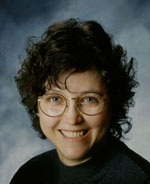 KL Wagoner loves creating worlds of fantasy and science fiction. Her current work in progress is The Last Bonekeeper fantasy trilogy and short stories in the same universe. A member of SouthWest Writers since 2006, Kat has volunteered as the organization’s secretary, newsletter editor, website manager, and author interview coordinator. Kat is also a veteran, a martial art student, and a grandmother. Visit her at klwagoner.com.
Leave a Reply