
Before becoming an author, Marcia Butler had creative careers as a professional oboist, an interior designer, and a documentary filmmaker. Her acclaimed memoir, The Skin Above My Knee, was published by Little, Brown and Company in 2017, followed by two novels published by Central Avenue, Pickle’s Progress (2019) and Oslo, Maine (2021). Marcia’s 2025 release, Dear Virginia, Wait for Me (Central Avenue), is “a sensitive coming-of-age novel of a fragile yet brilliant young woman who, like Virginia Woolf, is determined to carve her unique path in life.” Look for Marcia on MarciaButler.com, and on Facebook and Instagram. Her books are available at major bookstores including Bookshop and Amazon.
 What did you hope to accomplish when you began writing Dear Virginia, Wait for Me? By the end of the journey, do you feel you were successful in your goals?
Dear Virginia, Wait for Me is my fourth book, third novel. Since I always like to challenge myself with each work of fiction, I approach every novel from a different POV. So the task of telling this story is in the hands of a sole protagonist, Peppa Ryan, and in third person. The challenge of this perspective is that everything that happens has to go through the eyes and mind of one person. There is no omniscience to expand on, or clarify, details. At the beginning this was daunting as my two previous novels used multiple points of view. But I soon came to love the experience of immersing myself completely in the mind and heart of the very singular Peppa Ryan. She grows up sheltered and is immensely naïve about the world around her. Yet, I juxtaposed this with mild neurodiversity and possessing savant-like talents and capabilities. And all of this is reflected through her perceptions of place, time and people. I certainly hope I rendered Peppa as the thoroughly sympathetic character I imagined.
Did your main character, Peppa Ryan, surprise you as you wrote her story? What do you like most about her? And why, out of all the inner voices she could hear, did you choose Virginia Woolf?
Peppa Ryan surprised me all the time. She believes she is limited by the way she sees herself, though, when facing considerable challenges from her family of origin, she prevails, again and again. Peppa is the classic unwitting heroine, someone we can’t help but root for. That’s what I like most about her. Regarding the voice Peppa hears in her head, in first drafts I selected Virginia Woolf to simply be Peppa’s favorite author. The inner voice was nameless and quite foreboding. It wasn’t until late drafts that I put two and two together and realized that, of course, the inner voice simply had to be that of Virginia’s. And that’s when the novel really came together.
Why is New York City at the turn of the millennium the perfect place and time for your story to unfold?
My novel is set in 2000–2001 when it was still possible to use a landline and not get laughed at. Or, avoid the internet and not be considered a tech anarchist. I wanted Peppa’s naivety to coincide with this very specific “in between time.” Before streaming platforms like YouTube, TikTok, Facebook and Instagram absorbed hours and hours of our daily lives. And, before we lost ourselves to expecting total convenience. The year 2000, just twenty-five years ago, is reminiscent of innocence, and Peppa Ryan very much embodies this too.
What typically comes first for you — a character, a setting, a story idea? Was it different for Dear Virginia? How did you proceed after the first spark?
I never plot out beforehand. Rather, I start with an inciting incident that I’ll write toward or away from. It might occur in the beginning, middle or end. My characters tend to be eccentrics, good people who’ve done bad things, lovable kids and adorable animals. I place them in situations, make them talk and move around, and have interior experiences. I describe environments and flesh out time and space. This probably sounds quite disorganized, but I prefer not to know what will happen, or what my characters will do. Writing in that state of naivete is precisely when anything at all can happen. Somehow, along the way, plot emerges. And to me this feels like freedom. I wrote Dear Virginia in just this way.
What unique challenge did this work pose for you?
This novel deals with mental illness. Initially I adhered to descriptions in the DSM Manual of Mental Disorders. But I found that this didn’t fit the personalities of my characters. So, I gave myself permission to invent symptoms that were aligned with the characters that I was also inventing. It is fiction after all. And I truly believe that all authors breaking rules must rule the day. If one can think it, one should write it.
What was your favorite part of putting this project together?
My favorite part of writing any book is that I actually finish it! Because writing novels is unimaginably difficult. Doubt is present at every turn. And just because you have a book or two under your belt, that doubt persists because you must reinvent that literary wheel. What was new and wonderful about writing Dear Virginia was that for the first time I felt confident that I would, and could, figure it all out. And I suppose that’s progress.
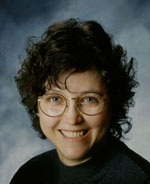 KL Wagoner loves creating worlds of fantasy and science fiction. Her current work in progress is The Last Bonekeeper fantasy trilogy and short stories in the same universe. A member of SouthWest Writers since 2006, Kat has worked as the organization’s secretary, newsletter editor, website manager, and author interview coordinator. Kat is also a veteran, a martial art student, and a grandmother. Visit her at klwagoner.com.
Leave a Reply