
Kirt Hickman is the award-winning author of the Worlds Asunder sci-fi thriller series, the Age of Prophecy fantasy trilogy, and the nonfiction writer’s guide Revising Fiction—Making Sense of the Madness. His 2025 fiction release, Host of Evil (Age of Prophecy, Book III), follows Nick Mirrin and his friends as they “set out to complete the forging of a blessed weapon that might—just might—prevent the…terrible dawning of the Age of Darkness.” Look for Kirt on his Amazon author store, and read more about his work in his 2022 interview for SouthWest Writers.
 What is at the heart of the story you tell in Host of Evil?
Host of Evil is the final book in my fantasy trilogy. The trilogy is about a small band of heroes who are trying to stop the fulfillment of a dark prophecy that foretells the end of the civilized races—the humans, elves, and dwarves.
The task set before the heroes in book three is to forge a weapon that can kill the Dark Master behind all the evil and confront him in battle. This requires them to cross the length of the Civilized Lands twice. They are too late to prevent the release of the demons from the Abyss, so they must cross the Civilized Lands while those lands are swarming with this host of evil beings.
What was the most challenging aspect of returning to the world of the Age of Prophecy series to write the final book in the trilogy?
The storyline was written via a game of Dungeons & Dragons (D&D) that I played with several friends. The entire campaign and characters were designed for the purpose of writing a fantasy trilogy. I came up with the world, the villains, and the problem (the prophecy). My players came up with the characters, personalities, backstories, and any associated ulterior motives. They chose their methods and actions throughout the entire storyline. This resulted in a much richer and more complex plot that I would have come up with on my own.
The challenge of book three was the timing. Several of my players worked for the same company and were scheduled to be transferred out of state before we would have time to finish the D&D campaign. So, we cut to the chase. We skipped to the end of the story, leaving me with about 25% of the book to write, without having the benefit of the players making the choices for their own characters. I had to make sure I kept each character consistent with the person their player had established them to be.
Who are your main characters? Did they surprise you as you wrote their story?
The most engaging stories, to me, are those in which the protagonist is an ordinary person who finds himself way over his head in a high-stakes crisis that is not of his own making. In my case, the hero is a simple farm boy named Nick who got roped into the prophetic events when one of the Dark Master’s lieutenants came after an important object that had last been seen in the possession of Nick’s grandfather. In Host of Evil, Nick is accompanied by a wizard whose magic is based entirely on ice, a half-demon monk, and an elven “witch” who works for the Dwarven Intelligence Guild (the DIG).
Because these characters were all played by real people (during the D&D campaign), they constantly surprised me—much to the benefit of the storyline.
Tell us more about how the book came together.
The first draft of all three books has been on paper for years—ever since we finished playing out the storyline via the D&D game. The kick in the pants to complete Book III was my sense of obligation to both my readers and my players to finish the story—to get it out so people could read it.
 Once the first draft is on paper, my self-editing process (which I describe in detail in my writer’s how-to Revising Fiction) takes me about a year to complete. Then it goes into the steps that I call “production.” This is the critique, editing, book layout, cover design, and printing, all of which are done by freelance professionals who I hire for the purpose. This ensures a publication-quality novel that does not have the look and feel of a self-published book. Production takes about a year, during which I am working through the self-editing steps for my next book.
What are some of your favorite settings in the book? Which setting would you love to visit and which would you gladly send your worst enemy to?
The two most contrasting settings in the book are the Sunburst Plain and the Wild Lands bog. The Sunburst Plain is a vast stretch of grassland and wildflowers that spreads over much of the dwarven kingdom. I love it because of its beauty (even more striking than that of the elven lands), and because it’s atypical as a feature of a dwarven kingdom.
The Wild Land bog is the most gross and dangerous natural setting in the story: slimy, oily pools of muck and filth, complete lack of direct sunlight and navigational landmarks, and an abundance of deadly creatures—you get the picture. If I had any enemies, I wouldn’t wish it upon them.
What makes this novel unique in the fantasy market?
While the trilogy has many of the standard fantasy tropes, there are some things that make the storyline unique. For example, during the final showdown at the end of each of the three books, the reader cannot be sure (at least not for all of the characters involved) which characters are on which side of the conflict. Even as the author, sometimes I wasn’t sure what some of the players would have their characters do. Fantasy, as a genre, has a tendency to draw very clear and stark lines between good and evil. In my story, it’s not always that cut and dried—especially as arrows and spells begin to fly at the beginning of the climactic battles.
What did you enjoy most about putting this project together?
Roll-playing the storyline, over the period of 4.5 years, was a blast.
How did you choose the book titles for the Age of Prophecy series?
All of the titles fell fairly naturally out of the content of the story. Host of Evil is a fun title because it actually has a triple meaning. First and foremost, it refers to the hoard of demons that are sweeping across the Civilized Lands throughout the book. Second, the Dark Master is the source of the evil activity in the book. The heroes take the battle to him in his lair. Because they are in his home, he is their host, and he is evil. Finally, the Dark Master can take control of the minds of most people. When he possesses them in this way, they become a sort of host for him, a host for his evil will.
 How do you feel about fan fiction (writing it yourself or having another writer use your characters or story world)?
I’ve never been into fan fiction. I guess it can serve as a sort of writing prompt for early writers who are practicing their craft or trying to decide if they want to write something of their own. Personally, I would much rather write my own stories than to piggyback on someone else’s.
What writing projects are you working on now?
Now that I’ve retired from my day job, I have more time to write. I’m currently working on the final three books of my Worlds Asunder sci-fi series. I’m also working on my first Bible-based series—a three-book series that lays out the scientific and historical evidence that supports the divine origin and truth of the Bible.
Is there anything else you’d like to tell readers?
Keep Reading.
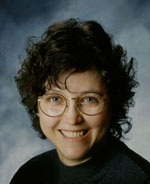 KL Wagoner loves creating worlds of fantasy and science fiction. Her current work in progress is The Last Bonekeeper fantasy trilogy and short stories in the same universe. A member of SouthWest Writers since 2006, Kat has worked as the organization’s secretary, newsletter editor, website manager, and author interview coordinator. Kat is also a veteran, a martial art student, and a grandmother. Visit her at klwagoner.com.
Leave a Reply