
by Ruth E. Thaler-Carter
Chair, Libros of Enchantment, the 2026 SWW Book Fiesta
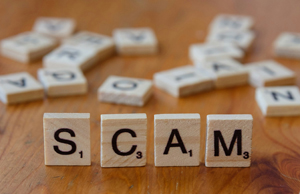
SouthWest Writers (SWW) member Chris Allen recently alerted colleagues to the current rash of email messages supposedly from famous authors, flattering recipients with fulsome compliments about our writing work.
I added a warning about similar messages purporting to be from book clubs and/or publicists, also full of compliments and including invitations to be featured by the clubs. The ones I’ve received usually address a different name and rave about books I haven’t written. The likelihood is that responding would result in pitches to pay for services that would never be provided.
As Chris noted, after receiving a phony message supposedly from author Donna Tartt, these scams are “a new plague on our times.”
Another scam targeting writers
These current attempts to separate writers from our money or reputations are in bad company with one that’s been around for at least 10 years and continues to pop up: the overpayment-by-counterfeit-check scam. It’s usually targeted more at freelance writers than book authors. That one involves an appealing offer from someone who supposedly has atraxia, and asks the recipient to write an article that they will plan to present at a workshop or conference. The sender provides a topic, sometimes a detailed description or outline, and a rate of 95¢ to as much as $2 a word, which is a lot these days. One colleague in the Editorial Freelancers Association responded to such an offer by turning it down and received a higher per-word fee in reply (which he luckily didn’t accept). The scammer sends a payment, often by FedEx; makes increasingly urgent requests for it to be deposited; then says “Oops, we overpaid” and asks for the “difference” to be returned. The payment turns out to be counterfeit and the writer is stuck for the original amount, returned funds, and any fees for checks that bounce because of the failed deposit.
I know about this one from personal experience, having almost fallen for it several years ago: On the Basics: Scams are always with us.
Identifying scams
Most of these scams are easy to identify as such. They offer unusually generous payment terms, use the wrong name for the recipient, go way overboard with praise for the book or work mentioned in the message, credit the recipient for books we haven’t written, etc. in general, if it looks too good to be true, it isn’t.
The bottom line
There isn’t much we can do to fend off these messages; as long as we have visibility in social media or our own websites, which is essential in the modern world, we can be found and targeted. If you receive one apparently from a well-known author and aren’t sure if it’s for real, you can do what Chris has done: Contact the agent for the author supposedly praising your work to see if the message was actually from that author. (The answer will be no.)
If you receive an offer to be featured in a book club, you might be able to verify that it exists — but the scammer may have hijacked the name of an actual club. It’s usually safe to assume that such offers are not real.
Cara Jones, agent for Donna Tartt, suggested blocking and reporting such messages. The problem with that is the senders are often bots that don’t know or care about being blocked; they just move on to the next potential victim, often using new sender eddresses once they’ve gained money from responses to the first one. Responding to such messages simply confirms that they have reached a live email address and opens the door to further messages and scams.
There also doesn’t seem to be anywhere to report these messages. The Federal Communications Commission (FCC) does have a way to report spam, but doesn’t seem to be able to do anything about it. The best protection is to be alert and aware of potential scams and delete, delete, delete.
Vetting contacts
The rash of scams targeting writers raises another question: How do we verify whether an agent, editor, or publisher is legitimate? Colleagues and organizations like SWW are one of the best ways to check on something or someone.
Keep in mind that agents, editors, marketers, and publishers rarely contact writers; we contact them. If you receive a message from someone purporting to be in such a role, do some research even before replying.
One source of information about agents is Writer’s Digest magazine, which has regular columns about agents looking for new clients. Writer Beware is an excellent, long-standing resource for tracking scams and vetting publishers and editors. Organizations like ACES: The Society for Copy Editing and the National Association of Independent Writers & Editors (NAIWE) and the Editorial Freelancers Association (EFA) are good ways to find editors, proofreaders, indexers, and other providers of publishing services (with the caveat that neither NAIWE nor the EFA vets or certifies members; ACES has a certificate program in conjunction with the Poynter Institute).
As SWW member Chris Allen said, “With luck, as more people learn about and are prepared to deal with the false flattery of these emails, we can slow them down.” In the meantime, stay alert; ask colleagues about iffy messages; and remember to delete, delete, delete.
Resources
Writer Beware, https://writerbeware.blog/
Blog posts by Ruth Thaler-Carter:
https://americaneditor.wordpress.com/2020/05/11/on-the-basics-scams-are-always-with-us/
https://americaneditor.wordpress.com/2025/12/15/on-the-basics-yet-more-scams/
https://americaneditor.wordpress.com/?s=Scams
Information from the Authors Guild, courtesy of Cara Jones:
https://writersguild.org.uk/scams/
https://authorsguild.org/resource/publishing-scam-alerts/
Associations:
NAIWE, www.naiwe.com
EFA, www.the-efa.org
ACES, https://aceseditors.org/
 Ruth “I can write about anything!”® Thaler-Carter (www.writerruth.com) writes, edits and proofreads projects in the arts, business, communications, diversity, education, publishing, gardening, law, PR and more. She wrote/published “Get Paid to Write! Getting Started as a Freelance Writer” and owns the An American Editor blog, where she tracks scams targeting communicators.
Leave a Reply