
Dr. Irene I. Blea is the author of university text books and academic articles, as well as novels, poetry, and memoirs. Her 2025 release Talking with Rudy: Platicando con Rudolfo Anaya is a “magical realistic” memoir that reflects on four decades of conversations between herself and award-winning author Rudolfo “Rudy” Anaya, the godfather of Chicano literature. Look for Irene on Facebook and her Amazon author page. Read more about her work in her 2015, 2017, and 2024 interviews for SouthWest Writers.
 At what point did you decide to write a memoir using conversations with your longtime friend Rudy Anaya? What prompted the push to begin?
Several months after Rudy died in 2020, I drove near where he lived. I heard a small bubble burst and looked to my right. Rudy sat in the passenger seat of my car. He said, “Take me to my house, Irene.” This was an astonishing experience, but I began a conversation with him. Later I reflected on the many conversations I had with him over a period of forty-plus years.
When you began writing the book, what did you hope to accomplish? By the end of the journey, do you feel you were successful in your goal?
When Rudy died during COVID many people did not get to say goodbye to him. By writing the book, I hoped to do two things: introduce readers to the Rudy I knew — the man, my friend, my neighbor — and give readers an opportunity to say goodbye. I did not know at the time that we had unfinished business. Yes, I feel I accomplished my goal.
Talking with Rudy was published five years after his death. How do you think he would have reacted to the book if he’d been able to read it?
In my car, he asked me to write about him, and I think he would be very happy. He was a bit of a tease, and I visualize him smiling as I answer this question because I had no intention of writing about him. He was traveiso, a prankster.
What was your greatest challenge as this project unfolded?
I was surprised to learn much about me. My mother died in 2005, and I failed to recognize that I still mourned her passing. That gets resolved in the book. The greatest challenge to the writing of it was that my recollections of our conversations were not consecutive. I had to piece some of them together in order to offer the reader a more cohesive insight.
What would you like readers to know about Rudy Anaya? What fueled your friendship with him?
Until writing the book I failed to recognize that we shared a profound friendship and similarity. I guess I took it for granted. Readers knew Rudy’s work as an author. Some knew him as a university professor. We shared that, but Rudy was a very kind and generous person who watched his money carefully. He was a respectful, peaceful, spiritual person but he was more complex. He was not only highly intelligent, he was political, philosophical and a very private, self-contained person who enjoyed having fun. For example, it was only when you sat, shared a drink, and ate with Rudy or talked with him truthfully on a walk in the Bosque that he shared profound love for New Mexico and the spiritual component of that deep-rooted love. Rudy had sisters who he adored. He held a niece in very high esteem. He had a large family, and greatly loved Pat, his wife. Rudy was not highly demonstrative, and one would not know this, but he was romantic.
Did writing the book change you or your view of Rudy?
I knew Rudy for a very long time and had many conversations with him and many encounters. But I never thought of him as a friend; I thought of him as an acquaintance. And in writing the book and reflecting on the sometimes intimate or emotionally charged context in which our discussions took place I realized that we were intimate friends, very good friends based in mutual trust. As the years passed, neither of us trusted freely. I regretted not being totally cognizant of this. Things had happened to me, and I was closed off to such deep knowing and had to give myself permission to let go of my defenses. The book helped me do that.
What was your favorite part of putting this project together?
I like the ending. I didn’t know the ending. I had a few thoughts on it but the ending that I finally published was highly appropriate and I’m very happy that I concluded it this way.
Do you have a favorite quote from Talking with Rudy that you’d like to share?
Rudy frequently said, “It’s all fiction.” What he meant was we all have a story, and we see that story through our own life experiences. The story takes meaning from those experiences, and this does not mean that another person would see the incident the same way. We all have our own perspectives, it’s all fiction. We make up what it means to us.
What do many beginning writers misunderstand about telling a story?
Stories, of course, have a beginning, middle, and an end. In the beginning I introduce my characters, even if it’s just in a very brief reference to them. Later I expand on who they are and what they are and why they are that way. The middle is very difficult for some writers; it is not difficult for me. Except that in Talking with Rudy I did not know that grief sometimes lasts a long time; it is individual. We grieve the way that we need to grieve. I had not concluded the process. I repeat this because we learn from writing or telling a story.
What do you want to be known for as an author?
That as a scholar I told a good story. I love what bonded Rudy and I was that we both loved New Mexico in a spiritual way. He loved it as much as I love it. It is more than an intense or emotional attachment that we have to the land, the people, the cultures. We are New Mexico because we are of it; it made us what we are. I want to be known as a scholar that learned to tell a story as a fundamental contribution to American Literature.
 Is there something that always inspires you or triggers your creativity?
I am a very disciplined writer. I do not wait for inspiration; I get up every day, sit at my computer and although I may have very little inspiration to write, I will begin by going through my current writing projects; I generally have two or three at a time. Before I know it, I’ve spent three to five hours writing or editing something.
What writing projects are you working on now?
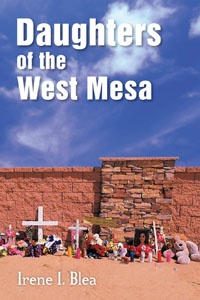
I wrote Daughters of the West Mesa, a very popular book. The book ends with one of the main characters sent to a drug rehabilitation facility. She was not the most lovable character and people love to hate her but frequently ask what happened to her. The next book will most likely be a sequel to Daughters of the West Mesa. I don’t have a title for it yet. Titles are difficult for me, and they are generally the last thing that is written.
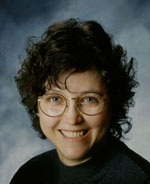 KL Wagoner loves creating worlds of fantasy and science fiction. Her current work in progress is The Last Bonekeeper fantasy trilogy and short stories in the same universe. A member of SouthWest Writers since 2006, Kat has worked as the organization’s secretary, newsletter editor, website manager, and author interview coordinator. Kat is also a veteran, a martial art student, and a grandmother. Visit her at klwagoner.com.
Leave a Reply