
Retired physical therapist Lisa Page crafts stories using her love for the natural world and her passion for the magical and the everyday sacred. Her debut novel, Saving Cottonwood (June 2025), “is a heartfelt, genre-blurring tale of love, loss, and quiet awakening. With elements of magical realism, mystery, and environmental soul, it invites readers to believe in the power of place, the pull of destiny, and the fierce, hidden magic in everyday lives.” Look for Lisa on her website LisaPageAuthor.com, on Goodreads and Instagram, and her Amazon author page. Besides Amazon, Saving Cottonwood is available at Page 1 Books and Organic Books in Albuquerque, New Mexico.
 What would you like readers to know about the story you tell in Saving Cottonwood?
When I first sat down to write, I didn’t know much about publishing genres beyond the basics. Later, I stumbled across “cozy mystery,” and then, believe it or not, “cozy, paranormal, mystery, romance.” That’s where Saving Cottonwood landed, though I think of it more as my love letter to magic, community, and resilience. More than genre, I want readers to know that this is an optimistic story about the power of ordinary people to face the forces of wealth, politics, and destruction, and protect what matters most.
What was the greatest challenge or obstacle to completing this work?
This was my first novel, so every stage was a mountain — writing, revising, self-publishing, and then (deep breath) marketing. But the real summit wasn’t the mechanics, it was keeping the faith even when I felt doubt. Learning to keep going page after page was the hardest and most essential part.
Who are your main characters? Your favorite secondary characters? How did you go about creating/developing them and working out their relationships?
At the heart of the story is Iris, a middle school librarian in her thirties, newly divorced and trying to rebuild her life. By locking herself out of her house, she meets Ezra, a locksmith with a gift for practical magic, and their chance encounter changes everything. Then there’s Xena, a stray cat with a secret identity: a bodhisattva disguised in a long black coat, tasked with guiding Iris toward her purpose. And Annabelle, a brave 11-year-old who is fiercely protective of the forest and all that is vulnerable. She becomes Iris’s moral compass. I see parts of myself in all my characters, but I can’t say I created them. It feels like they were already there and just waiting for me to tell their stories.
What makes New Mexico the perfect setting for the book? Did you model the town of Cottonwood after a particular location?
The fictional town of Cottonwood will feel very familiar to anyone who knows Albuquerque, especially the North Valley acequias, and the bosque along the Rio Grande. The land, the river, and the cottonwoods verge into being characters in their own right, carrying the bosque’s history, magic, and life pulse. I think it is a perfect setting because it’s a place worth preserving.
Tell us more about Saving Cottonwood and how it came together.
The seed for Saving Cottonwood was planted in 2019, when I was moving out of a beloved historic home I’d lived in after my divorce. I left the new owners a whimsical letter about feeding the hummingbirds, caring for the trees, and honoring the spirit of the place—along with a vase of daffodils.
Later, I thought: what if a story began this way, with someone moving in and discovering such a letter? That idea wouldn’t let me go. After I retired in 2023, I began writing. The first draft poured out in about three months. Then came months of layering and revising. I gathered feedback from friends, took long breaks to be able to return to the manuscript with fresh eyes, and then did two or three more rounds of edits. I didn’t realize how hard it would be to decide when it was actually done. Eventually, I took a leap and sent the story out into the world.
What was the most difficult aspect of world building for this book?
The “world” was my own everyday landscape, so the challenge wasn’t building it, but trying to portray it as accurately as possible. And when the bosque whispered about faeries, crows with messages, and a talking cat, luckily, I was there to take notes.
What was your favorite part of putting this project together?
The surprises. The moments when the story took the reins, when the characters knew more than I did, when the river wanted to speak, when the plot unfolded in ways I didn’t see coming. In those moments, I discovered the enchantment and magic inside the writing process.
Do you have a theme or a message in the book? If so, was it intentional going into the project or did you discover it as the story unfolded?
Intentionally, going into the project, I imagined a benevolent universe where help appears when we ask for it, and that it takes many forms, seen and unseen. It may come in the form of people, or synchronicities, or from the realm of the ancestors. And if we are very lucky, sometimes it comes from those with fur or feathers or faery wings.
When did you know you wanted to be a writer, and when did you actually consider yourself one?
Ahh! I wanted to be a writer from a young age, probably from around middle school. I turned 60 this year, and I think maybe I am a writer now? But the label author still feels new and strange, like a fancy outfit that doesn’t quite feel like me yet.
What advice do you have for beginning or discouraged writers?
Creative work is vulnerable. It stirs up the inner critic. For me, meditation, emotional self-regulation strategies, and kindness toward myself have been the strongest anchors. Finding friends on the writing path can be an invaluable support. I got a lot out of some of the UNM continuing education classes on writing fiction.
If you can make a habit of writing despite the mean and doubtful voices that arise, a muse will find you, and that relationship will carry you through and nourish both your own soul and the world. It’s so worth it!
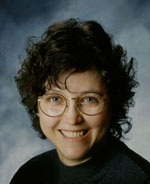 KL Wagoner loves creating worlds of fantasy and science fiction. Her current work in progress is The Last Bonekeeper fantasy trilogy and short stories in the same universe. A member of SouthWest Writers since 2006, Kat has worked as the organization’s secretary, newsletter editor, website manager, and author interview coordinator. Kat is also a veteran, a martial art student, and a grandmother. Visit her at klwagoner.com.
Leave a Reply