Monthly Archives: September 2026

Author Update: R.M. Tembreull

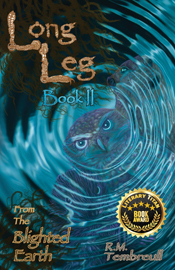
R.M. Tembreull is an award-winning author, an artist, and a U.S. Air Force combat veteran whose love of writing is only matched by his respect for nature. His newest release, Long Leg from the Blighted Earth (The Blighted Earth Series, Book 2, May 2026), is a Literary Titan, 2026 Gold Book Award Winner that “invites readers to care deeply about the smallest beings and to see the natural world as a powerful, sacred community.” Look for Ray on his website TheBlightedEarth.com, on Instagram, and his Amazon author page. Read more about his work in his 2025 interview for SouthWest Writers.


What is at the heart of the story you tell in Long Leg from the Blighted Earth?
In the second installment of The Blighted Earth series, readers are immersed in a world where nature is not merely a setting, but a living force caught in an escalating conflict between the Natural Order and Chaos. Nilch’i, a powerful and corrupted wind sentient, has unleashed a devastating new incarnation of the 1930s Dust Bowl across the northern prairies. As drought and ecological destruction spread, the weakened earth elemental Okaraxta entrusts his Keeper animal, a Gifted burrowing owl named Long Leg, with a desperate mission. Long Leg must deliver a vital message to North America’s Guardian Spirit, a task that may determine whether the Natural Order survives. Joined by prairie-born companions, Khúta the Gifted prairie dog and Augee the mole, Long Leg must navigate a damaged landscape under assault by Chaos’s Force Corrupted where wind, water, animals, fungi, and the land itself are active participants in a struggle to restore the natural balance. These small animal protagonists, who must journey through a dangerous world shaped by forces larger than themselves, are at the heart of the story. Their courage matters, not just because they’re vulnerable, but because they carry the fate of our world on their tiny shoulders.

What was the most difficult challenge of continuing the story you began with book one of The Blighted Earth Series?
Believe it or not, the most difficult challenge was not the core story centered around the burrowing owl Keeper animal, Long Leg, and her journey. Her story was one I had been waiting to tell for years. I actually wrote the rough drafts for books two through four before I wrote book one, Fractured State in the Blighted Earth. The hardest part of my newest novel was maintaining the connective tissue with the through-line story arcs started in book one. Long Leg introduces a new set of characters in a new setting/location, and the timeline is running concurrently with events and character developments which continue to unfold from book one. The world of The Blighted Earth continues to evolve and grow in complexity, so maintaining those story arcs while introducing readers to a completely new one was truly challenging. I need an intern!

Who are a few of your favorite characters in the book? Did they surprise you as you wrote their story?
I put a great deal of thought into my characters and all love all of them, protagonists and antagonists alike, in a “virtual children” kind of way. So, I’ll focus on those who surprised me in the writing of the story:

Protagonists:

  • Khúta, the Gifted prairie dog and one of Long Leg’s companions on her journey. Blessed with strung consciousness, the memories and experiences of all the others who served in his role before him, Khúta is to serve as Long Leg’s guide due to his extensive knowledge of the lands beyond her elemental’s protectorate. Besides annoying Long Leg, Khúta’s character was designed to bring an element of humor to the challenging journey as the know-it-all who is constantly seeking validation. The affinity I ultimately developed for Khúta and the close friendship that developed between him and Long Leg was a surprise development that wrote itself into the story.
  • Mní is water as a consciousness-in-being, and water is as essential to biological life on Earth as she was to the Long Leg story. Elemental water and her contribution to the story was always part of the plan, but the depth and complexity of her character and her power as an entity evolved way beyond what I had anticipated from the initial concept.
  • Black River, the Lakota shaman, required extensive research in Lakota culture, lore, and religious ceremony in the development of the character and telling the story. I learned so much in the process, and my journey not only contributed to Black River’s richness and depth as a character but instilled a deeper respect for the Lakota people’s life way. I hope at some point, I reach Lakota readers and get their feedback on my work.

Antagonists:

  • Waŋží Sápa, the black buffalo spirit, was fun and intense to develop and write about. In many respects, the writing of the book began with Long Leg’s encounter with Waŋží Sápa in the Badlands, and then I wrote the beginning to that point and wrote the rest of the book from there. At initial concept, the black buffalo was little more than a mindless beast who stood between Long Leg and the delivery of her message. However, the tormented being grew into something—someone—who was far more than that. The Black One embodies America’s violent history and the suffering wrought by the conquering of the West. The writing journey this character took me on was surprisingly unsettling while also tremendously fulfilling.
  • Dextra Posses, the Lone Star Nation militiamen, make an appearance in the ‘Interlogue’ chapter. I surprised myself with the intense and visceral nature of the atrocities they committed against the citizens of a small New Mexico town. Later, after reflecting on it, I believe I was processing my strong feelings regarding the rise of senseless conflict and unnecessary suffering being experienced in the world, as well as the growing incivility and violence in our own country. It was a difficult write, but I feel it added to the depth and impact of the overall narrative.

How did the book come together?
Interestingly, even though Long Leg is the second book in The Blighted Earth series, I wrote it first. The initial draft was written in 2020 during the COVID-19 pandemic lockdown. When I conceptualized the primary story arcs which would run the course of the series, this story manifested before all the others in my creative consciousness. Apparently, Long Leg’s muse was singing the loudest. Over the course of 2020–2021, I wrote the drafts for books two through four and part of book five. In 2022, I turned my attention to getting my very first book, the Stories, Legends, and Truths from the Blighted Earth story collection, published. That manuscript was written over 2019 into 2020, and it was ultimately published in 2023. After Stories, Legends, and Truths was released, the remainder of 2023 and 2024 was devoted to writing book one of the series, Fractured State in the Blighted Earth, which was published through Atmosphere Press and released in September 2024. In winter 2024, I returned to Long Leg and started finalizing the manuscript in earnest. I chose to publish with Atmosphere Press again, because I had a good experience with them in getting Fractured State in print, and the book itself was a quality product. That was important, because the Long Leg story is very special to me. From the time I signed back on with Atmosphere in November 2024, developmental editing, line editing, cover design, interior design and illustrations, proofreading, and proof copy reviews occurred over 17 months. The novel was published with a release date of May 5th, 2026. If I add in the time spent on the draft manuscript in 2020, Long Leg was almost a two-year effort from start to finish.

What makes this novel unique in the eco-fantasy genre?
This novel is unique in the niche genre of eco-fantasy because of the storytelling perspectives. There is the perspective of a powerful alien race and how they view Earth as both a resource for survival and a rare oasis of biodiversity which should be valued and cherished. There is the perspective of the Earth’s High Sentients and how they view the decisions, actions, and behaviors of humankind as the planet’s dominant species. In some cases, you also experience the story from the perspective of human characters.

Long Leg and The Blighted Earth series is the unique fusion of multiple genres. The series occurs in our modern era and involves real locations and events, and thus, has aspects of speculative fiction. The fantasy world itself has the expansive worldbuilding attributes of high fantasy. The contributions of the alien race, the Inani, grow progressively throughout the series so the story also possesses science fiction elements. In addition, strong contributions from the supernatural and metaphysical components make for a mythic adventure story. Last, but not least, you have climate fiction as the series backbone with ecological destruction bordering on dystopian fiction, or at least, the possibility of it.

Did what-if questions help shape this work?
There are two ‘what-if’s’ that shape not just Long Leg, but the whole of The Blighted Earth series. First and foremost is what if our planet was a sentient being? My writing is informed by this unique perspective and the actions of humankind as the planet’s dominant species. It is akin to how a mother feels about her children even when their decisions and actions negatively affect her. A mother still loves their children even with they are murderers or destroying their own home, just as humankind is behind unconscionable atrocities and climate change, natural resource overconsumption, and habitat loss driving our world to ecological ruin. The second ‘what-if’ deals with how humankind would be viewed by a powerful alien race governed by a technocracy built on reason and fact-based decision making. The fate of our world depends on their judgment of our species’ ultimate potential and ability to better the universe.

Were you surprised by any aspect of the project as it unfolded? Did it meet your expectations?
There were few surprises regarding the publishing aspects of the project since this was the second book with Atmosphere Press, and I was familiar with their process. However, one pleasant surprise was the book cover. I had my own cover design, which I passed on to Atmosphere’s team, thinking it would influence their concept. To my surprise—with the exception of a couple of minor adjustments—the publisher adopted my concept. Another involved the manuscript. The final manuscript evolved quite a bit from the first draft written in 2020. This was largely a function of incorporating chapters and other sections that maintained connective tissue with throughline story arcs outside of the core Long Leg story. As the series progresses and builds momentum, it is also growing in complexity so there are a lot of things to keep track of. I had expected to publish Long Leg before the end of 2025, but professional obligations and personal challenges held me up on finalizing the novel, which primarily involved the time needed to complete the interior illustrations.

Did you create a story bible for The Blighted Earth Series? If so, how long is it and are you still adding to it?
In all honesty, I had to look up what a story bible is because I am not familiar with the term. After researching, my answer is “sort of.” I have two repositories where I keep story bible related info: (1) I have folders for every book in the series in Microsoft OneNote, and (2) I have a Microsoft Word document, entitled “Blighted Earth Administrivia” that I use to capture information when I am not at home. However, I do admit it is not as organized as I would like it to be. These documents are primarily for capturing ideas involving plotlines, characters, their back stories, timelines, etc. for the books yet-to-be-written. At some point, I do need to go back and get information together on worldbuilding rules, character origins, and other legacy information. Right now, some of that information is stored in other locations, and it needs to be consolidated in a single location and organized for easier reference to ensure I keep everything wired tight in future books.

Do you prefer the creating or editing aspect of writing? How do you feel about research?
I most definitely prefer the creating. The editing aspect of writing is too much like work, and honestly, by the time I get to the proof copy reviews, I have looked at my own story as least a dozen times. At that point, I really have to redouble my efforts to nug through it and finish the project, because every aspect of my creative being yearns to move on to the next project.

As far as research, I don’t mind it at all. I spend a lot of time doing it, because there is a lot of science baked into my books. I find interesting ways to have fun with it, and I have learned so much in the course of writing my series. In fact, I do so much research that I really don’t leave myself much time for reading other authors’ books, but I have finally started setting aside time to do that. In terms of the order of preferences for me: (1) Creating; (2) Research; (3) Editing.

What are your strengths as a writer?
I feel my strengths as a writer stem from talents as a visual artist. My vibrant descriptions of characters, scenes, and action sequences are merely the written descriptions of visual depictions in my mind. Some reviewers have described my writing as “cinematic,” which I take as a huge complement. I am hoping to see The Blighted Earth series on the big screen someday.

I would say my other strength is that I don’t seem to suffer from writer’s block…at least not yet. The time taken to finish a work is more a function of carving out the time to write and finish illustrations. I am not plagued with those writer ailments which prevent writers from finishing a work and putting out in the world, such as overthinking, paralysis by analysis, perfectionism, or writing anxiety. Thank goodness for that.


KLWagoner150_2KL Wagoner loves creating worlds of fantasy and science fiction. Her current work in progress is The Last Bonekeeper fantasy trilogy and short stories in the same universe. A member of SouthWest Writers since 2006, Kat has volunteered as the organization’s secretary, newsletter editor, website manager, and author interview coordinator. Kat is also a veteran, a martial art student, and a grandmother. Visit her at klwagoner.com.

An Interview with Author Herman Johansen

Author and actor Herman Johansen is also a poet, playwright, and screenwriter. He added “novelist” to his bag of tricks in September 2026 with his debut release of Las Cruces: Blood Relative (Running Wild Press), a murder mystery/supernatural thriller involving an unsolved murder, a series of copycat murders, and a celebrity who provides the police with victims’ names before they’re killed. Look for Herman on his website HermanJohansen.com and IMDB, as well as on Bluesky, Facebook, Instagram, LinkedIn, and his Amazon author store. Las Cruces: Blood Relative is available on Amazon and Barnes & Noble.


What is your elevator pitch for Las Cruces: Blood Relative?
A cold case, new murders, and a child knows who’s going to be next—before they’re killed.

What sparked the story idea for the book?
Sadly, a true story…a crime known as the ‘Las Cruces Bowling Alley Massacre.’ It happened in 1990 and it’s still unsolved. Among the dead were three children, one as young as two. My novel is NOT a true (or even a fictional account) of that event, but it got me wondering…what if the kids were the target? In my book, (spoiler alert!) that turns out to be the case. That’s where the idea came from.

Who are your main characters and why will readers connect to them? What was the process like to create strong enough protagonists to carry the story?
Two detectives discover a new series of murders that tie into a cold case. One detective is a middle-aged white guy (Det. Michaels) with a tortured past, and the other is a younger Native American female (Det. Talker) who is driven to be the best cop despite many obstacles in front of her. My family has some connection to the Native American culture and I respect it tremendously. However, that may not be important: hopefully, these polar opposites will give readers someone they may relate to. They can choose either Michaels, who showed all this promise when he was younger and is now struggling to hold it together, or Talker, who appears on the outside, at least, to have it all together, but is struggling inside. Or maybe both?

What challenges did this, your first novel, pose for you?
Continuity! I’m an actor and I know how important it is to keep the facts straight. I wrote this over a few years and two cities. During this time, I wrote two feature-length screenplays. I started the novel in Los Angeles when I lived there and stopped and started many times, for a variety of reasons, including a lack of confidence. I moved to Albuquerque and started to pick it up again, and then…I suffered an aortic dissection…spent twelve hours in surgery, eight days in an induced coma and another twenty days in ICU, followed by a few months of rehab, had to learn to write, speak and add again. All this gave me time to think about the things that were important to me: my children, my girlfriend, and finishing this doggone book!

Tell us more about the book and how it came together.
I researched it largely as I wrote, looking for specific details when I needed them. All in all, I spent about four years due to all the factors above. It was my first cop story, so there were things I needed to look up. I know some of it isn’t accurate, but it’s fiction! I used six beta readers, including a brother-in-law who has a background in newspaper editing. They were all helpful. I looked for a publisher starting three years ago, long before it was ready. I had only the first draft at that point. But I didn’t spend too much time on that. I think I pitched it three times with no success. Once I did connect with a publisher and started working with an editor, the first one didn’t work out. I was new to this world, so I was hesitant to complain, but when it looked like we were going to miss the deadline for 2026, I voiced my concerns and was assigned a new editor. We got along well and rushed through the editing process in two months. The publisher did the formatting both for the book and an eBook. I was asked to offer ideas for the cover design and that was produced by a firm they use. Book 2 took 1 year, and it was accepted for publication last month. I get to work with the same editor.

Why did you pick Las Cruces, New Mexico for the book’s setting?
It kinda picked me! I lived in LA at the time but I’m originally from Missouri and took the southern route to MO and spent a couple of days in Las Cruces. Got the feel of the place and loved it. I’m sure the real events played a factor, but not a big one in choosing the setting. There’s something about the spiritual imagery of Las Cruces (The Crosses) that draws me to it. The book, in my mind, was always set there.

What was your favorite part of working on this project?
I made two other trips to Las Cruces and seeing some of the places used in the book was great fun. In general, I love writing. Researching is one thing I’d like to do more of if I can afford it, especially if it involves travel. I wish I had more time and money to do more research before starting. It makes it so much more real to visit the setting.

Is there a scene in Las Cruces: Blood Relative that you’d love to see play out in a movie?
All of it! Seriously, it’d take some special effects, but the penultimate scene where Det. Talker confronts the killer in a disintegrating house would be amazing. And Michaels hacking his way out of a corn maze when he puts the pieces together might be fun. I guess from writing screenplays, I subconsciously wrote a book that would be readily adaptable to film.

How has writing screenplays and stage plays benefitted your short story and novel writing?
A college professor in a creative writing class told me my work was “cinematic.” I leaned into writing screenplays for the novel. Short chapters that could be scenes, present tense, multiple POVs, would all work for film. Stage plays are words, words, words. Love to write ‘em, but this novel wouldn’t work.

What first inspired you to be a writer? When did you actually consider yourself a writer?
As long as I can remember, I loved writing. I sold a couple of poems as a teenager. I wrote a variety show in high school as a charity project. We did two shows with great success. A short story and several poems were championed by Sharon Lewis, my high school English teacher, to whom I owe a great deal. A good friend, who has published books and plays, told me once, “a writer is someone who writes!” It took me a while to gain the confidence needed to say that but after my stage play was produced in the NYC Fringe Fest and I completed my first screenplay, I got used to it. And I recommend it!

How has the creativity and discipline you employ as an actor helped you in your writing journey?
I feel the creativity needed for both is, in many ways, similar. With acting, you’re using someone else’s words, but with writing, you’re (hopefully) using your own and creating your own world. Both require an active imagination. And both require teamwork; in the acting world it’s the director and other actors that you must collaborate with and in writing, it’s ultimately the editor that you need to trust.

What does a typical writing session look like for you? Do you have any writing rituals or something you absolutely need in order to write?
I always use music: I’ll loop one song (this drives my girlfriend crazy). It’ll be something that matches the mood of the scene. The song will fade into the background, but it puts me in the zone. And it must be a keyboard and a PC. Even before the surgery I never wrote longhand.

Who are some of your favorite authors, and what do you admire most about their writing?
Lisa Gardner, John Irving, John Grisham, John Sanford and David Baldicci are people I read a lot. Irving creates vivid characters and allows the reader to spend so much time with them that it feels like you’ve lost a lifelong friend when you finish. I used to read everything James Patterson wrote but then they all started sounding alike. He’s still an influence for sure.

What writing projects are you working on now?
I’m still working part time, (made some crappy choices over the last 10 years) but we’ll start editing Book 2 in the coming weeks. I do intend to write a book or screenplay about the surgery and the hallucinations from being on opioids for four weeks. They were so real that I have trouble separating them from reality. And I have another novel that has been buzzing around my head over the last four years, and I need to write before I travel on to the great beyond. The title (yeah, I’ve already got the title, so DON’T steal it!) is Ashes and Rain. It’s literary fiction and not like this series at all. Hopefully!

Is there anything else you’d like readers to know?
Buy my book! Cast me in your next film!

I’m the proud father of two great kids (which I don’t deserve) and two grandkids, and I love travel and hiking and adventures like skydiving, bungee jumping and ziplining. And reading!


KLWagoner150_2KL Wagoner loves creating worlds of fantasy and science fiction. Her current work in progress is The Last Bonekeeper fantasy trilogy and short stories in the same universe. A member of SouthWest Writers since 2006, Kat has volunteered as the organization’s secretary, newsletter editor, website manager, and author interview coordinator. Kat is also a veteran, a martial art student, and a grandmother. Visit her at klwagoner.com.



In Archive