
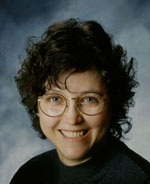
After retiring as a special education teacher, Michele Buchanan learned to play the Celtic harp and traveled a circuit of Renaissance Faires and Celtic festivals with her hand-made costumes. She now performs with Celtic Singers of New Mexico, lectures on Scottish history and harp history, and plays her harp for hospice, as well as festivals and fairs. Her debut novel, Scota’s Harp (Mercury Heartlink, 2016), blends history with legend and myth to tell the story of an Egyptian princess who becomes the namesake of Scotland. Look for Michele on her website MicheleLangBuchanan.com and on LinkedIn.
 What is your elevator pitch for Scota’s Harp?
Scotland is named for a tribe of warriors called the Scotti, who were named for their queen, Scota. Who was Scota? An Egyptian princess of course! Or so say the ancient oral legends of both the Irish and Scottish people. Because they had no written language, they relied on oral legends for their history. It is therefore very curious that the name of an Egyptian pharaoh occurs in the story, since no one could read Egyptian names until the Rosetta Stone was translated. Yet Nectanebus was a real pharaoh and a magician whom ancient people believed was also the father of Alexander the Great. Such legends needed exploring, and along with the famous Stone of Scone, I have woven these legends into a convincing historical fiction. If you love Celtic history, this book is for you!
What sparked the story idea?
As I began playing the Celtic harp upon retirement, people would ask where harps came from. By researching this question, I learned there were no harps in Europe until the Renaissance, and that harps came from the ancient middle east, across the Mediterranean, then eventually to the British Isles. Harps became nearly extinct with the reign of Elizabeth I who believed harpers were spies and decreed that all harps should be burned. The harpers were the bards who kept the oral traditions and histories alive. The Romans did their best to eliminate the culture by killing the Druids and harper/storytellers. So the history of harps has many political and cultural factors that are hidden. When I found out about harps, the story of Scota and her harp just had to be written.
Who are the main characters in the book, and what are they up against?
The main character is an American archaeologist/Egyptologist who gets hired to do some illegal excavation in Spain. This modern man and his contemporary people are countered by the love story in ancient Egypt between Princess Scota and her lover Gamal Miledh. Scota’s conflict is that she is to be forced into marriage with her father, a threatening dabbler in evil arts, who gained the throne by assassination and magic. It is the story of her escape and her desire to fill her destiny to be a queen. The American hero will be the central protagonist in the sequel to Scota’s Harp as he tries to overcome his PTSD suffered in Gibraltar. The novel is quite a travelogue!
The story takes the reader from ancient Egypt to modern Scotland, and places in between. Tell us about the settings and why you chose them.
In this book you have scenes from ancient Egypt and their religious practices, scenes from Scotland at the Battle of Bannockburn and King Robert the Bruce, scenes from modern Scotland when the Stone of Scone was stolen from London by college students, so there are varied points in history that support the thread of a princess from Egypt being connected to modern Scotland. You will read scenes about the Pharaoh receiving his mercenaries from “Sea People” as well as scenes of Elizabeth I screaming about Blarney Castle. The book is about half ancient Egypt and the rest a quilt of other historical places and events that bind the story together. I have included a glossary of Egyptian words, Scottish idioms, and historical events that help the reader know that I didn’t just make this stuff up.
What was the most rewarding aspect of writing the book?
I found that I really like writing. I like telling stories, and especially like writing about hidden history. When I learn some anomalous thing, I just have to insert it into my concept of truth about the world. So writing and making coherent concepts about history was immensely fun.
How did the book come together?
I spent about a year actually writing and editing and organizing the book, but the story of Scota had been percolating in my head since I began playing the harp in 1996. The greatest challenge was weaving disparate legends into a coherent flow of time from 363 BCE to the present through an American archaeologist and his travels. The book jumps in time into different scenes and eras, but the sequencing took perspective in order to encompass the whole story. This book was not an easy subject to weave together, so it took more time than I expected. I finally did the self-publishing route, as no publishers or agents were interested in the story, which was quite disappointing.
Anything surprising you discovered while doing research for Scota’s Harp?
Yes! Scottish tartan weave was invented in far western China in a place called Urumchi. Tall red-haired Caucasian people lived there and invented the twill weaving pattern and the plaid designs. These people were valued mercenaries who eventually came to fight the Persians in Egypt.
What is the best compliment you’ve received as an author?
Reading reviews on Amazon does a lot for my ego, as strangers actually thank me for writing Scota’s Harp. I worked hard on the historical facts, so this was rewarding to hear people actually give me validation for this very obscure oral history. I once described a scene in the book to a little lady in a walker. The scene was where the pharaoh thinks he is cursed because his son, Alexander the Great, has horns at his temples. Statues depicting him show little protrusions hidden in curls, and it is a medical anomaly that people can sprout horns. Anyway, the lady said she would show me her scars. She took off her straw hat to show me the two circular scars where she’d had her horns removed long ago. She thanked me for writing the story!
 KL Wagoner (writing as Cate Macabe) is the author of This New Mountain: a memoir of AJ Jackson, private investigator, repossessor, and grandmother. She has a new speculative fiction blog at klwagoner.com and writes about memoir at ThisNewMountain.com.


