
Monthly Archives: September 2025

An Interview with Author Tom Andes

Tom Andes is a musician, a freelance editor and writing coach, and an award-winning author whose short stories have appeared in dozens of publications including Best American Mystery and Suspense Stories 2025, The Best Private Eye Stories of the Year 2025, The Best American Mystery Stories 2012, and Ellery Queen’s Mystery Magazine. His debut novel, Wait There Till You Hear From Me: A Charles Prentiss Novel (Crescent City Books, October 2025), follows a would-be private eye through the streets of New Orleans as he searches for a missing person while also pursued by a stalker. Look for Tom on his website TomAndes.com and on Facebook. Wait There Till You Hear From Me is available at Amazon, Barnes & Noble, and Bookshop.


What would you like readers to know about the story you tell in Wait There Till You Hear From Me?
To some extent, this is a classic detective or mystery story, but it’s also a story about someone figuring out who he is. When the book starts, Charles has been lying to himself, and he doesn’t really understand his own nature. It’s also about New Orleans, which has been a muse to me in so many ways, though I would despair of ever writing the definitive book about the city. Fortunately, no one ever will: it’s impossible.

What unique challenges did this work pose for you?
The biggest challenge was deciding what the book was. An agent who didn’t ultimately represent the manuscript asked for a rewrite. Of the draft she read, she said I needed to decide whether I was going for Chandler or Fellini. Up to that point, I think I hadn’t entirely committed to writing a mystery novel, so it still had literary qualities and contained elements of parody or pastiche. Once she put it to me that way, though, it was very clear to me that the answer was Chandler, and I rewrote the book from the beginning with that in mind. I’m sure it still has traces of those other qualities; they’re part of its DNA. But that was clarifying and led to what was basically the definitive draft of the book.

Share a little about your main characters, why readers will connect to them, and what makes Charles Prentiss the best private detective to carry your mystery series.
Well, I think a big part of Charles’s character is his hesitancy, the fact he doesn’t entirely know himself. He’s a working class kid from San Francisco. He’d wanted to be a private detective, but he chickened out on that and went to grad school after nearly getting shot serving papers to a career criminal. Now, he’s living in New Orleans; he’s got this desk job, and he’s engaged to an upper-class woman, a lawyer. He desperately wants to impress her family but fears he doesn’t measure up. Yet for all that, he’s aware of his class position and identity, he’s not entirely cognizant of how much he wants to climb the social ladder. I think one thread in the book is the question of whether he’s meant to be doing detective work. Geoff Munsterman, the editor at Crescent City Books, the press that gave this book a home, wrote on one draft of the manuscript, “Is Charles a good detective?” I think that’s a question throughout the book. Is he good at this job? Sometimes he is. Sometimes he’s blind to the obvious. Hopefully those qualities make him relatable. For all that we love our detectives tough and hard-boiled, the opposite qualities often make them memorable. Though of course they need to be tough and hard-boiled, too. And Charles gets his chance to be those things.

As for carrying the series forward, I think there is simply more I want to discover about all these characters.

Why did you use New Orleans as the main setting for the book? Do you consider the setting a character in the story?
The short answer is that I had recently moved back to New Orleans when I started writing this book, so the overwhelming sensory experience of being there—during the summer, no less—was foremost in my mind. Though I often set stories in places I’ve lived in the past, I wanted to be able to use stuff that was readily to hand, stuff I could walk out my front door and see. And yes, the city very much is a character in the novel. I think New Orleans is a difficult place to write, or at least to write well. I tried to write into the spaces people don’t think of when they first think of the city, Old Metairie, for instance, or the suburbs on the West Bank. Of course, a couple scenes take place in the French Quarter. But I tried to limit the time we spend there.

Tell us how the book came together.
The germ of this book comes from a short story I wrote when I was living in Fayetteville, Arkansas. All I really had, though, was the troubled brother and the class difference between the protagonist, Charles, and his fiancée, Gwendolyn. A couple years later, I decided this might be material for a mystery novel, so I sat down and tried writing one. That was 2012, so it took me twelve years to write, but that obviously wasn’t continuous. I was writing stories and songs and other things during that time. I wrote a first draft, which I condensed into a second draft that wasn’t substantially changed. That got the attention of the agent I mentioned above. I worked with an editor on a major developmental edit that involved changing the point of view from first- to third-person and beginning the story at what had been the twenty-five percent mark of the first draft. At one time, cutting 25,000 words would’ve frightened me, but it was incredibly freeing. I felt like I finally knew what the story was.

After that, I spent a year writing the draft that is to my mind the definitive draft of the book. The opening of that version won the Gold Medal for Best Novel-in-Progress from the Pirate’s Alley Faulkner Society in New Orleans, which was a major shot in the arm, and which I’m so grateful for. I did three or four drafts after that, but none of them involved those kinds of major structural changes. There were still things I wanted to address, though. One, for instance, involved reinventing the character of Laura, who by the end of the book becomes Charles’s sidekick, or maybe he’s her sidekick.

All along, I was querying agents, and I had a few express interest. But I was also trying to sell it myself. When I thought I had a good draft, I sent it to Crescent City Books (CCB), which publishes terrific mysteries and noir set in New Orleans. I think the editorship at that press also shares some of the humor in this book, the way the real estate developer has his fingers in everything, for instance. Living in New Orleans, one develops a jaundiced eye as far as corruption is concerned. I knew CCB would give it a good home, so I was really happy when they took it. I signed the contract a month after leaving New Orleans, after we moved to Albuquerque.

What makes this novel unique in the mystery market?
The focus on Charles’s origin story and on his journey to finding himself makes this book unique in the mystery market. More than that, though, I think Gwendolyn makes the book unique. Early on, I had this idea about the fiancée being a femme fatale, and maybe to some extent she is. But I wanted to reinvigorate that trope, to make her motives legible and human. Even when she acts badly, I think we understand why. She knows Charles better than he knows himself. To whatever extent she does him wrong, she’s right about him and their relationship.

What was your favorite part of putting this project together?
I think my favorite part was doing that long, definitive draft where I rewrote this from scratch into third-person, when I finally committed to writing a detective novel. That draft wasn’t perfect, but every day I went to my desk feeling like I knew what I was doing. Would that every day could feel that way!

How did you choose Wait There Till You Hear From Me as the title of the book?
The working title of the first couple drafts was Desire. I chose that because the climax takes place in the Desire neighborhood, but it was also a way of shoehorning in this New Orleans specific reference that was never quite right for the book and was also kind of appropriative. The final title presented itself during that definitive draft, when I wrote it into third-person. I’d taken a couple workshops with the great short story writer Lee K. Abbott. Lee was amazing with titles. He was a big fan of titles that are complete sentences. I was writing the scene where Charles tells Gwen to wait for him, saying to her voicemail, “Wait there till you hear from me.” And it leapt out to me as a title. It’s a little romantic, a little desperate. It foregrounds their relationship. And all those things felt right.

How has the creativity and discipline you employ as a musician helped you in your writing journey?
As weird as this sounds, I think initially songwriting helped free me up to take fiction writing less seriously. I’ve always been terrible at letting go of things, and for years, I would just sort of endlessly revise instead of writing new things. Because I didn’t have the same ego attachment to writing songs, it was easier for me to let them go. Sometimes they were keepers; sometimes they weren’t. Either way, I just wanted to make the next one. I think it has really helped me to carry that attitude into my fiction writing, as best I can.
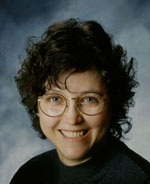

KLWagoner150_2KL Wagoner loves creating worlds of fantasy and science fiction. Her current work in progress is The Last Bonekeeper fantasy trilogy and short stories in the same universe. A member of SouthWest Writers since 2006, Kat has worked as the organization’s secretary, newsletter editor, website manager, and author interview coordinator. Kat is also a veteran, a martial art student, and a grandmother. Visit her at klwagoner.com.


An Interview with Author George Kent Kedl

Former philosophy professor George Kent Kedl gave up his 20-year teaching career for life on a sailboat with his wife and children. His award-winning release We Ran Away to Sea: A Memoir and Letters (2023) was written with a combination of his late wife Pamela Thompson Kedl’s letters and his own memories of their adventures. Look for Kent on his website JacanaPress.com, on Facebook and on Tiktok. We Ran Away to Sea is available at Amazon, Barnes & Noble, and Bookshop.


At its heart, what is your memoir about?
It is the story of my mid-life crisis, roughly spanning from 1984 to 2000, when I was obsessed with creating a life of cruising the world on a sailboat. First, with my wife Pam and our two young sons, and later with my wife alone. I attempted to escape the American way of life, which I had come to see as materialistic and shallow. I was influenced by Thoreau’s admonition to “Simplify, simplify, simplify” and Schumacher’s Small is Beautiful, a book that confirmed my thinking about how wasteful and unsustainable our lives in the United States were. Although neither one of us knew anything about sailing or the sea (we had both grown up in Wyoming and were living in South Dakota), a sailboat looked like a perfect solution. We could travel anywhere in the world for free with the wind to blow us about. We wouldn’t be wasting valuable resources. The boat would serve as both a home and a means of travel, and we could sustain ourselves from the sea. If we ran out of money, we would get work wherever we were. My previous experience of living and working in Colombia as a Peace Corps volunteer convinced me that working in foreign countries was the best way to learn to appreciate the ways of other people. Pam, the co-author of the book, did not share precisely the same ideas about what we were doing, so my attempt to create a new life ultimately failed. One reviewer calls the book a love story, and it is. We weathered our differences and stayed together because we loved each other.

What unique challenges did this work pose for you?
I wanted to preserve some of Pam’s writing, primarily her letters to friends and relatives, which reported on our locations and discoveries at various stops, as well as her often witty observations and reflections on our experiences. Finding a way to combine my stories and Pam’s in a way that avoided needless and boring repetition while maintaining the tension of our different perceptions was challenging. I wanted the book to be more than an outdated travelogue. Our excellent developmental editor, Jacquelin Cangro, played a crucial role in guiding us through this process. Reviewers say the book flows smoothly from one voice to the other, so I think we succeeded.

When did you know you wanted to write your memoir? What prompted the push to begin the project?
The simple, one-word answer is: Linnea, my second wife, whom I met after Pam’s death. During the COVID pandemic, I came across a batch of Pam’s letters and thought they were clever and amusing, and ought to be preserved for our sons. When I showed them to Linnea, she said, “Oh, no, they are too good for that. These should be made into a book!” Over the years, I had written for my amusement and to get things down while I could still remember them. I had many stories about our years on the boats. So, we had lots of material to draw from—indeed, way too much. We had to cut a lot to keep the book in bounds. The memoir was our COVID project. I wrote, and Linnea edited (both Pam’s letters and my stories), and made me keep my nose to the grindstone. (Note from Linnea: At first, I was hesitant to edit Pam’s letters. As a historian, I felt they should be preserved as written. But with advice from other readers and thinking about it more deeply, I realized that if I had written those letters, they would not have been intended for publication. Often writing on a rocking boat, I would have eventually edited them for publication, and would want someone else to do so if I couldn’t. So, I became bolder in my editing, always keeping in mind what Pam intended. I also cut passages that impeded the flow of the story.)

How is the book structured and why did you choose to put it together that way?
The book is divided into three parts. The first part tells the story of our first boat with the boys. It includes why we gave up our rather conventional life in the States, the search for a boat that took us to England, finding the boat, the almost immediate desertion of mate and crew, the stormy first sail to the Canary Islands, the reuniting of the family, the sail across the Atlantic, the cruise through the Caribbean and eventual sale of the boat in Florida.

The second short, transitional part is about the years getting the boys through school and settled enough for Pam and me to take off on a second boat. It was a time of growing desperation. We escaped to China for a semester and also searched for and found another boat.

The third and longest part is about our escape to the Caribbean on our second boat. We had more adventures as we traveled throughout the Caribbean, and South and Central America. The growing tension leads to our return to the States, where we reestablish ourselves, at least temporarily, and eventually sell the boat. That is the end of the dream and the book.

Tell us how the book came together.
The whole process took about two and a half years. Aside from Linnea’s editing as we went along, we hired a developmental editor who was most helpful and led to more rewriting. We hired a local graphic artist who came up with several cover designs that were rather generic-looking and did not effectively convey the nature of the book. Then, on the advice of a writer friend, we hired Sara de Haan, a book designer, to format the book, design the cover, and add the maps based on my drawings and copies from Google Maps. A rather subtle feature of the structure is how we, at Sara’s suggestion, distinguished between our two voices by changing the margins.

Sara outsourced the maps, which required several edits (delaying the publication for months). The maps also needed minor adjustments to conform to Amazon’s printing specifications. She patiently came up with a variety of designs for the cover. We liked the first design better than most of the later ones. In the end, we narrowed our choices down to the first cover and the last one and took a survey of preferences (in our Christmas letter) and among friends and colleagues. In the end, we chose the final, less popular one, partly because it was based upon a piece of Pam’s artwork that conveyed the essence of the book in one picture.  We could reissue the book with the other cover and see if it sells more copies, but it has done quite well with the chosen cover, and we haven’t grown tired of looking at it. We also had it printed on a mug, a tote bag, a poster for book signings and readings, and selected an image from the cover for bookmarks.

The rewriting and re-editing seemed endless, but the book turned out to be much better for it. One of the more difficult tasks was cutting out stories simply because they would make the book too long. We naively thought Sara was formatting the book to be published on Amazon as a printed book and an eBook. That turned out not to be the case. She thought we should go through IngramSpark and let Amazon handle the rest. The research we did indicated we would do better to upload the book directly to Amazon ourselves. Which we were able to do because we purchased our own ISBNs. However, formatting the book for Kindle or any other eBook format would require more work. It looked like it was going to be an expensive proposition. Still, another writer friend recommended a book designer in the Netherlands who did it promptly and well for a fraction of the other bids we’d received. She also spotted a few errors that we were able to fix.

Is there a chapter or scene in your memoir that you’d love to see play out in a movie?
One of my favorite chapters that captures what cruising in a small sailboat allows one to do (that would be impossible through other means) is a trip we made up the Macareo River in Venezuela—one of the rivers that forms the delta of the Orinoco. We visited a Warao Indian dwelling, experienced the hectic and chaotic begging in a small village we anchored near, and had a sleepless night, desperately protecting the anchored boat from flotsam coming down the river. Best of all, we squeezed the boat up a small side stream into the uninhabited jungle to a spot wide enough to turn and anchor the boat in the heart of the jungle. We were miles from any other human being, and as alone with the natural world as it is possible to be with our little home with us. We sat in the cockpit, binoculars in hand, quietly reading and whispering to each other for fear of breaking the spell. For several days, we observed the wild birds and animals (Macaws, Toucans, Scarlet Ibises, Hoatzins, howler monkeys, and Spider Monkeys). We experienced awe that we never forgot.

What was the most rewarding aspect of writing We Ran Away to Sea?
Reflecting on our boating years, twenty years or more ago, reviewing the old logbooks, and especially rereading Pam’s letters, gave me a perspective on our lives that made me much more aware of what was happening than I realized at the time. If Pam were alive today, I would want to apologize to her for my lack of awareness about many things and to thank her for her patience and strength in accompanying me all those years. Writing this book forced me to think harder about what we did and made me recapture the past in a way that I could not have done in any other way.

What makes the book unique in the memoir market?
I don’t know of any other small-boat-sailing memoir in which a family sets out across an ocean with such a lack of experience with either boats or the sea as we had. There are other memoirs of boaters setting out with little knowledge, such as The Sail of Two Idiots, but they didn’t try to cross an ocean for their first sail—and their marriage broke up in the process, while Pam and I remained devoted to each other until the day she died. The two voices create tension because each author has different ideas about what they are doing and what is worth telling about. Reviewers have said that they expected the book to be a ‘we-went-here-we-went-there’ sort of book (as most boating memoirs are), but found it contained an unexpected human-interest aspect as well.

What writing projects are you working on now?
We cut several stories from We Ran Away to Sea. They make enough material for another, somewhat shorter book. I am working on a second book that includes them.


KLWagoner150_2KL Wagoner loves creating worlds of fantasy and science fiction. Her current work in progress is The Last Bonekeeper fantasy trilogy and short stories in the same universe. A member of SouthWest Writers since 2006, Kat has worked as the organization’s secretary, newsletter editor, website manager, and author interview coordinator. Kat is also a veteran, a martial art student, and a grandmother. Visit her at klwagoner.com.


An Interview with Author Douglas W. Price

During his nearly 50 years in education, author Douglas W. Price has taught a range of students from elementary to college level in both public and private schools. He was also an elementary school principal for 21 years. His debut release, Livengoods Living Well (Lighthouse Publishing, February 2025), “encourages readers to embark on their own discovery—both in the world and within themselves” while experiencing the challenges that shape the story’s characters. Livengoods Living Well is available on Amazon and Barnes & Noble.


At its heart, what is Livengoods Living Well about? What do you hope readers will take away from it?
Livengoods Living Well presents a way of life filled with values and virtues that give durable substance and direction to each member and each family within faith, hope, and love.

What unique challenges did this work pose for you?
Finding time to write.

What sparked the idea for the book, and what prompted the push to begin?
The need for a shared experience of human formation according to traditional values and virtues. All too often we find in our culture widespread loneliness, alienation, loss of purpose and direction, and deep misunderstandings of the foundational values of our country. Livengoods is an engaging story of realistic idealism calling us forward in refreshed identity and in ways of belonging more true to our nature.

How is the book structured and why did you choose to organize it that way?
I want readers to experience the formation and development in deeply engaging characters of the most basic and wonderful human values and virtues from early childhood into adulthood within a sensible, enjoyable, easy-to-read and beautifully illustrated book of 150 pages.

Part I follows a boy and a girl from early childhood into young adulthood as they grow to resolve typical issues of personal identity and belonging. A chapter is given to every two years in their lives with an orientation to traditional values, but with very clear statements from the main characters supporting kindness, support, and generosity for those with different beliefs and ways of living. Vocabulary, sentence structure and length, and content vary by chapter according to the ages of the main characters. Chapters one through three may be read to or with children ages 3–9, chapters four through six ages 9–14, chapters seven through nine are for ages 15–21. Those without children may like to accompany Donald and Linda in their formative stages of growth.

Parts II and III are intended for young adults through readers in their elder years. Opportunities and challenges of personal growth and developing durable relationships test and develop the integrity of each character, always with the prevailing wisdom of Christian beliefs, moral values, and ethics.

Do you have a favorite chapter in the book, or one that characterizes the whole?
Not really. As unique characters achieve wholeness through their explorations and growth, chapters develop into one integrated story. Each character and each chapter contribute like threads and colors in a texture.

What did you learn in writing or publishing Livengoods Living Well that you can apply to future projects?
If the Lord does not build a house, in vain do the builders labor (Psalm 127:1). Inspiration and guidance are foundational in writing as in Living Well.

What was the most rewarding aspect of putting this project together?
Getting to know the characters; being surprised and delighted by their conversations and interactions; being impressed by their dedication to one another and the principles of their lives; being grateful for their resilience and fortitude.

What do you want to be known for as an author?
Dedication to portraying the eternal truths in human formation and growth.

Who are your favorite authors, and what do you admire most about their writing?
In fiction: Tolkien, for his genius in creating a fictional reality in his trilogy that illuminates the greatest depths of our reality; Tolstoy for his brilliance in creating fictional characters that challenge the depths of our understanding of what is most real in us. In non-fiction: Pope Benedict XVI for his humble, thorough, deeply insightful and revealing scholarship in his trilogy Jesus of Nazareth; Pope Francis for his broad and deep devotion and care for human beings.

What has writing taught you about yourself?
That writing, like growing up, as Pope Francis said in his autobiography, Hope (p. 271), “requires that you think what you feel and do, that you feel what you think and do, that you do what you feel and think.”

What is the best encouragement or advice you’ve received on your writing journey?
My father’s advice: To thine ownself be true.

What writing projects are you working on now?
Book 4, a sequel to the trilogy of which Livengoods Living Well is book 1.

Is there anything else you’d like readers to know?

  • An illustration in full color in each chapter makes Livengoods Living Well a costly paperback, $25 on Amazon (free with Kindle), $30 on the Barnes & Noble website for the larger issue in higher quality paper.
  • Manuscripts for the next two books, LivingWell Family and LivingWell Community are written, illustrated, formatted and ready for print, pending a successful response to Livengoods Living Well.

KLWagoner150_2KL Wagoner loves creating worlds of fantasy and science fiction. Her current work in progress is The Last Bonekeeper fantasy trilogy and short stories in the same universe. A member of SouthWest Writers since 2006, Kat has worked as the organization’s secretary, newsletter editor, website manager, and author interview coordinator. Kat is also a veteran, a martial art student, and a grandmother. Visit her at klwagoner.com.


An Interview with Author Marcia Butler

Before becoming an author, Marcia Butler had creative careers as a professional oboist, an interior designer, and a documentary filmmaker. Her acclaimed memoir, The Skin Above My Knee, was published by Little, Brown and Company in 2017, followed by two novels published by Central Avenue, Pickle’s Progress (2019) and Oslo, Maine (2021). Marcia’s 2025 release, Dear Virginia, Wait for Me (Central Avenue), is “a sensitive coming-of-age novel of a fragile yet brilliant young woman who, like Virginia Woolf, is determined to carve her unique path in life.” Look for Marcia on MarciaButler.com, and on Facebook and Instagram. Her books are available at major bookstores including Bookshop and Amazon.


What did you hope to accomplish when you began writing Dear Virginia, Wait for Me? By the end of the journey, do you feel you were successful in your goals?
Dear Virginia, Wait for Me is my fourth book, third novel. Since I always like to challenge myself with each work of fiction, I approach every novel from a different POV. So the task of telling this story is in the hands of a sole protagonist, Peppa Ryan, and in third person. The challenge of this perspective is that everything that happens has to go through the eyes and mind of one person. There is no omniscience to expand on, or clarify, details. At the beginning this was daunting as my two previous novels used multiple points of view. But I soon came to love the experience of immersing myself completely in the mind and heart of the very singular Peppa Ryan. She grows up sheltered and is immensely naïve about the world around her. Yet, I juxtaposed this with mild neurodiversity and possessing savant-like talents and capabilities. And all of this is reflected through her perceptions of place, time and people. I certainly hope I rendered Peppa as the thoroughly sympathetic character I imagined.

Did your main character, Peppa Ryan, surprise you as you wrote her story? What do you like most about her? And why, out of all the inner voices she could hear, did you choose Virginia Woolf?
Peppa Ryan surprised me all the time. She believes she is limited by the way she sees herself, though, when facing considerable challenges from her family of origin, she prevails, again and again. Peppa is the classic unwitting heroine, someone we can’t help but root for. That’s what I like most about her. Regarding the voice Peppa hears in her head, in first drafts I selected Virginia Woolf to simply be Peppa’s favorite author. The inner voice was nameless and quite foreboding. It wasn’t until late drafts that I put two and two together and realized that, of course, the inner voice simply had to be that of Virginia’s. And that’s when the novel really came together.

Why is New York City at the turn of the millennium the perfect place and time for your story to unfold?
My novel is set in 2000–2001 when it was still possible to use a landline and not get laughed at. Or, avoid the internet and not be considered a tech anarchist. I wanted Peppa’s naivety to coincide with this very specific “in between time.” Before streaming platforms like YouTube, TikTok, Facebook and Instagram absorbed hours and hours of our daily lives. And, before we lost ourselves to expecting total convenience. The year 2000, just twenty-five years ago, is reminiscent of innocence, and Peppa Ryan very much embodies this too.

What typically comes first for you — a character, a setting, a story idea? Was it different for Dear Virginia? How did you proceed after the first spark?
I never plot out beforehand. Rather, I start with an inciting incident that I’ll write toward or away from. It might occur in the beginning, middle or end. My characters tend to be eccentrics, good people who’ve done bad things, lovable kids and adorable animals. I place them in situations, make them talk and move around, and have interior experiences. I describe environments and flesh out time and space. This probably sounds quite disorganized, but I prefer not to know what will happen, or what my characters will do. Writing in that state of naivete is precisely when anything at all can happen. Somehow, along the way, plot emerges. And to me this feels like freedom. I wrote Dear Virginia in just this way.

What unique challenge did this work pose for you?
This novel deals with mental illness. Initially I adhered to descriptions in the DSM Manual of Mental Disorders. But I found that this didn’t fit the personalities of my characters. So, I gave myself permission to invent symptoms that were aligned with the characters that I was also inventing. It is fiction after all. And I truly believe that all authors breaking rules must rule the day. If one can think it, one should write it.

What was your favorite part of putting this project together?
My favorite part of writing any book is that I actually finish it! Because writing novels is unimaginably difficult. Doubt is present at every turn. And just because you have a book or two under your belt, that doubt persists because you must reinvent that literary wheel. What was new and wonderful about writing Dear Virginia was that for the first time I felt confident that I would, and could, figure it all out. And I suppose that’s progress.


KLWagoner150_2KL Wagoner loves creating worlds of fantasy and science fiction. Her current work in progress is The Last Bonekeeper fantasy trilogy and short stories in the same universe. A member of SouthWest Writers since 2006, Kat has worked as the organization’s secretary, newsletter editor, website manager, and author interview coordinator. Kat is also a veteran, a martial art student, and a grandmother. Visit her at klwagoner.com.


In Archive