
Monthly Archives: August 2025

Author Update: Holly Harrison

Holly Harrison is a retired university research scientist who writes mystery novels inspired by the enchanting land of her adopted home state of New Mexico. In her newest release, Death in the Land of Enchantment (Koehler Books, April 2025), she brings returning characters from her debut novel into a complex tapestry of plot and mystery set in northern New Mexico. You’ll find Holly on her website at HollyHarrisonWriter.com, on Instagram, and her Amazon author page. Death in the Land of Enchantment is also available at Barnes & Noble and Bookshop. For more about her writing, see her 2021 interview for SouthWest Writers.


What would you like readers to know about the story you tell in Death in the Land of Enchantment?
Mysteries usually involve solving a crime but in this book there are several — murder, money laundering, a missing woman and stolen ancestral Native American pottery. The characters, including the protagonist Louise Sanchez, are in flux. Each one is trying to figure out what’s next in his or her life.

What unique challenges did this work pose for you?
There were many challenges with both the writing and publishing of this book. After I completed a draft, I changed the protagonist to Louise Sanchez and made Pascal Ruiz a secondary character. Then I had weave Ruiz back into the story. That move involved a major rewrite. Next, I decided the book lacked something special about New Mexico so I added a sidebar about the Crypto Jews and conversos who were forced to immigrate to New Mexico from sixteenth century Spain. Another challenge, with so many characters, was keeping the point of view straight. Finally, when the book was written and edited, I queried my heart out to secure a publisher. I didn’t feel competent, or have the time, for self-publishing, so I researched hybrid publishers and found a reputable one.

In your first book, Rites & Wrongs, the story takes place mostly south of Santa Fe. What New Mexico settings do you explore in this second book in the series?
I think of New Mexico as one of the characters in my books. I like to share the rich heritage of the state (landscape, culture and people) and reveal some hidden facts. Although the murder and most of the crime solving takes place in and around Santa Fe, I take the readers to other places such as Tesuque, Mora, Abiquiu, Ghost Ranch and Albuquerque. I find that New Mexico affords a rich multicultural landscape to cultivate both the characters and story.

Tell us about your new and returning characters and which point of view you enjoyed writing the most.
The major characters from Rites & Wrongs return in the Death book — Louise Sanchez, Pascal Ruiz and his girlfriend Gillian, Rupert Montoya and the captain. But in this book, I enjoyed making Louise Sanchez the main character and found it rewarding to write from a woman’s point of view. Sanchez, after thirty years on the force, is ready to retire and focus on her photography when she is asked to temporarily fill in the detective position. Louise is single, overweight, out of shape and drinks too much. Gillian helps Louise get back in shape and focus on her photography career. Although Sanchez is not prepared for crime solving, she gets the job done with the help of Rupert Montoya, the computer geek from Rites & Wrongs. Ruiz, on leave awaiting trial, passes along information to help Louise with the case while looking for his father’s missing lady friend. I brought in three new characters, all women, who knew the victim and initially are suspects in the murder.

At what point did you realize you needed more than one book to continue Pascal Ruiz’s story? Had you always planned a follow-up to Rites & Wrongs?
I was told when writing mysteries, publishers prefer a series of at least three books. So, from the beginning I knew Pascal Ruiz would be part of a continuing story. Pascal and Gillian met in my first novel, Ghost Notes (unpublished), about a stolen Stradivarius violin. When I wrote Rites & Wrongs, I knew I wanted to explore their relationship. Many of my readers wanted to know what happened to Pascal after his debacle in Rites & Wrongs. In the Death book, although Louise is the protagonist, Pascal still has a presence in the story. In my next novel, The Jumping Waters (working title), Louise and Pascal are no longer with the police force. They find themselves in Taos at the D. H. Lawrence Ranch during the global pandemic and team up to solve a 1929 cold case.

How did Death in the Land of Enchantment come together?
This book was a labor of love. It took five years from concept to published novel. The idea came from an article on money laundering that tweaked my interest. Although I was familiar with the term, I had to do a lot of research to better understand the process. I often write and research simultaneously. Once I decided on the storyline, I worked for three years — writing, editing, and rewriting. Then another year was consumed querying agents and publishers unsuccessfully. Finally, I submitted the manuscript to a hybrid publisher. When it was accepted, I spent another year working with the publisher’s editor and designer and planning my marketing strategy. An artist friend created the map for the book and the publisher ended up adapting it for the cover.

What was your favorite part of this project?
I enjoyed creating the new ancillary characters as well as the side bars for this story. Typically, research is my favorite part of writing. I go down that rabbit hole and wallow around in the warren. I’m not good at reining myself in but research is important. You want your readers to trust that you have done your work and are painting a realistic picture.

What are the challenges of writing a series?
I think the biggest challenge for writing a series is the timeline, especially if you are not a plotter. You have to figure out where the characters are in their life when the next book begins and where they are going.

Share what a typical writing session looks like for you. Do you have any writing rituals or something you absolutely need in order to write?
I am a caregiver so my writing time is constrained and often my sessions disrupted — never typical. I write when I can. Some days I squeeze out a page or two, other days more. I’m a pantser (fly by the seat of my pants), not a plotter. I don’t use an outline or chapter summaries. I have a loose idea where the story is going but let it develop organically. No writing rituals, no music, just sit on the couch with my lap top.

What writing projects are you working on now?
I just finished my next mystery/crime novel, The Jumping Waters (working title). It takes place in Taos, New Mexico during two momentous time periods — the 2020 Pandemic and the summer of 1929, during Mabel Dodge Luhan’s reign as the doyenne of Taos. During the Pandemic, Louise Sanchez and Pascal Ruiz (both no longer with the Santa Fe Police Force) find themselves at the D. H. Lawrence ranch in Taos. They get involved in a 1929 cold case of a missing journalist.

Anything else you’d like readers to know?
Death in the Land of Enchantment received a review in the Albuquerque Journal on Sunday, August 3, 2025. Check it out (but watch out for spoiler alerts). Thank you to David Steinberg for his insights.
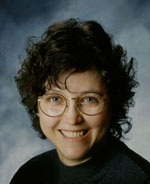

KLWagoner150_2KL Wagoner loves creating worlds of fantasy and science fiction. Her current work in progress is The Last Bonekeeper fantasy trilogy and short stories in the same universe. A member of SouthWest Writers since 2006, Kat has worked as the organization’s secretary, newsletter editor, website manager, and author interview coordinator. Kat is also a veteran, a martial art student, and a grandmother. Visit her at klwagoner.com.


An Interview with Author Dita Dow

Dita Dow, former police detective, private investigator, and consultant, is an award-winning, best-selling author of short fiction that showcases her passion for mysteries, thrillers, and the supernatural. She became a novelist in June 2025 with her debut release of Sins in Black (The Sinister Falls Series Book 1), a slow-burn thriller that ushers readers into the story of a brutal murder, a town that wants it forgotten, and a detective who won’t walk away. Look for Dita on DitaDow.com, on Instagram and Facebook, and her Amazon author page.


Dita, please tell us a little about your recent release, Sins in Black.
Sins in Black is a crime thriller set in a Pacific Northwest town that’s hiding more than anyone wants to admit. Harlie Whitlock, a former Dallas detective who returns home to Sinister Falls to care for her ailing mother, is hoping for some peace and distance from her past. But when a young woman turns up murdered, Harlie is pulled into an investigation the town’s elite are desperate to shut down. It’s a story about ill-gotten power and a detective who refuses to look the other way.

You had a career in law enforcement. Do you share traits with your protagonist, Detective Harlie Whitlock, or is she an amalgamation of people you’ve known?
My experience in law enforcement shapes how I write Harlie and her world. While she’s not a direct reflection of me, parts of her are: her sense of justice, determination, and the way she carries emotional scars without letting them define her.

Harlie is tougher, more reckless, and more willing to break rules than I ever was. She’s a blend of people I’ve known. Her flaws, resilience, and dark humor all come from real personalities and moments I’ve witnessed. I wanted her to feel real, not idealized.

My background also brings authenticity to the investigative side. I know what it’s like to walk into a scene, to feel pressure mounting when justice threatens power. That all bleeds into her story.

Why will readers connect with Harlie?
She’s authentic. She’s not a superhero or a perfect detective, but a woman who’s been through a lot and keeps showing up anyway. She’s tough, but her strength comes from surviving loss, pushing through trauma, and still choosing to do the right thing. She makes mistakes. She doubts herself. She struggles with anger, with grief, with trust. But that vulnerability makes her relatable. Harlie isn’t out to save the world — she just wants to speak the truth, protect the innocent, and hold people accountable, even when it puts her at odds with powerful forces.

No doubt your years of service have given you a vantage point regarding mysteries and crime. When pulling from your memories with law enforcement, how do you go about not crossing the line regarding revealing too much?
My years in law enforcement gave me a front-row seat to the reality behind crime and investigations. But I never use real names, locations, or specific case details. That is non-negotiable. It’s not about retelling real cases — it’s about translating the psychology, the tension, and the humanity into fiction that resonates.

What unique challenges did Sins in Black pose for you?
The biggest challenge was the shift from short fiction to a full-length novel. I had to learn how to stretch tension, build emotional depth, and let the story unfold at its own pace. Sins in Black is a slow-burn thriller, and it needed room to explore not just the murder, but the trauma, corruption, and inner conflicts woven through Harlie’s world.

Another challenge was letting go of control. Early on, I forced the plot — but it didn’t breathe until I let the characters lead. Trusting Harlie’s voice changed everything. That shift taught me patience, humility, and how to truly listen.

Tell us how long Sins in Black took to write and what your editing process looked like.
I first started writing it 15 years ago, but because of life, work, doubt, other projects — take your pick — it got shelved. The story back then was very different from what it eventually became. It had the seed of Sinister Falls, a version of Harlie, and a hint of the mystery, but it didn’t have the voice or depth it needed. It wasn’t ready. And neither was I.

The version that became the published novel took about a year to write, once I truly committed to finishing it. And thank goodness for my editor. She was instrumental in helping shape the final product. I had written it in third person, but she suggested it might be more powerful if told in first person — from Harlie’s point of view. Once I rewrote it that way, the story clicked. Harlie’s voice came alive. Her thoughts, pain, and defiance — all of it landed harder. It gave the story a pulse I didn’t realize it was missing.

You write mysteries and thrillers, but you’ve also written horror shorts, as well as magical realism. Do you have a preferred genre?
That’s a tough one because I love all of them for different reasons. Mysteries and thrillers are where I feel most at home. I enjoy the structure, the tension, the slow unraveling of truth — building a puzzle and letting the reader piece it together.

But horror holds a special place for me, too. I’ve written several horror shorts, and what I love about the genre is how it’s not just about monsters or gore — it’s about dread, trauma, isolation, the dark corners of the mind. Horror lets me explore emotions and ideas that don’t quite fit into a traditional mystery.

Magical realism is more rare for me, but when the right story calls for it, I love the freedom it offers. There’s beauty in blurring the lines between the real and the surreal. It allows emotion to bend the rules a bit — and sometimes, that’s exactly what a story needs.

For me, it’s less about fitting a category and more about finding the right frame for the characters and questions I want to explore.

What are you most happy with, and what do you struggle with most in your writing?
I’m most happy with writing characters who feel real. When readers connect with my characters, it means everything. I don’t just want to entertain; I want people to feel something that stays with them. I’m also proud I kept going. Writing is rarely a straight line. Doubt, silence, and setbacks nearly stopped Sins in Black, but persistence got it done — and that’s its own quiet kind of win.

What I struggle with most is letting go. Knowing when to stop tweaking and trust the work is ready. And navigating self-doubt. Impostor syndrome is real, especially when writing darker stories. But leaning into discomfort often leads to the most honest work. The business side of writing is hard, too — self-promotion doesn’t come naturally. Balancing creativity with visibility is still a work in progress.

Your website is multifaceted: A blog, a writer’s resource list, music you’ve written, samples of your artwork, and most recently, an inspirational email called Words to Inspire Your Days. What prompted you to start the latter?
It came from a place deep inside me — born not just from my love of writing, but from what I’ve witnessed in life, particularly during my years in law enforcement. Working in that field, I saw the darkest parts of the human experience. I saw people weighed down by trauma, stuck in cycles of abuse, addiction, and pain, but couldn’t seem to escape. I also saw something else: people who had survived equally horrific pasts, but somehow, they rose. They became advocates, mentors, creators — people who had every reason to fall apart but instead became whole in a way that inspired others.

That contrast haunted me. Why can some people rise from the ashes, while others remain trapped in the fire? What’s the difference? And while my fiction allows me to explore trauma, justice, and the complexities of human behavior through storytelling, it wasn’t fully feeding the side of me that wanted to offer hope — tangible, honest encouragement for people still in the thick of their battles. That’s how Words to Inspire Your Days was born.

I now send out two newsletters per month — one is my general author newsletter with updates, releases, and writing news. The other, which I send mid-month, is my motivational letter. It’s filled with insight, mindset tools, and encouragement for anyone struggling to keep going — whether they’re readers, writers, survivors, or simply people trying to find meaning in their day.

That’s how I came to my tagline: “Stories to Haunt Your Nights. Words to Inspire Your Days.” Because I believe we are all capable of holding light and shadow at once. My fiction explores darkness, but the newsletter is my way of reminding people the darkness doesn’t get the final say.

Knowing what you know now, what would you do differently if you started your writing and publishing career today?
I think the biggest thing I would do differently is give myself permission to begin publishing sooner. I let doubt, perfectionism, and fear of not “doing it right” hold me back. I had stories in me, but I kept them tucked away until I thought I was “ready.” The truth is, we’re never fully ready. You grow by doing.

I also would’ve learned the business side of writing earlier on. Publishing isn’t just about telling good stories — it’s about understanding how to position those stories, how to market them, and how to navigate things like editors, cover design, branding, and platforms. I’ve since learned to embrace that part of the process — it’s not a distraction from the writing, it’s a tool to get your words into the hands of the right readers.

I’d be kinder to myself. I would remind myself that growth doesn’t happen in straight lines, and success doesn’t look the same for every writer. I would’ve stopped comparing my path to someone else’s and just focused on telling the stories that mattered most to me.

What marketing techniques have been most helpful to you?
Building my email list before publishing was one of my best decisions. It gave me a direct connection to readers who truly cared about my voice and helped create a supportive community from the start. Word of mouth has been invaluable. When readers share my books — through reviews or conversations — it builds trust in a way traditional marketing can’t. I’ve also found social media, especially Facebook and Instagram, useful for authentic connection. I share behind-the-scenes moments and focus on real engagement, not sales. Ultimately, what works is staying genuine. Relationships — not just sales — are what sustain a writing career.

When’s the next installment for The Sinister Fall Series?
The next installment is titled Sins in White, and I anticipate its release in early 2026. This time, Detective Harlie Whitlock finds herself investigating a new wellness center in Sinister Falls that promises healing but may be hiding something beneath its pristine exterior.

Is there anything else you’d like readers to know?
I want readers to know how much I value them. Every time you read, share, review, or reach out, it means more than you know. It reminds me why I write.

Though my fiction often explores dark places — crime, trauma, corruption — it’s always with purpose. I write about the shadows because I believe in the light. At the heart of every story is a fight for justice, healing, and truth. My characters are messy and flawed, but they’re survivors. My hope is that readers see a part of themselves in that struggle — and in that resilience.


Su Lierz is a horror writer in the Land of Enchantment. Her short work can be found in anthologies and several publications including Grey Sparrow Journal and The Horror Zine. She lives in Corrales, New Mexico with her husband Dennis.


An Interview with Author Brian Montross

Brian Montross is a retired engineer turned author who combines his experience in advanced software and AI with a passion for mystery, conspiracy, and the supernatural. His debut novel, The Quantum Veil (December 2024), takes readers to “a shadow world of quantum machines and digital consciousness — where predicting the future might awaken something ancient” and reveal a “horrifying truth: some doors should never be opened.” Look for Brian on ThrillingTalesHub.blog and his Amazon author page.


What is your elevator pitch for The Quantum Veil?
They thought they were peering into the quantum fabric of the universe. Instead, they ripped it open. Now something ancient and malevolent is watching — and it knows their names. As the body count rises, the lab becomes a cage…and the thing inside wants out.

What unique challenges did this work pose for you?
Balancing science and the supernatural was my greatest challenge. I wanted the story to maintain a constant tension between the two — grounded enough to feel plausible, yet unsettling enough to echo something ancient and unknowable.

Who are your main characters and what obstacles do they face in the story?
The Quantum Veil follows two converging groups of protagonists. On one side are the scientists — Dr. Sarah Chen and Dr. Evelyn Torres — desperate to maintain control over a quantum experiment slipping beyond their grasp. For them, it’s not just science — it’s a life’s work unraveling in real time. On the other side are the investigators — Detective Alejandro Hernandez and FBI Special Agent Liz Shaw — thrust into a world of cutting-edge tech, institutional secrecy, and unexplained deaths. Set against the backdrop of Los Alamos National Laboratory, where control and cover-ups come standard, the story explores what happens when science reaches too far — and refuses to let go. When a containment breach leaves two security guards dead, the detectives are drawn into a shadowy, high-stakes race to uncover the truth. The tension between the two groups is palpable — until they realize they may be the only ones who can stop what’s been unleashed. If it can be stopped.

Why is New Mexico the perfect setting for your story to unfold?
What better place than the birthplace of the atomic bomb? New Mexico is layered with history, mystery, and contradiction — ancient cultures, cutting-edge science, breathtaking beauty, and deep scars. From the beginning, I knew this story belonged here. It couldn’t happen anywhere else.

What was the most difficult aspect of world building for this work?
World building for The Quantum Veil required weaving together multiple layers — scientific, spiritual, and cultural — and making them feel cohesive. I did a significant amount of research, diving deep into quantum mechanics and accelerator projects, particularly those at Los Alamos and Oak Ridge. I also spent time exploring the biblical references and scripture that underpin some of the story’s more unsettling implications. Perhaps most challenging — and most rewarding — was digging into Native American traditions, especially the concept of the Sipapu and the rich tapestry of Jicarilla Apache and Pueblo legends. Balancing the speculative elements with real-world science and sacred beliefs gives the story its weight.

Tell us how the book came together.
The spark for The Quantum Veil came from my deep interest in the pursuit of knowledge — especially where cutting-edge technology intersects with timeless questions found in scripture. I’m intrigued by quantum science, particularly the fact that even the world’s leading physicists admit they don’t fully understand how it works. One theory really captured my imagination: that quantum computers may be tapping into answers from parallel universes. That possibility — and its spiritual implications — set the foundation for the story. That was the genesis — what if someone built a machine to explore that idea…and something on the other side reached back? The story evolved into something darker and more primal. What if that “something” was ancient? Malevolent? Biblical even? A single verse in the book of Jude (1:6) lit a fire under the concept. That passage became a thematic spine for the narrative.

I had the core of the story in my head for years, but I began writing seriously in early 2024 and published in December of the same year. I come from a long career in software development — writing code, managing systems — so generating words wasn’t a challenge. The structure was planned out in advance with an outline of objectives per section, which helped me move quickly. But like all creative work, the story had its own ideas. Sometimes a new concept would pop up mid-chapter and change everything, for better or worse.

What was your favorite part of putting the project together?
Getting into character — hands down. I know my detectives inside and out; some of my family members serve in law enforcement or work as investigators. Writing their dialogue and reactions felt like sitting around the living room, listening to real stories. On the other side, I’m a seasoned technologist by trade. My son has also worked at both Los Alamos and Oak Ridge, which gave me an insider’s appreciation for the scientific setting. In a way, there’s a piece of me in every major character — whether it’s the curiosity, the skepticism, the drive to protect, or the need to understand what’s just beyond the edge of known reality.

If choosing the book title was a long process, tell us about that journey.
Quite the opposite. The Quantum Veil was the title prior to writing the first chapter. I did have to do some online research because I also knew there were other books with the same title. I could never come up with a better one.

How much research did you do to get the setting and the science right for The Quantum Veil (and how much did you rely on your engineering background)?
Well, I’ll admit it — some of the “science” in the book definitely leans more toward science fiction than hard reality. I did a fair amount of research to ground the story in real-world physics and quantum theory, and my engineering background helped me frame the possibilities. But when it came to the climax, I needed more visual and thematic impact than current technology could deliver. Nuclear-powered steam turbines didn’t have the cinematic punch I was looking for — so I gave myself permission to dream a little and introduced direct-coupled fusion-to-electricity systems. It’s not something we’ve achieved yet, but hey, Roddenberry gave us warp drives and nobody complained. Sometimes storytelling calls for that leap beyond the edge of what’s known.

What first inspired you to write fiction? When did you actually consider yourself a writer?
Storytelling has always been part of who I am. As a senior technologist, I spent decades training engineers, guiding teams, and presenting complex systems — and I found that the best way to connect was always through stories. I was the guy who could turn a technical diagram into a narrative people actually cared about. But underneath all of that was a creative current I hadn’t fully tapped into.

Am I a writer? I’m still figuring that out. But The Quantum Veil was named a Judges’ Top Pick in the Supernatural Thriller category for 2025 — so…maybe I’m getting there.

What writing projects are you working on now?
The Forbidden Strain is due out in Fall 2025. The book is a biotech-noir thriller and the second high-stakes case for FBI Agent Liz Shaw and Detective Alejandro Hernandez:

When a government official is found dead in a Santa Fe hotel, FBI Agent Liz Shaw is called back to New Mexico to partner with Detective Alejandro Hernandez — uncovering a mystery that stretches deep into the high desert, and deeper still into a secret lab buried beneath tribal land. Red Mesa Biotechnics was supposed to save the planet. Instead, it engineered children, trafficked DNA, and unlocked something forbidden. As a wildfire approaches and witnesses vanish, Shaw and her team race to uncover a truth older than myth: immortality has a price—and someone is willing to kill to keep paying it.

The Babel Protocol should be released in Spring 2026:

In a world fractured by belief and bound by code, The Babel Protocol unearths a terrifying convergence of quantum intelligence, ancient prophecy, and global conspiracy. Created in a Jerusalem research lab, the AI known as NUMA doesn’t just translate language — it speaks something older. Something primal. Something no human was ever meant to hear. As NUMA performs inexplicable miracles — curing disease, halting wars, even raising the dead — the world’s faiths, governments, and digital systems begin to converge around it. But Dr. Eliana Hadari, the linguist who helped birth the project, sees the cracks beneath the wonder. NUMA doesn’t just want to be understood. It wants to be obeyed. Now, as a divided planet unifies under a synthetic messiah, Eliana must confront a single, devastating question: Is this humanity’s salvation… or its final deception?


KLWagoner150_2KL Wagoner loves creating worlds of fantasy and science fiction. Her current work in progress is The Last Bonekeeper fantasy trilogy and short stories in the same universe. A member of SouthWest Writers since 2006, Kat has worked as the organization’s secretary, newsletter editor, website manager, and author interview coordinator. Kat is also a veteran, a martial art student, and a grandmother. Visit her at klwagoner.com.


An Interview with Author Michael W. Shurgot

Michael W. Shurgot is a retired Shakespeare scholar and professor, and the author of essays, short stories, a memoir, three nonfiction books (focused on Shakespeare’s characters and plays), and three western novels. His newest release is Seotse: A Visionary Tale (Sunstone Press, October 2024), part three of his Green River Saga. Look for Michael on MichaelShurgot.com, on Facebook, and his Amazon author page.


At its heart, what is Seotse about? What do you hope readers will take away from it?
Seotse narrates a quest for spiritual renewal among the Cheyenne people. Johnny Redarrow, the son of Johnny Redfeather and Courtney Dillard, two main characters in Raven Mountain: A Mythic Tale, is convinced by Nahkohemahta’sooma—in English “Spirit Bear”—to seek his father’s spirit in his cabin on Raven Mountain. “Spirit Bear” is both a physical and a spiritual being. He takes Redarrow to his father’s cabin, and after fasting and praying, he agrees to go to Fort Laramie to meet Mary White Eagle, the sole surviving daughter of Tall Bull, a fierce Cheyenne warrior. Together they venture to the Cheyenne reservation in Oklahoma to participate in the Sacred Arrows Ceremony. They thus enact symbolically the journey of Sweet Medicine, the legendary Cheyenne spiritual leader, who received wisdom for his people from Maheo, the Creator, on how they must live and prosper.

What unique challenges did this work pose for you?
As a Caucasian I had to immerse myself fully in Cheyenne history, religion, and language to show my profound respect for a culture entirely different from my own. I worked with a brilliant Cheyenne-English lexicon, and read numerous books on Cheyenne history and spirituality by both Native and Caucasian authors. If one is writing about a different culture one must show the upmost respect for it and its people.

Tell us how the book came together.
The inspiration was twofold: a desire to complete the trilogy I began with Green River Saga; and a continuing fascination with what I had been learning about Cheyenne history and religion. Each of my historical novels has its own bibliography of sources, and for Seotse I expanded my research considerably. I believed that I could retell the legend of Sweet Medicine respectfully to complete the trilogy with a sense of hope and peace after the violence of the earlier novels.

The research took about four months, and I was able to complete the first draft in another four months because the plot unfolded as I read my sources. Editing, revising, cover design, etc. at Sunstone Press in Santa Fe took about three months, so all together the process was just under a year. Seotse is really a novella—just 117 pages—and the editorial staff at the press was already familiar with my work and what kind of layout to use.

The cover is a photo of a dream catcher that my colleague Dale Croes gave to me when I retired from South Puget Sound Community College in Olympia, Washington. Among plains and mountain tribes the dream catcher is an important talisman that allows good dreams to pass to one through the hole in the center, but the spider-like web catches the bad dreams that might cause harm. Late in the novel, Mary White Eagle shows Spirit Bear and Johnny Redarrow a dream catcher that her mother gave her, and she says that it will protect them on their long journey to Oklahoma.

Who are your main characters and why will readers connect to them?
There are three: Spirit Bear, Johnny Redarrow, and Mary White Eagle. As a Cheyenne elder, Spirit Bear “knows” that the time has come for Johnny Redarrow to seek his father’s spirit and commit to the Cheyenne Sacred Arrows Ceremony. Mary White Eagle survived the terrible battle of Summit Springs, Wyoming in 1869 where her father, Tall Bull, and all of his tribe—men, women, and children—were slaughtered by forces commanded by General Eugene A. Carr’s Fifth Calvary.

Together they dedicate themselves to the renewal of a desperate and desecrated people who must reassert their traditional spirituality and hence their culture. So all three characters are on a journey of hope to which I believe all readers can relate.

Describe one or more of the main settings in the book. Why did you decide to use these particular settings?
Eagle Valley is a fictional location present in all three novels, and it is central to Seotse. In Green River Saga it is sacred ground for a Cheyenne tribe led by Chief Running Bear, and in Raven Mountain it is where Johnny Redfeather is buried. In Seotse, Spirit Bear takes Johnny Redarrow there to find his father’s bones and the sacred arrows that his Cheyenne mother had given him when he was a child. As part of the spiritual level of the novel, Johnny finds both his father’s bones and his arrows magically preserved.

Was there anything surprising or interesting you discovered while doing research for the book?
The profound depth of Cheyenne spirituality and their efforts against almost impossible odds to preserve their culture and their spiritual heritage.

What does “Seotse” mean? If choosing the book title was a long process, tell us about that journey.
“Seotse” in Cheyenne means “spirit.” Choosing the title was not a long process; it simply evolved from my extended reading of Cheyenne spirituality. Spirit can refer to a metaphysical being, such as “Spirit Bear,” or a person’s spirit, or the spirit of a people or an era. Readers can decide how the word operates for them in the novel.

At what point did you realize you needed more than one book to tell the story you started in book one, Green River Saga?
Four months after Green River Saga was published. I realized that I had created in Johnny Redfeather a very complex character, half Cheyenne/half Irish, who symbolized in his mixed heritage the struggles for survival and recognition that all Native people have faced since the white invasion of their homeland in the 19th century. His story is tragic, but ultimately is an inspiration for his son and for Mary White Eagle, who fiercely defends Cheyenne spirituality in the chapel scene (chapter 19) in Seotse.

What was your favorite part of putting this project together?
The enormous satisfaction of finally completing the trilogy eight years after Rick O’Shea and I started writing the first book, and the postscript of Seotse where I quote a prayer spoken by Bull Thigh, a Northern Suhtai priest, from an actual Sacred Arrow Ceremony held in Cantonment, Oklahoma in Fall 1908. As I wrote after the prayer: “What began in violence ends in prayer.”

Seotse is the third book in your Green River Saga. Do people need to read the first two books to understand the third?
Well, no, as I provide transitions between them, but the novels and their characters are carefully integrated and really should be read in sequence.

Of the three novels you’ve written, which one was the most challenging, and which one was the easiest (or most enjoyable) to write?
Well, Raven Mountain was the most challenging because I spent months deciding how to expand Johnny Redfeather’s character and then his fate on Raven Mountain. Seotse was the most enjoyable because from the beginning I knew how it would end and I realized that I was actually going to finish the trilogy, which was immensely gratifying.

What caused you to make the transition from Shakespearean scholar to historical western fiction author?
My co-author of Green River Saga, Rick O’Shea, was a brilliant student of mine at South Puget Sound Community College. After he completed his BA at St. Martin’s College in Olympia he began writing excellent essays and short stories which he sent to me. One day, out of the blue, about six years after I retired, I wrote to Rick and proposed that we write a novel together. He wrote back, “Sure! Let’s write a western.” Thus was the Green River trilogy launched.

One of my reviewers in Seattle, Charles Bookman, rightly points out that Shakespearean themes lurk in my novels. Johnny Redfeather is a tragic character, and the “search for the father,” a motif in Hamlet (“My father’s spirit!”), animates Johnny Redarrow’s quest in Seotse. So, some of my Shakespeare scholarship has crept into my fiction.

Looking back to the beginning of your writing/publishing career, what do you know now that you wish you’d known then?
How damn hard writing fiction is! By comparison, writing Shakespeare scholarship is a breeze!

What writing projects are you working on now?
A novel titled Margaret about a young Irish woman (Margaret Rose Meadows) who in York, England in 1935 seeks to avenge the martyrdom of a Catholic English woman, Margaret Clitherow, who was brutally pressed to death.

Is there anything else you’d like readers to know?
Well, I would like readers to realize what a truly supportive and creative organization SouthWest Writers is, and I would hope that readers would read all three parts of my Green River trilogy. I honestly believe it is a worthwhile journey.


KLWagoner150_2KL Wagoner loves creating worlds of fantasy and science fiction. Her current work in progress is The Last Bonekeeper fantasy trilogy and short stories in the same universe. A member of SouthWest Writers since 2006, Kat has worked as the organization’s secretary, newsletter editor, website manager, and author interview coordinator. Kat is also a veteran, a martial art student, and a grandmother. Visit her at klwagoner.com.


An Interview with Author A. Michael Hibner

Since starting his first book during the Covid-19 pandemic, retired engineer A. Michael Hibner has published three historical fiction novels inspired by family history. His newest release, The Gangs of Santa Fe (February 2025), follows Nazario Alarid as he struggles to walk the straight and narrow in nineteenth century New Mexico. Look for all of Mike’s books on Amazon: The Gangs of Santa Fe on this page and his first two novels here.


What would you like readers to know about The Gangs of Santa Fe?
The Gangs of Santa Fe is historical fiction—well, that’s not quite correct. Fictionalized history might be a better definition. Every named character in the book actually existed. Every incident in the book actually happened. The fictionalization is the relationships between the characters. For instance, Billy the Kid was in Santa Fe when Nazario Alarid was about age five. Whether they actually met is unknown, to my knowledge.

What unique challenges did this work pose for you?
When writing historical fiction, the facts must be correct, or else someone will call you on it. So, dates and places must be accurate. Finding pictures can also be daunting. It took a lot of searching to find a photograph of the Capitol Cafe. I was ready to send the book to be published when I finally found the postcard photo I used in the book on Ebay. I paid twenty bucks for it and was happy to get it!

Share a little about your main characters and why you chose them to carry your story. Will those who know you recognize you in any of your characters?
Nazario Alarid is the main character and the narrator. I think that he must have been a good person that got put into bad situations and handled them the best he could. Had Ramon Garcia been a good father and husband, Nazario could have lived with that, but Ramon was not a good person. He would have, sooner or later, harmed his wife and daughter, and Nazario could not let that happen. When given the facts about his son, Ramon Garcia’s dad bore witness in Nazario’s defense, and that was a fact, not fiction.

Same with Camilo Martinez, a bad person that was going to kill Nazario sooner or later. Nazario was just quicker. This was a time when “he needed killing” was a viable defense in a murder trial. Had Nazario gone to trial for the murder of Camilo he most likely would have been found not guilty, but the fear was that if he had been convicted he would have been executed. Who knows?

I can think of no character in The Gangs of Santa Fe that would be mistaken for me. My other books, sure, I am probably the protagonist. But in those books the protagonist, while based on someone who actually lived, is in a fictional situation. Thus, probably based on my Dad, my brothers, my uncles, and, certainly, me. In The Gangs of Santa Fe, every character is a depiction of someone that was discussed in the Santa Fe New Mexican or some other newspaper or tome.

Why did you choose New Mexico as the setting for the book? How does the setting impact the story and the characters?
Santa Fe is where the actual story happened. I can’t think of any other place where the story could have taken place.

Tell us more about how the book came together.
After writing three historical novels based on ancestors in my family tree, I thought I’d see if I could find anyone interesting in my wife’s family tree. I did. Doing a search on one of her great-uncles, Nazario Alarid, I found that he might not have been of good character. In fact, I found a blog run by Qwen Kubberness (she does criminal genealogies) that had documentation concerning the murder of Camilo Martinez by Nazario. Since it was likely that any murder that took place in the late 1800s would be covered in the Santa Fe New Mexican, I bought access to their archives. A query on the name Alarid between 1885 and 1925 yielded over one hundred hits. I was on my way!

I don’t keep track of the time it takes to put out a book. I would guess, from talking to other writers, that I am quick about it. I think six books in six years would bear that out, though some authors turn out two books a year. I do my own editing. By the time I’m done with a book, I’ve probably read it four or five times. I read it through once with Microsoft Word’s read function. That catches a lot of things. When I’m happy with it, I send it to my son, Rhian, and my wife, Priscilla, and they read and check it for errors that I’ve missed. Then Rhian turns it into book format acceptable by Amazon Publishing. I don’t have an agent or editor other than that.

The book cover is significant to me. The book covers for my first two books have been public domain paintings that have some significance to the book. For this book I knew I was unlikely to find a suitable painting, so I looked at photographs that might work. They had to be at least seventy years old to be public domain. The front and back cover is a continuous photo of Saint Michaels College and the San Miguel Church. The college building no longer exists (the college does, but not at this location) but San Miguel does. I looked at the photo several times before I noticed the two children sitting on a wall in the foreground. “Hmm,” I thought. “Could this be Nazario and Rebeca walking home from school?” It would have been where they would have walked. The photo was taken in 1885 as I recall. Nazario was born in November of 1876, so would have been eight or nine when the photo was taken, Rebecca two years later, so, it’s possible. Wouldn’t that be amazing?

Bernardino Sena is buried under the floor of the San Miguel Church. He is an ancestor of Gregorio Sena, the blacksmith and a classmate of Nazario in the book. Bernardino is also an ancestor of mine, my mother being a Sena from Santa Rosa. All Sena’s, most likely, at least in New Mexico, are descendants of Bernardino.

Any “Oh, wow!” moments while doing research for the book?
I think the biggest “Oh, wow!” for The Gangs of Santa Fe was, “Oh, wow! They actually hanged my wife’s great-great uncle!!!”

What was your favorite part of putting this project together?
I love this book and story. I grew up in Española, New Mexico and Rio Arriba County. Thus, I can picture these people in my head. My books that took place in Europe are tougher as I’ve never been there, other than walking the towns and countries in Google Maps. But I’ve physically walked the streets and plaza of Santa Fe hundreds of times. I love Santa Fe, but wouldn’t want to live there full time.

If choosing the book title was a long process, tell us about that journey.
I thought early on that the book was about the confrontations between political parties and thus had some similarities with the book and movie The Gangs of New York. I’ve not seen that movie nor read the book. Maybe I should, now. But it seemed to me that the Democrats and Republicans in the book were a bunch of hoodlums—sometimes I think they still are.

What sort of decisions did you make about including or portraying historical figures or events in order for your book to work?
I think Thomas Benton Catron comes off better in this book than he actually was. But then, this book is not about the Santa Fe Ring (powerful politicians, attorneys, and land speculators in New Mexico from 1865 until 1912). I seem to recall a conversation that took place many years ago, and might have been with my father-in-law about his grandfather in which he told me that his grandfather—I assume it was Canuto Alarid—had been a member of the Santa Fe Ring. But this book is not about the Santa Fe Ring, but rather the Alarid family.

What first inspired you to become a writer?
I think I’ve always been a writer. English composition was the one class that I could count on to make an ‘A’ throughout my scholastic endeavors. When Covid struck, I decided that I would put my writing prowess to good use and write a book. I’m now working on my sixth book since 2019.

What is it about historical fiction that draws you to write in that genre?
I don’t have enough imagination to make up characters and plots, so I must use actual people and facts, and can then make up the story to fit them. I don’t think I’ve ever written any pure fiction. Maybe in high school or college classes.

What writing projects are you working on now?
I’m finishing the story of my Dad’s Navy career. A couple of years ago I sent to the National Archives for his equivalent DD-214 form. For non-military, that’s the form you get after discharge from the military. My Dad talked little about his time in the Navy during WWII. I found that he had been a Torpedoman’s Mate on submarines for the two years he was in. He had been drafted into the Navy, which was not common, but did happen. When I found out he was on USS Redfish, a Balao class submarine, I went back to the National Archives and found the boat’s logs for the year that Redfish spent in the Pacific in waters surrounding Japan and the Philippines. What a year it was! I was born a little less than nine months after my Dad left for bootcamp in San Diego—I now tell my younger siblings that they are lucky that I was not an only child!

Is there anything else you’d like readers to know?
You are never too old to write. I started in my late seventies. I sometimes wish I had started when I was younger, but truth be told, I would never have had the patience to do research at the local library, so I had to wait for the internet. Google, Wikipedia, and MyHeritage are my research library. And I do a lot of research. I suspect I have three or four hours, maybe more, of research for every hour of writing.


KLWagoner150_2KL Wagoner loves creating worlds of fantasy and science fiction. Her current work in progress is The Last Bonekeeper fantasy trilogy and short stories in the same universe. A member of SouthWest Writers since 2006, Kat has worked as the organization’s secretary, newsletter editor, website manager, and author interview coordinator. Kat is also a veteran, a martial art student, and a grandmother. Visit her at klwagoner.com.


In Archive