
Monthly Archives: October 2025

An Interview with Author Astrid Tuttle Winegar

Astrid Tuttle Winegar considers herself a recipe wrangler, moderately tortured writer, and non-professional photographer at large. She plans and tests recipes for years, photographs the results, and writes clever tidbits to include in her cookbooks before releasing them into the world. Her newest publication is the award-winning Celebrating Comfy, Cozy Foods from North America: Cooking for Halflings & Monsters, Volume 3 (October 2024). Look for Astrid on her website AstridWinegar.com, as well as on Facebook, Instagram, and Bluesky. And visit her Amazon Store as well as her Etsy shop, ElegantSufficiencies.


Who did you write the book for, and where did the subtitle Cooking for Halflings & Monsters come from?
My cookbooks are for anyone who loves to eat delicious comfort foods! But more specifically, having an interest in nerdy stuff, like Middle-earth, Narnia, Star Wars, etc. is a plus. Not a requirement, but a plus. My subtitle became the series title after my first cookbook was threatened with a cease and desist from the J.R.R. Tolkien estate. I had to rewrite almost everything. I came up with Halflings & Monsters as a non-litigious way of referring to characters from his books. Now it encompasses any sort of fantastical creature and character in a wide variety of works.

What was the greatest challenge in writing this particular volume?
After releasing my second cookbook on Halloween of 2019, I was sort of fiddling around with the idea of a third book, and I figured I’d get around to doing something eventually. Then COVID happened. Suddenly I had all sorts of time (in theory) and really no excuses for not writing anything. However, finding ingredients was sometimes challenging, which I discuss in the cookbook. Yeast was hard to find for a while. Grocery shopping was sometimes a nightmare. My husband and I were the official caretakers for three of our grandchildren during the COVID pandemic, so we had lots to do! One child was in preschool, but two others were doing the remote learning program. The whole time was a challenge, to say the least. But perhaps that made me focus more efficiently.

Tell us how the book is structured and why you organized it that way.
This volume is structured around a few holiday chapters surrounded by a few subject categories, such as “Lunchy Stuff,” “Main Events,” or “Hot Sides.” I have various chapters devoted to menus for holidays such as July 4th or Cinco de Mayo. I approached this one as sort of a casual year-in-the-life kind of book.

How did Celebrating Comfy, Cozy Foods from North America come together?
This volume took a total of four years. Many of my recipes have been floating around for decades, though some have also been completely new. Once I determine which recipes to include, they start appearing on our family’s rotation frequently. Then I recruit others to try recipes and give me feedback. These testers are usually in the United States, but I have had testers from Europe and Australia. Writing takes a year or so, then I have to take all the photographs and work on them. Editors and proofreaders take as long as they need to; some are fast, some are slower. I design my covers, which never fit into any pigeonhole, though a leather-looking background is always a must. For this cookbook, I had thought I would go with a certain photo for the cover, but then I suddenly was inspired to go with a yin/yang, green/red chile photo, which seemed to be a perfect representative of the menu items, as well as my own personality.

You include many recipes on your website at https://astridwinegar.com/recipes-2/. Do you have a favorite seasoning mix or go-to comfort-food recipe that you’d like readers to try?
I would advise starting with the first recipe on the website, “Shire Seasoning.” This is known in my cookbooks as Savory Seasoning, because I wasn’t sure if “shire” belonged to Tolkien (it probably doesn’t, but I figured I’d better be safe than sorry…). I actually use this seasoning constantly, even today. It would be difficult to pick just one recipe from my three cookbooks as a go-to, but my husband will always request my traditional coleslaw recipe, which is his namesake: Bob’s Obsession. He wants me to make that every week! I don’t do this, however.

What keeps you motivated to move forward and continue the hard work of producing more cookbooks?
I have two more cookbooks in me, and that will be it. I’m simply motivated to finish them, though I’m taking my time. It’ll probably take four years to do each one, and that’s fine.

What was your favorite part of putting volume three together?
Besides the incessant eating and drinking? Well, though I’m not a professional photographer, I have most enjoyed cooking or baking something, then staging it somehow for a photo. Maybe I missed my true calling.

What was the inspiration for the first book, Cooking for Halflings & Monsters: 111 Comfy, Cozy Recipes for Fantasy-Loving Souls (2017)? When did you know your idea was strong enough for a series?
During my undergraduate days at University of New Mexico, I took a class on Tolkien. We all had to produce some sort of end-of-semester project. Since I’ve been cooking since I was ten, it was logical for me to make a Middle-earth cookbook with items mentioned in The Hobbit and The Lord of the Rings. After I finished my MA, my advisor (who had also taught that undergrad class) wistfully mentioned that she wished I would expand my project and try to be published. Four years later, I was able to do this. My cookbooks are only a series because I have way too many recipes and I’ve had to distribute them into smaller portions to fit into manageable books. Though this current cookbook ended up a bit long.

Who or what sparked your interest in cooking?
My mom was probably the strongest motivator. Maybe she didn’t want to cook much anymore? Perhaps.

Have you ever wanted to write fiction? If so, what genre, and what has held you back from trying that new direction?
During those undergrad years I definitely wanted to, so I dabbled with fiction. I tried a few genres in a half-hearted way. Constructive criticism from creative writing classes and plenty of honest self-reflection held me back from bothering to try fiction. I suppose it’s really not my cup of tea.

What genre do you enjoy reading the most?
Fantasy probably tops my genres, though I also read mysteries, fiction, science fiction, memoir, classics of many kinds, and lately I’ve been reading some romance.

What writing projects are you working on now?
I am currently working on volume four, with a few detours to volume five. Four will concentrate on European cuisine, from Scandinavia to Italy to some Middle Eastern foods. Five will be centered on Asia.

Is there anything else you’d like readers to know?
The best place to get updates for any of my work is my Facebook page, astridtuttlewinegar. I run contests for free books, share photos, and I recruit recipe testers there (amongst other things, of course). I don’t write on my blog anymore, because I think it has proven to be a waste of valuable time. I’m also on a few other social media platforms.
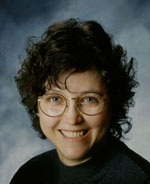

KLWagoner150_2KL Wagoner loves creating worlds of fantasy and science fiction. Her current work in progress is The Last Bonekeeper fantasy trilogy and short stories in the same universe. A member of SouthWest Writers since 2006, Kat has worked as the organization’s secretary, newsletter editor, website manager, and author interview coordinator. Kat is also a veteran, a martial art student, and a grandmother. Visit her at klwagoner.com.


An Interview with Author Sharon Kayne

Sharon Kayne spent more than 30 years as an award-winning writer/editor of nonfiction, working in journalism and in nonprofit advocacy, before retiring to pursue fiction writing. Her newest historical romance release, The Green Silk Gown (August 2025), is set in late 19th century San Francisco and touches on themes of self-determination, independence, and women’s rights. Look for Sharon on her website SharonKayne.com, as well as on Facebook, Instagram, Pinterest, and her Amazon author page.


What is your elevator pitch for The Green Silk Gown?
I don’t really have an elevator pitch for any of my books—which is probably not the best way to sell your books! I usually talk about my books in fairly general terms, such as: The Green Silk Gown is a second-chance historical romance about a young woman who finds love with a portrait painter only to have her world shattered by a shocking assault. Though it is a romance at its core, it delves into larger themes, such as independence, self-determination, and women’s rights. Book club discussion prompts are included.

I do have a new-and-improved book blurb, however (and that’s sort of an elevator pitch, right?), which reads: Emily’s father expects obedience. And that means marrying the man he’s chosen for her. But Jonathan is coarse, over-confident, and controlling. And he doesn’t love her any more than she loves him.

Emily, who works in her family’s flower shop, is as hopeful as she is resilient. She decides to get to know two interesting customers: Edmund, a handsome artist who asks her to sit for his next portrait and a suffragist who invites her to a meeting. As Emily begins to forge a close and romantic friendship with the portrait painter and hears new perspectives from the suffragist about the rights she is denied, she becomes determined to take charge of her life. Then angry threats, an unspoken ultimatum, and a shocking sexual assault force Emily to make an unthinkable escape. She must ultimately discover if she has the courage to eschew social expectations and set her own terms for her future. Sometimes, the darkest, most daunting path is the one that leads to the brightest possibilities.

Who are the love interests in the story, and why will readers connect to them and cheer them on? Which point of view did you enjoy writing the most?
The heroine, Emily, is a sweet young woman who works in her family’s flower shop. Readers will connect to her and cheer her on because she is being pressured by her father to marry a man she does not love. Although her options in the late 19th century are limited, she wants more from her life—especially once she begins to attend suffrage meetings and learns new perspectives. The hero, Edmund, was born in a well-to-do family but has given up his inheritance because he wants to be a portrait painter—something his father disapproves of. Readers will connect with him and cheer him on because he is pursuing his dreams rather than settling for the life that is expected of him. I generally enjoy writing all points of view in my novels, although I usually find female characters slightly easier to write because I can relate more to their issues.

What is the main setting of the book? Why is it the perfect place for your story to unfold?
The book is set in San Francisco. Aside from having been there a few times, I’ve always found it to be a rather romantic city. I love the architecture and the hills, as well as the bay. I also needed a city large enough to have flower shops and art galleries, not to mention having the sort of clientele that could support a portrait painter. I also needed a setting that would have the kinds of factories that women and children worked at in the late 19th century. That it has the trolley system in the late 19th century was also a plus, as it allowed my character some independence of movement.

How did the book come together?
I came up with the idea just after having completed my first novel, This Restless Sea, which I’d written during a three-month sabbatical from my job. Not only was I shocked that I’d been able to write a novel from start to finish, but I was fairly certain it was the only idea I would ever have for a novel—mainly because the idea for This Restless Sea had been banging about in my mind for years! But I’d loved writing it and wanted to see if I could write another. So, I flopped down on the couch and started thinking up another plot. This consisted mainly of asking myself a lot of “what if?” questions. I came up with the idea fairly quickly and so I spent the last two weeks of my sabbatical working on it. It took me another few months to complete after that. As if I’d been bitten by a radioactive spider, I felt compelled to write every weekend (I didn’t write in the evenings because I was working as a writer/editor, which took up a lot of my creative juices during the week) and I completed three more novels over the next couple of years. During that time, I also worked with a developmental editor that a friend had introduced me to, who taught me many valuable lessons (such as why you don’t head hop), so that meant going back and doing some major rewriting on all of my manuscripts. I have some wonderful friends who are excellent writers who act as my beta readers. I’ve also joined a critique group through SouthWest Writers and have learned a great deal about writing from them. I found my cover designer through a friend who is also a published author, and it was another friend who suggested I use an image of green silk fabric on the cover, since it was impossible to find an appropriate image of the green silk gown that Edmund paints Emily wearing.

What makes this novel unique in the historical romance market?
While most historical romances deal very minimally with the strictures that women used to live under, The Green Silk Gown delves into them in a much more comprehensive way. Most historical romances—at least those set in England—revolve around women living very privileged lives (have you ever noticed how many historical romances have the word “Duke” in the title?!). Privilege brings with it rights and freedoms that common folk lack. I think it does modern women—especially young ones—a disservice to wholly romanticize what life was like for women before the mid-20th century. If we don’t understand how hard-fought our current rights are, we are too apt to lose them. I certainly don’t make women’s rights central in any of my historical romances, but they are always important to my heroines, so they make an appearance. Since Emily attends suffrage meetings, she learns about things like inheritance laws, the Comstock Act, what role the AMA had in constricting abortion rights, etc. That’s also one of the reasons I set my historical romances in the late 19th century—because suffrage movements were really picking up steam and, until women had the right to vote, they had no way to hold lawmakers accountable. Because my novels are infused with information about women’s rights, they make good reading for book clubs—and that is also why I include discussion prompts at the end.

Why did you choose The Green Silk Gown for the title?
The green silk gown is instrumental in getting the main two characters together, so it made sense as the title. Emily knows that it is improper for her to sit for a portrait for Edmund without a chaperone on hand—and she knows her parents would never approve of it. Edmund sees Emily as something of a muse, and he also believes that her red hair, fair complexion, and green eyes will set off the gown beautifully. So, he uses the gown to lure her into the sitting. Coming from a working-class family, she’s had neither the opportunity nor occasion to wear such a beautiful gown. The only drawback to the title, as I mentioned before, was that I knew I wouldn’t be able to find a photograph for the cover that depicted both the gown and Emily correctly. Most historical romance covers show the woman being disrobed and that was the wrong message to send. Not to mention, so many photos of models in historical dress are distressingly inaccurate! They show women in evening gowns wearing huge sunbonnets, for example. And, very conveniently, the women being disrobed are never wearing corsets!

What was your favorite part of putting this project together?
Writing the first draft of the manuscript is always my favorite part, although I also enjoy rewrites (which makes me something of an oddball, I know!). It’s also exciting to see the cover art when it’s complete, as it gives the novel its face, so to speak.

You published your first novel, This Restless Sea, in May 2025, just a few months before the release of The Green Silk Gown. Why did you choose to release two novels in the same year? What did you learn in writing/publishing these books that you can apply to future projects?
My initial plan was to grow my readership with This Restless Sea before I released The Green Silk Gown. But I soon learned that growing your readership is a slow process, so I thought a rapid release of a second novel might help. The jury is still out on whether that was a good plan! I have a third historical romance that I may release before the end of the year. After that, I’ll continue working on my rom-com romantasy series, and I’ll be looking for a publisher for that.

Looking back to the beginning of your writing/publishing career, what do you know now that you wish you’d known then?
I knew self-publishing would be hard, but I had no idea just how hard. Marketing your book takes a great deal of creative and emotional energy and, so far, mostly I get crickets back, which feels like failure on a near-daily basis. Also, if you promote your stuff on social media (and who doesn’t?) you’ll find that you are chum in the water for marketing sharks. TikTok is especially bad about this, and so many of the sharks out there are scammers. It’s disheartening!

What writing projects are you working on now?
As I mentioned, I have one more straight historical romance to release. After I’d finished writing that one, I decided to go back to the kind of writing I enjoy the most—humor. So, my current project is a rom-com romantasy series that has a fairytale basis. I’ll be looking for a small publisher for that series, as self-publishing is much harder than I imagined!


KLWagoner150_2KL Wagoner loves creating worlds of fantasy and science fiction. Her current work in progress is The Last Bonekeeper fantasy trilogy and short stories in the same universe. A member of SouthWest Writers since 2006, Kat has worked as the organization’s secretary, newsletter editor, website manager, and author interview coordinator. Kat is also a veteran, a martial art student, and a grandmother. Visit her at klwagoner.com.


An Interview with Author Lisa Page

Retired physical therapist Lisa Page crafts stories using her love for the natural world and her passion for the magical and the everyday sacred. Her debut novel, Saving Cottonwood (June 2025), “is a heartfelt, genre-blurring tale of love, loss, and quiet awakening. With elements of magical realism, mystery, and environmental soul, it invites readers to believe in the power of place, the pull of destiny, and the fierce, hidden magic in everyday lives.” Look for Lisa on her website LisaPageAuthor.com, on Goodreads and Instagram, and her Amazon author page. Besides Amazon, Saving Cottonwood is available at Page 1 Books and Organic Books in Albuquerque, New Mexico.


What would you like readers to know about the story you tell in Saving Cottonwood?
When I first sat down to write, I didn’t know much about publishing genres beyond the basics. Later, I stumbled across “cozy mystery,” and then, believe it or not, “cozy, paranormal, mystery, romance.”  That’s where Saving Cottonwood landed, though I think of it more as my love letter to magic, community, and resilience. More than genre, I want readers to know that this is an optimistic story about the power of ordinary people to face the forces of wealth, politics, and destruction, and protect what matters most.

What was the greatest challenge or obstacle to completing this work?
This was my first novel, so every stage was a mountain — writing, revising, self-publishing, and then (deep breath) marketing. But the real summit wasn’t the mechanics, it was keeping the faith even when I felt doubt. Learning to keep going page after page was the hardest and most essential part.

Who are your main characters? Your favorite secondary characters? How did you go about creating/developing them and working out their relationships?
At the heart of the story is Iris, a middle school librarian in her thirties, newly divorced and trying to rebuild her life. By locking herself out of her house, she meets Ezra, a locksmith with a gift for practical magic, and their chance encounter changes everything. Then there’s Xena, a stray cat with a secret identity: a bodhisattva disguised in a long black coat, tasked with guiding Iris toward her purpose. And Annabelle, a brave 11-year-old who is fiercely protective of the forest and all that is vulnerable. She becomes Iris’s moral compass. I see parts of myself in all my characters, but I can’t say I created them. It feels like they were already there and just waiting for me to tell their stories.

What makes New Mexico the perfect setting for the book? Did you model the town of Cottonwood after a particular location?
The fictional town of Cottonwood will feel very familiar to anyone who knows Albuquerque, especially the North Valley acequias, and the bosque along the Rio Grande. The land, the river, and the cottonwoods verge into being characters in their own right, carrying the bosque’s history, magic, and life pulse. I think it is a perfect setting because it’s a place worth preserving.

Tell us more about Saving Cottonwood and how it came together.
The seed for Saving Cottonwood was planted in 2019, when I was moving out of a beloved historic home I’d lived in after my divorce. I left the new owners a whimsical letter about feeding the hummingbirds, caring for the trees, and honoring the spirit of the place—along with a vase of daffodils.

Later, I thought: what if a story began this way, with someone moving in and discovering such a letter? That idea wouldn’t let me go. After I retired in 2023, I began writing. The first draft poured out in about three months. Then came months of layering and revising. I gathered feedback from friends, took long breaks to be able to return to the manuscript with fresh eyes, and then did two or three more rounds of edits. I didn’t realize how hard it would be to decide when it was actually done. Eventually, I took a leap and sent the story out into the world.

What was the most difficult aspect of world building for this book?
The “world” was my own everyday landscape, so the challenge wasn’t building it, but trying to portray it as accurately as possible. And when the bosque whispered about faeries, crows with messages, and a talking cat, luckily, I was there to take notes.

What was your favorite part of putting this project together?
The surprises.  The moments when the story took the reins, when the characters knew more than I did, when the river wanted to speak, when the plot unfolded in ways I didn’t see coming. In those moments, I discovered the enchantment and magic inside the writing process.

Do you have a theme or a message in the book? If so, was it intentional going into the project or did you discover it as the story unfolded?
Intentionally, going into the project, I imagined a benevolent universe where help appears when we ask for it, and that it takes many forms, seen and unseen. It may come in the form of people, or synchronicities, or from the realm of the ancestors. And if we are very lucky, sometimes it comes from those with fur or feathers or faery wings.

When did you know you wanted to be a writer, and when did you actually consider yourself one?
Ahh! I wanted to be a writer from a young age, probably from around middle school. I turned 60 this year, and I think maybe I am a writer now? But the label author still feels new and strange, like a fancy outfit that doesn’t quite feel like me yet.

What advice do you have for beginning or discouraged writers?
Creative work is vulnerable. It stirs up the inner critic. For me, meditation, emotional self-regulation strategies, and kindness toward myself have been the strongest anchors. Finding friends on the writing path can be an invaluable support. I got a lot out of some of the UNM continuing education classes on writing fiction.

If you can make a habit of writing despite the mean and doubtful voices that arise, a muse will find you, and that relationship will carry you through and nourish both your own soul and the world. It’s so worth it!


KLWagoner150_2KL Wagoner loves creating worlds of fantasy and science fiction. Her current work in progress is The Last Bonekeeper fantasy trilogy and short stories in the same universe. A member of SouthWest Writers since 2006, Kat has worked as the organization’s secretary, newsletter editor, website manager, and author interview coordinator. Kat is also a veteran, a martial art student, and a grandmother. Visit her at klwagoner.com.


Author Update 2025: Irene I. Blea

Dr. Irene I. Blea is the author of university text books and academic articles, as well as novels, poetry, and memoirs. Her 2025 release Talking with Rudy: Platicando con Rudolfo Anaya is a “magical realistic” memoir that reflects on four decades of conversations between herself and award-winning author Rudolfo “Rudy” Anaya, the godfather of Chicano literature. Look for Irene on Facebook and her Amazon author page. Read more about her work in her 2015, 2017, and 2024 interviews for SouthWest Writers.


At what point did you decide to write a memoir using conversations with your longtime friend Rudy Anaya? What prompted the push to begin?
Several months after Rudy died in 2020, I drove near where he lived. I heard a small bubble burst and looked to my right. Rudy sat in the passenger seat of my car. He said, “Take me to my house, Irene.” This was an astonishing experience, but I began a conversation with him. Later I reflected on the many conversations I had with him over a period of forty-plus years.

When you began writing the book, what did you hope to accomplish? By the end of the journey, do you feel you were successful in your goal?
When Rudy died during COVID many people did not get to say goodbye to him. By writing the book, I hoped to do two things: introduce readers to the Rudy I knew  — the man, my friend, my neighbor — and give readers an opportunity to say goodbye. I did not know at the time that we had unfinished business. Yes, I feel I accomplished my goal.

Talking with Rudy was published five years after his death. How do you think he would have reacted to the book if he’d been able to read it?
In my car, he asked me to write about him, and I think he would be very happy. He was a bit of a tease, and I visualize him smiling as I answer this question because I had no intention of writing about him. He was traveiso, a prankster.

What was your greatest challenge as this project unfolded?
I was surprised to learn much about me. My mother died in 2005, and I failed to recognize that I still mourned her passing. That gets resolved in the book. The greatest challenge to the writing of it was that my recollections of our conversations were not consecutive. I had to piece some of them together in order to offer the reader a more cohesive insight.

What would you like readers to know about Rudy Anaya? What fueled your friendship with him?
Until writing the book I failed to recognize that we shared a profound friendship and similarity. I guess I took it for granted. Readers knew Rudy’s work as an author. Some knew him as a university professor. We shared that, but Rudy was a very kind and generous person who watched his money carefully. He was a respectful, peaceful, spiritual person but he was more complex. He was not only highly intelligent, he was political, philosophical and a very private, self-contained person who enjoyed having fun. For example, it was only when you sat, shared a drink, and ate with Rudy or talked with him truthfully on a walk in the Bosque that he shared profound love for New Mexico and the spiritual component of that deep-rooted love. Rudy had sisters who he adored. He held a niece in very high esteem. He had a large family, and greatly loved Pat, his wife. Rudy was not highly demonstrative, and one would not know this, but he was romantic.

Did writing the book change you or your view of Rudy?
I knew Rudy for a very long time and had many conversations with him and many encounters. But I never thought of him as a friend; I thought of him as an acquaintance. And in writing the book and reflecting on the sometimes intimate or emotionally charged context in which our discussions took place I realized that we were intimate friends, very good friends based in mutual trust. As the years passed, neither of us trusted freely. I regretted not being totally cognizant of this. Things had happened to me, and I was closed off to such deep knowing and had to give myself permission to let go of my defenses. The book helped me do that.

What was your favorite part of putting this project together?
I like the ending. I didn’t know the ending. I had a few thoughts on it but the ending that I finally published was highly appropriate and I’m very happy that I concluded it this way.

Do you have a favorite quote from Talking with Rudy that you’d like to share?
Rudy frequently said, “It’s all fiction.” What he meant was we all have a story, and we see that story through our own life experiences. The story takes meaning from those experiences, and this does not mean that another person would see the incident the same way. We all have our own perspectives, it’s all fiction. We make up what it means to us.

What do many beginning writers misunderstand about telling a story?
Stories, of course, have a beginning, middle, and an end. In the beginning I introduce my characters, even if it’s just in a very brief reference to them. Later I expand on who they are and what they are and why they are that way. The middle is very difficult for some writers; it is not difficult for me. Except that in Talking with Rudy I did not know that grief sometimes lasts a long time; it is individual. We grieve the way that we need to grieve. I had not concluded the process. I repeat this because we learn from writing or telling a story.

What do you want to be known for as an author?
That as a scholar I told a good story. I love what bonded Rudy and I was that we both loved New Mexico in a spiritual way. He loved it as much as I love it. It is more than an intense or emotional attachment that we have to the land, the people, the cultures. We are New Mexico because we are of it; it made us what we are.  I want to be known as a scholar that learned to tell a story as a fundamental contribution to American Literature.

Is there something that always inspires you or triggers your creativity?
I am a very disciplined writer. I do not wait for inspiration; I get up every day, sit at my computer and although I may have very little inspiration to write, I will begin by going through my current writing projects; I generally have two or three at a time. Before I know it, I’ve spent three to five hours writing or editing something.

What writing projects are you working on now?
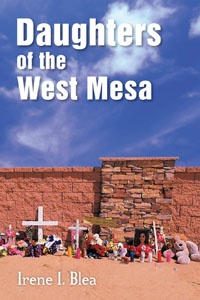
I wrote Daughters of the West Mesa, a very popular book. The book ends with one of the main characters sent to a drug rehabilitation facility. She was not the most lovable character and people love to hate her but frequently ask what happened to her. The next book will most likely be a sequel to Daughters of the West Mesa. I don’t have a title for it yet. Titles are difficult for me, and they are generally the last thing that is written.


KLWagoner150_2KL Wagoner loves creating worlds of fantasy and science fiction. Her current work in progress is The Last Bonekeeper fantasy trilogy and short stories in the same universe. A member of SouthWest Writers since 2006, Kat has worked as the organization’s secretary, newsletter editor, website manager, and author interview coordinator. Kat is also a veteran, a martial art student, and a grandmother. Visit her at klwagoner.com.


In Archive