Monthly Archives: June 2026

An Interview with Author Lesa Masten

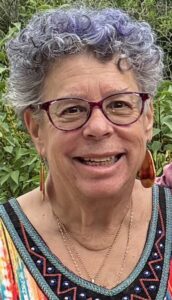
Author Lesa Masten embraces a love for writing as a power to teach, inspire, and shape positivity. Her first children’s book, Rana’s Perfect Place (Creative Solutionss, December 2024), takes us on a journey with Rana as she learns about self-awareness, self-identity, and empowerment. You’ll find Rana’s Perfect Place on Amazon and Barnes & Noble.


Who did you write the book for, and what topics does it touch on that make it a perfect fit for the classroom?
Rana’s Perfect Place was written for children, but the message applies to all people. This is made clear in the videos I’ve created on my social media platforms and website United Pen Press.com. The lesson is that we are all valuable on the inside. Our self-worth is always near to us. Everything we need is there.

What would you like readers to know about the story you tell in Rana’s Perfect Place?
Their power lives on the inside.

Who is your main character, and why will readers connect with her?
Rana is a 7-year-old Native American girl. Historically her people are not understood but they believe in who they are and live it against the odds.

Share the challenges this work posed for you.
Finding an honest publisher that follows through. I do have concerns as I have been disappointed with the publishing process. Financially I don’t know how I can make all of my projects happen with such high prices and little return. The two books I have pulled off have not turned out to make enough money for me to continue. I also would love to legally trademark my work but turns out it is really expensive. I am at a standstill with the marketing of my books, and although I have paid for some marketing, my publisher has failed to fulfill all of the promises made to market the books. I am really disappointed in the overall journey so far.

Do you have a favorite image or page spread from the book?
There are many milestone pages in the book, but I guess the last page would be the best choice because all the milestones are represented there. The last page embodies the mission complete and victory for Rana who is now reigning over the future.

Tell us how the book came together.
The idea for a picture book came to me in the early 90s. In September of 2021 I decided to develop the idea. It took a day from start to finish with edits to follow for a few weeks. In August 2024 I decided it was time to learn about publishing the book. I began searching online which led to me receiving some inquiry calls. I wanted to review what I had, so the first two calls I was not ready for, but the third call connected. From there I began putting in words for what I saw as the picture for each page; this took a few days to finish. I sent this manuscript to Creative Solutionss Publishing. They contacted me and reviewed the publishing contract with me. After sending a copy to me I agreed to the contract, and we got started on the book. First, we created the character and cover. The cover is based on two things: the gemstone mountains and the golden road. Second, I chose a Native American character because of their disparities, strength and their belief in themselves. As a Black Foot myself, I have always felt a connection to them. This process took about three weeks to complete. The pages took about four months to complete.

What was the most rewarding aspect of writing/publishing your first children’s book?
Because I started this business in the early 1990s, it feels good to finally get a project off the ground. I not only finished a book, but I also made my business an LLC. Rana’s Perfect Place is an important message for all people, young and old, as it places the importance of looking inside ourselves for everything, we need to feel good all the time. I was able to find this gemstone and put it in the book through the golden road that lives inside us all and costs nothing to tap into.

What did you learn from writing Rana’s Perfect Place that you can use in future projects?
Something that grew from this experience is knowing that I am a writer. I’ve always connected with expression of every kind. Writing is the direction that taps into all media forms. I love it and Rana’s Perfect Place has made this reality come alive. There are so many ideas that have grown from this one book that I’d like to continue to share with children and people who love Rana.

Why do you write?
The creation process is so fun for me because I am also a builder. Putting them together for me makes me smile and feel satisfied because I write to inspire and lift people up. This is how I build a community, ideas, love and wellness. There are so many experiences I would like to share with the world. Helpful things I have learned along the way. My story is not over, it’s just begun. I look forward to sharing everything I know with the world.


KLWagoner150_2KL Wagoner loves creating worlds of fantasy and science fiction. Her current work in progress is The Last Bonekeeper fantasy trilogy and short stories in the same universe. A member of SouthWest Writers since 2006, Kat has worked as the organization’s secretary, newsletter editor, website manager, and author interview coordinator. Kat is also a veteran, a martial art student, and a grandmother. Visit her at klwagoner.com.


Beware of scams and email “plagues” targeting writers

by Ruth E. Thaler-Carter
Chair, Libros of Enchantment, the 2026 SWW Book Fiesta


SouthWest Writers (SWW) member Chris Allen recently alerted colleagues to the current rash of email messages supposedly from famous authors, flattering recipients with fulsome compliments about our writing work.

I added a warning about similar messages purporting to be from book clubs and/or publicists, also full of compliments and including invitations to be featured by the clubs. The ones I’ve received usually address a different name and rave about books I haven’t written. The likelihood is that responding would result in pitches to pay for services that would never be provided.

As Chris noted, after receiving a phony message supposedly from author Donna Tartt, these scams are “a new plague on our times.”

Another scam targeting writers

These current attempts to separate writers from our money or reputations are in bad company with one that’s been around for at least 10 years and continues to pop up: the overpayment-by-counterfeit-check scam. It’s usually targeted more at freelance writers than book authors. That one involves an appealing offer from someone who supposedly has atraxia, and asks the recipient to write an article that they will plan to present at a workshop or conference. The sender provides a topic, sometimes a detailed description or outline, and a rate of 95¢ to as much as $2 a word, which is a lot these days. One colleague in the Editorial Freelancers Association responded to such an offer by turning it down and received a higher per-word fee in reply (which he luckily didn’t accept). The scammer sends a payment, often by FedEx; makes increasingly urgent requests for it to be deposited; then says “Oops, we overpaid” and asks for the “difference” to be returned. The payment turns out to be counterfeit and the writer is stuck for the original amount, returned funds, and any fees for checks that bounce because of the failed deposit.

I know about this one from personal experience, having almost fallen for it several years ago: On the Basics: Scams are always with us.

Identifying scams

Most of these scams are easy to identify as such. They offer unusually generous payment terms, use the wrong name for the recipient, go way overboard with praise for the book or work mentioned in the message, credit the recipient for books we haven’t written, etc. in general, if it looks too good to be true, it isn’t.

The bottom line

There isn’t much we can do to fend off these messages; as long as we have visibility in social media or our own websites, which is essential in the modern world, we can be found and targeted. If you receive one apparently from a well-known author and aren’t sure if it’s for real, you can do what Chris has done: Contact the agent for the author supposedly praising your work to see if the message was actually from that author. (The answer will be no.)

If you receive an offer to be featured in a book club, you might be able to verify that it exists — but the scammer may have hijacked the name of an actual club. It’s usually safe to assume that such offers are not real.

Cara Jones, agent for Donna Tartt, suggested blocking and reporting such messages. The problem with that is the senders are often bots that don’t know or care about being blocked; they just move on to the next potential victim, often using new sender eddresses once they’ve gained money from responses to the first one. Responding to such messages simply confirms that they have reached a live email address and opens the door to further messages and scams.

There also doesn’t seem to be anywhere to report these messages. The Federal Communications Commission (FCC) does have a way to report spam, but doesn’t seem to be able to do anything about it. The best protection is to be alert and aware of potential scams and delete, delete, delete.

Vetting contacts

The rash of scams targeting writers raises another question: How do we verify whether an agent, editor, or publisher is legitimate? Colleagues and organizations like SWW are one of the best ways to check on something or someone.

Keep in mind that agents, editors, marketers, and publishers rarely contact writers; we contact them. If you receive a message from someone purporting to be in such a role, do some research even before replying.
One source of information about agents is Writer’s Digest magazine, which has regular columns about agents looking for new clients. Writer Beware is an excellent, long-standing resource for tracking scams and vetting publishers and editors. Organizations like ACES: The Society for Copy Editing and the National Association of Independent Writers & Editors (NAIWE) and the Editorial Freelancers Association (EFA) are good ways to find editors, proofreaders, indexers, and other providers of publishing services (with the caveat that neither NAIWE nor the EFA vets or certifies members; ACES has a certificate program in conjunction with the Poynter Institute).

As SWW member Chris Allen said, “With luck, as more people learn about and are prepared to deal with the false flattery of these emails, we can slow them down.” In the meantime, stay alert; ask colleagues about iffy messages; and remember to delete, delete, delete.

Resources

Writer Beware, https://writerbeware.blog/

Blog posts by Ruth Thaler-Carter:
https://americaneditor.wordpress.com/2020/05/11/on-the-basics-scams-are-always-with-us/
https://americaneditor.wordpress.com/2025/12/15/on-the-basics-yet-more-scams/
https://americaneditor.wordpress.com/?s=Scams

Information from the Authors Guild, courtesy of Cara Jones:
https://writersguild.org.uk/scams/
https://authorsguild.org/resource/publishing-scam-alerts/

Associations:
NAIWE, www.naiwe.com
EFA, www.the-efa.org
ACES, https://aceseditors.org/


Ruth “I can write about anything!”® Thaler-Carter (www.writerruth.com) writes, edits and proofreads projects in the arts, business, communications, diversity, education, publishing, gardening, law, PR and more. She wrote/published “Get Paid to Write! Getting Started as a Freelance Writer” and owns the An American Editor blog, where she tracks scams targeting communicators.


Interview Update 2026: Rose Marie Kern


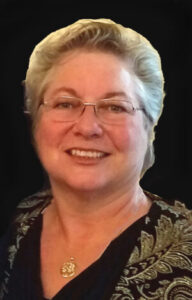
Rose Marie Kern is a retired air traffic control FSS specialist and an award-winning author, as well as a speaker and teacher, Master Gardener and solar chef, and an active member of SouthWest Writers (SWW). She has published several nonfiction books, over 1,000 articles on various topics, plus short fiction and poetry. And as part of her volunteer work for SWW, Rose often wears editor and formatting hats to help produce the organization’s annual anthologies.

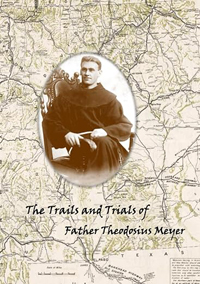
In 2025 she edited and published The Trails and Trials of Father Theodosius Meyer, a memoir written by family member Fr. Theodosius who, for almost forty years, “strove to understand a wide diversity of cultures and languages in order to provide spiritual guidance to remote Catholic missions” in early 20th century New Mexico. You’ll find Rose on her SWW author page and her Amazon author store. Read more about Rose’s work in her 2017, 2019, and 2020 interviews for SouthWest Writers.


What would you like readers to know about Father Theodosius Meyer and the memoir he wrote?
Frank Joseph Meyer was born in 1882 in an Indiana farmhouse. His Dad taught him a myriad of skills a man of that era would need: carpentry, growing crops, fishing, and hunting. The family was deeply religious and Frank began thinking about becoming a priest from a young age. His father died when he was 15 years old, so he became “The Man” of the family. But his mother and uncle knew he truly wanted to devote himself to the church, so when his younger brother, Leo, came of age, he took over the farm and Frank was encouraged to join the Seminary.

In the Catholic tradition, when someone enters the Novitiate for training, they take on a new name to signify their commitment to God. When Frank put on the Franciscan robes, he became Father Theodosius. You never know where the church will eventually send you, or what your duties will include, but after he was ordained into the priesthood, Fr. Theodosius was sent to a place he’d never heard of, very far away from the rolling cornfields of Indiana.

In July of 1914, Fr. Theo entered service in the newly minted state of New Mexico. The memoir he wrote goes beyond his personal observations and becomes a window into the history and cultures which molded this wild western territory into the unique blend we know today.

This project began as a preservation of your family’s history, put together for them to cherish into the future. Have you found a wider audience for the book beyond family?
Fr. Theo began his career here as a caring missionary, but over time his skills and knowledge advanced him into a larger socio-political arena. He served as a priest to over 25 communities in his time. He was Chaplain to the New Mexico State Senate, and the Chairman of the annual Santa Fe Fiesta. He was influential enough to have enemies, and was shot one day while fishing. He advocated for better roads in rural communities and was assigned the job of re-modeling the famous St. Francis Cathedral in Santa Fe.

What was the process like to get the original typewritten manuscript into a format you could use to publish the book?
The manuscript I was given by Fr. Theo’s nephew was typewritten with many things crossed out and others corrected by hand. It was impossible to simply scan into an editable .pdf. I opened up a blank document in MS Word and used the “Talk to Text” feature. Then I simply read the manuscript aloud from beginning to end. Once it was in print, I was able to manipulate the formatting.

Give us an example of the type of editing you did for the memoir.
Unsurprisingly, things have changed in the last hundred years, so there were portions of the text that needed explanations — which I provided as footnotes in the manuscript. Additionally, I did research about the era and the places Fr. Theo worked — so I’ve included photos of some of the churches he served, and photos of him which were provided by his nephew, Leo Meyer.

Were you surprised by any aspect of the project as it unfolded? Did it meet your expectations?
There were many surprises as I married Fr. Theo’s insights to New Mexico history. He wrote articles for local newspapers, and was the subject of others. I was able to retrieve some of these on the internet and included them in the book.

Tell us more about how the book came together.
The original manuscript was handed to me by my mother’s cousin, Leo Meyer, during my visit to Indiana in 2024. Being an avid collector of family lore, Leo was able to provide me with many of the photos of Fr. Theo in the book. It took about a year to complete the project after I’d gathered the peripheral information I felt was needed, including verification of the dates Fr. Theo mentions concerning his career – this required contacting the Archdiocese of Santa Fe and Indianapolis. Once I had it all gathered, I determined the printing/distribution channels I wanted to use, the size of the book itself, the typeface/styles and the message I wanted to convey with the cover art.

What was the most surprising thing you discovered while reading the story or doing research for the book?
I work with many authors, including one who writes about scandalous women in the old west. Donna Pedace wrote about a wealthy, famous gambler, Dona Tules, who was purported to have been buried under “a church” in Santa Fe in 1852, but no one remembered where.

In 1939 the ceiling of the St. Francis Cathedral in Santa Fe began to crack, so the church called Fr. Theo in to look at it. He discovered that the large pillars holding up the roof were tilting. Over the next few years, he headed a workgroup to rip out the floor of the church and stabilize the ground below. In the process they found 30 unmarked coffins buried underneath. Turns out the cathedral had been built on the site of an older church, and it was common practice in the past for wealthy patrons to be buried under the floor of churches. These coffins were dug up and reburied in the cemetery. There is nothing specifically indicating that one of these was Dona Tules, but it was interesting how working on this book brought the possibility into my imagination.

What was your favorite part of putting this project together?
The look of delight on the faces of my mother and her cousin, Leo, when I handed them the final manuscript. Obviously, I’ve also gifted copies to the historical museums of all the towns and churches Fr. Theo worked for — and am delighted by their responses.

Your writing takes many forms — fiction and nonfiction, essays, articles, short stories, memoir — as well as poetry. Is there one form you’re drawn to the most when you write or read?
I’m addicted to “words” in just about any form, I’m personally most comfortable with writing essays, short stories and non-fiction articles. I love reading novels, primarily sci-fi/fantasy, mysteries, and historical fiction.


KLWagoner150_2KL Wagoner loves creating worlds of fantasy and science fiction. Her current work in progress is The Last Bonekeeper fantasy trilogy and short stories in the same universe. A member of SouthWest Writers since 2006, Kat has worked as the organization’s secretary, newsletter editor, website manager, and author interview coordinator. Kat is also a veteran, a martial art student, and a grandmother. Visit her at klwagoner.com.


Author Update: Lynne Sebastian

Lynne Sebastian is a retired archaeologist and published nonfiction author turned storyteller. Her 2025 book, The House of Ravens: An Archaeological Reminiscence, follows “a small team of archaeologists camped in a remote part of the Navajo Indian Reservation” and “sensitively and realistically portrays the human story of a field crew as it is intertwined with the archaeological story being revealed.” You’ll find Lynne on her SWW author page, on Facebook, and her Amazon author store. Read more about Lynne’s work in her 2023 interview for SouthWest Writers.


What would you like readers to know about the story you tell in The House of Ravens?
I would like them to know that it is true. It is an accurate reflection of archaeological fieldwork as it was in the early 1980s. As with many other professions, technological changes caused major shifts in how archaeology was done in the late 20th century, but The House of Ravens captures the last years of archaeology carried out in remote field camps. I would also say that, if any of the readers ever thought that they would have loved to be an archaeologist, this story will either convince them that they were right or that they were very wrong.

What challenges did this work pose for you?
You mean besides trying to dredge up my memories of this great adventure that happened more than 40 years ago? I guess I would say it was trying to be very careful about how I portrayed my colleagues. This was a real project and a relatively well-known one in New Mexico archaeology. There is a 600+ page report. There is no hiding who was on the Navajo Mine Archaeological Project crew. This is why I changed some characters into composites and introduced one fictional one. And I changed all the names, except mine and my husband’s, to protect both the innocent and the guilty.

You describe the book as a lightly fictionalized account. Could it also be considered creative nonfiction? What parts of the real story did you keep and which did you fictionalize?
Yes, I would say that this could be considered creative nonfiction. The archaeological excavation techniques and discoveries are described as they were. Field camp life is as it was. Virtually all of the events are true. Some of the characters in the book are real people; others are composites of field archaeologists that I knew at the time. And the dogs are all real.

Tell us about the journey from inspiration to completed book.
I would have to say that the inspiration for this book was the same as the inspiration for my first novel One Last Cowboy Song. When I finally finished that one and Rose Kern did her magic thing to turn it into an actual, physical book, I was so burned out on writing that I told the members of my critique group that it was like when I finished my PhD dissertation — I couldn’t even write a grocery list because I didn’t have any words left in me. And they said, “You’re an archaeologist, but you’ve never given us any stories about archaeology. Why don’t you write about that?” So, I wrote an exciting short story about experiencing a dangerous flashflood while living in a tent in a field camp in the middle of nowhere in northwestern New Mexico. And they said, “Oh, this is a good story but why were you digging sites out there and weren’t there any dogs in this field camp? You should write about them. And what about…? And what about…? And soon, I realized I was writing another book-length work, and I had started writing in the middle of the story, which I really don’t recommend. Worse yet, this was exactly how the critique group nudged me into writing Cowboy Song when I just intended to write a nice short story. I should have stayed away from those people.

What makes this book unique in the memoir/creative nonfiction market?
I guess I would say the big selling point is that it’s about archaeology, and most people love that. But even more, it is about real archaeology, not the Indiana Jones, “I’m looking for the golden idol or the Ark of the Covenant or some other great treasurer hunter fixation” kind. This is about being able to literally reach out and touch the existence of people who lived a thousand years ago. To understand how they built lives and homes for themselves and their families in a harsh and unyielding environment. There are those moments — finding a child’s toy left behind on the floor of a house, placing your hand in a handprint in the ancient mud plaster of an ancient wall, encountering evidence of a tragedy that struck a family long ages ago — that leave you changed as a person. This is what I’ve tried to convey in this book.

Any “Oh, wow!” moments while doing research for The House of Ravens?
Well, I didn’t have to do a lot of research — there was that 600-page report of the project and its results sitting on the bookshelf behind my desk. Any facts or figures that my brain couldn’t dredge up were waiting for me in the pages of that tome.

What was your favorite part of putting the project together?
All the memories. My husband and I were only a couple of years into this long voyage that we have undertaken. We were digging some really good sites, recovering precious knowledge about the past before those sites were destroyed by a strip mine. We were working with good people. And we were young enough to stand working outside and living in a tent in subfreezing weather.

Why did you choose The House of Ravens as the main title of the book? If choosing the title or sub-title was a long process, tell us about that journey.
The title was easy; the cover was hard. The name that we gave the big site that my crew dug part of during the project was “Raven House.” And “House of Ravens” was just a slightly cooler sounding rendition of that name.

For the cover, I wanted a rendering of the dramatic setting of the site. I tried two different artists, and neither of them could envision the image that was so clear in my mind. The third artist (who coincidentally is the daughter of one of the men who worked on the project) couldn’t see it either, but she created such an extraordinarily beautiful alternative that I said, “What the heck, let’s go with that!” And it was a very wise decision.

What did you learn from writing/publishing The House of Ravens that will help with future projects?
Hopefully, I learned what I failed to learn from the first book — if you are going to write a book-length work, start at the beginning. Do not be lured into expanding a short story that will appear as a chapter in the middle or, worse yet, near the end of the book. It really screws up your ability to keep the timeline straight, especially if you are a writer like me who struggles a bit with the timeline under the best of circumstances.

What writing projects are you working on now?
I am writing a prequel to One Last Cowboy Song, and for once, I’ve actually started at the beginning of the book!

Is there anything else you’d like readers to know?
If you are a writer, join a critique group. Even if they lead you down the primrose path to expanding a short story into a novel, that novel will be so much better for their wise counsel.


KLWagoner150_2KL Wagoner loves creating worlds of fantasy and science fiction. Her current work in progress is The Last Bonekeeper fantasy trilogy and short stories in the same universe. A member of SouthWest Writers since 2006, Kat has worked as the organization’s secretary, newsletter editor, website manager, and author interview coordinator. Kat is also a veteran, a martial art student, and a grandmother. Visit her at klwagoner.com.


An Interview with Author Jo Donahue

Author Jo Donahue (aka Dorajane Grummer) is a retired nurse turned author of romance, suspense, and cozy mysteries. Her 2025 novel, Murder in the Wind (Volume 1 of The Writers Club Mysteries), takes readers to an annual retreat with a group of writers, a killer hiding among them, and a hurricane trapping them all in a Victorian house where “the most dangerous thing might not be the hurricane, but the secrets carried on its winds.” Look for Jo on her website JoDonahue.com, on Instagram, and her Amazon author store.
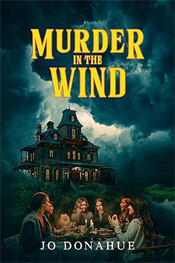

What is your elevator pitch for Murder in the Wind?
Murder in the Wind is a mystery about a mystery writer whose retreat takes a deadly turn. Marilyn Peters and her dog, Peppers, arrive at the Wine and Whine Writers annual retreat expecting a quiet gathering, but instead they find a mysterious diary, a looming hurricane, and the chilling realization that a killer is among them. At the heart of the story is one urgent question: can Marilyn uncover the truth before the murderer strikes again?

What challenges did this work pose for you?
When I write a book, I usually begin with the first chapter, then the last, and only after that do I create the outline. That helps me shape the story, so it builds naturally toward the ending I have in mind. The challenge with this book was finding the right balance between revealing information a little at a time and keeping the pace and suspense strong enough to pull the reader forward.

Peppers played an especially important role in making that balance work. Whenever the story became too intense, he brought in a moment of lightness that helped ease the tension without taking away from the mystery. He was not there simply for charm, though he certainly brings plenty of that. He also helps move the story forward and, in his own small but memorable way, proves to be quite the little hero.

How did you go from the premise/story idea to a mystery plot with clues and suspects?
I belong to several romance writers’ groups, but I realized early on that I am not a romance writer. My sons like to tease me that I have been a widow too long to remember how all that works. The idea for this story really began during a sprint group, when one of the members had just moved to Alabama and talked about how different hurricanes were from the droughts of California. Since we had all agreed to meet once a year, the idea started to grow from there.

The setting came together quickly: an older house, a hurricane, and a group of writers gathering each year. From there, all I had to do was build the mystery. Because I work from detailed outlines, usually 12 to 20 pages long, it was easier to place the red herrings and shape the suspense, even if I moved a few of them around to improve the flow. The characters, a lively group of writers, were inspired by a composite of people from my different sprint groups. That makes them feel familiar, and even a little recognizable.

Share a little about your main point of view character and why you chose her to tell the story.
Marilyn Peters is a mystery writer, which made her a natural choice to tell this story. Because she is used to building plots and planting clues, she is especially well suited to facing a mystery of her own. Everywhere she turns, she finds herself in situations that feel as if they came straight out of one of her books, except this time she is the one living the story. Having created red herrings on the page, she now must sort through them in real life and decide what is true. Peppers, her little dog, helps guide her back when she loses the trail, moving the investigation forward while also bringing warmth and heart to the story.

What is the main setting? Why is this place and time important to the story and the characters?
When I get bogged down as a writer, I often turn to a bit of comic relief. While I was writing this story, I had been watching The Ghost and Mrs. Muir and The Munsters, and I ended up blending those two houses in my imagination to create the setting. The result was an old Victorian house on a beach in Alabama, where I used to live—a setting that felt dark, atmospheric, and perfect for mystery.

The story would not have been as mysterious or compelling if I had set it in a modern house in Sacramento. I wanted the sense of unease to begin the moment Marilyn arrived at the bed-and-breakfast and realized it was nothing like the brochure. As the storm built outside and the house went into lockdown for the hurricane, the suspense grew even stronger because the characters could not leave. They were trapped and forced to find the killer before becoming victims themselves.

Tell us more about the book and how it came together.
Most of my stories are set in places I have lived before. My late husband was a hospital administrator, and our family moved about every three years. Before each move, I would immerse myself and the children in the history of the place we were going, and over the years I filled notebooks with descriptions and details. Now all that research is paying off.

I have always loved being on the beach just before a storm. The force of nature and the clean, fresh air have always drawn me in, and that atmosphere found its way into this book. As a new author, it took me two years to write it, and my poor sprint friends had to listen to plenty of my frustrations along the way. What I learned is that drafting is only part of the process—the real story often comes together during editing. I am grateful my group encouraged me to develop style sheets and story bibles, because without them, this book might never have been finished.

The cover was a challenge too. I worked with a Ukrainian cover designer, and because they were not familiar with the story—and were creating it while their country was at war—it took some extra collaboration to get it exactly right. Still, they were wonderful to work with and kept refining it until we were both happy with the result. One of the ways I motivate myself is by ordering the cover as soon as I have written the first and last chapters and completed the outline. I then set it as the background on my computer screen, so I see it every day. That image helps keep me focused and moving the story forward.

What was your favorite part of putting this project together?
Of course, the best part is writing “The End,” but outlining is a close second. Most of my sprint group are pantsers, and I still do not understand how that works. I am very organized and like to know where I am going before I start writing. A detailed outline keeps the story on track and makes the drafting process much smoother. That said, I can still change direction if something is not working, but I need that sense of structure. That comes from my many years as a nurse. Right now, I have six books outlined and ready to go, and I usually create the outline as soon as a story idea comes to me.

You began your fiction writing career later in life. What did your mature self bring to the writing table that your younger self never could have?
Up until about six years ago, I was busy living life. I had an active nursing career, raised three children, and sometimes I am not sure whether I was raising them, or whether they were raising me. Our family moved often, my children were nine years apart, and I stayed deeply involved in clubs and school activities. What I did not realize at the time was that all those experiences were quietly preparing me to become a writer.

I had always written in small ways, through little stories, diary entries, and personal reflections, but never with real seriousness until I began preparing for my doctorate. That was when writing became essential. I had always thought I could write well, but when I got my first paper back as a doctoral student and saw every page covered in red marks, I quickly realized how much I still had to learn. It had been twenty years since I had been in school, and I knew it was time to buckle down.

Now I carry all those years with me into my work. I have a storehouse of settings, the history of places, and characters inspired by people I have met along the way. I also bring the ability to look back at my mistakes and share those experiences honestly, so others know they are not alone in making them. In that sense, I think life has made my writing more human, and a little more compassionate too.

What inspired you to become a writer? When did you consider yourself a writer?
My father was a writer who created beautiful, warm stories and poems, and for a long time I never imagined I could do the same. Then, after attending a writing class, I went to work the next day and told my co-worker, Chuck, that I thought I might write a romance, and not just any romance, but a historical western romance, since I grew up in Oklahoma. He laughed and teased me about it all day, not in a mean way, but certainly enough to stir my competitive side. By the end of the day, I had decided I was going to write that book if only to prove him wrong.

I joined my local romance writers’ group, and with their patience and encouragement, I wrote the book, published it, and dedicated it to Chuck. He still gives me a hard time, but he does not laugh anymore. Even so, I did not fully think of myself as a writer until my short stories were chosen for the Hearts through History anthologies. That was the moment I felt I had truly found my place. At the same time, that first book also taught me something important: I am not really a romance writer. What I love most are stories filled with action, adventure, suspense, and mystery, especially those centered on strong women characters. Even now, I am writing first for myself, because I have so many stories I want to share.

What writing projects are you working on now?
I have several writing projects in the works right now. The first book in my Donna Thornberry series, Cherokee Cypher, will be published this month (June 2026). It follows a retired police detective who uncovers hidden clues in a quilt carried by the Cherokee people along the Trail of Tears from Georgia to Oklahoma. The story has a treasure-hunt feel, with caves in northeastern Oklahoma near Grand Lake adding to the adventure. Of course, it is also another murder mystery, since I do seem to kill off quite a few people in my books. Donna is a strong female character who knits while piecing together the clues.

My next book, Kabul Running, has been drafted and is now in the editing stage. It tells the story of a young graduate nurse who visits her diplomatic parents and becomes caught up in the evacuation of the United States from Kabul, Afghanistan. From there, she is swept into a high-stakes journey involving recovery from a car bombing, an effort to clear her mother’s name after she is accused of being a spy, and even the possibility of love along the way. It is full of adventure, kidnappings, and murder.

I also have another drafted book that is ready for editing, Miscalculated Love. It is a romance set partly in Los Angeles and partly on a wide-beam boat traveling through the canals of England.

Is there anything else you would like readers to know?
I think the clue to writing is to find out what you really like to write. Writing to impress or writing just to sell books is really difficult. I write my stories because I like these kinds of stories. I am always glad when others write to me and tell me that they like a story or ask questions about my stories. It is important to study your craft. Does it mean that I follow what others say, or write perfectly? No, you take what helps you and discard the rest. There is no perfect writer. Stop striving to be perfect and just tell your story.
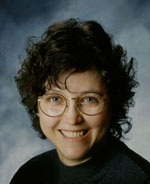

KLWagoner150_2KL Wagoner loves creating worlds of fantasy and science fiction. Her current work in progress is The Last Bonekeeper fantasy trilogy and short stories in the same universe. A member of SouthWest Writers since 2006, Kat has worked as the organization’s secretary, newsletter editor, website manager, and author interview coordinator. Kat is also a veteran, a martial art student, and a grandmother. Visit her at klwagoner.com.




An Interview with Author Richard Chavez

Author Richard Chavez is a former Marine who retired from a 35-year career in Air Traffic Control. His debut novel, Hijo Del Barrio: Son of the Barrio (Palmetto Publishing, January 2026), depicts “a young Hispanic’s life in the barrio” and offers a “hard-hitting description of Marines and the atrocities and agony that they experienced in the Vietnam War.” Look for Rick on his SouthWest Writers’ author page. You’ll find Hijo Del Barrio on Amazon, Barnes & Noble, and Bookshop.


What is at the heart of the story you tell in Hijo Del Barrio? What do you hope readers will take away from it?
This is the story of a young Hispanic Marine that battles to survive in the jungles of Vietnam. His story is filled with flashbacks of his formative years in the barrio where he endured poverty, disappointment, racism and personal loss. It is also a story of the bond created when individuals face death on a daily basis and must depend on each other to survive.

I hope readers are given some insight into the life and experiences of young Hispanics during the timeframe of the Vietnam War and especially those that fought there. Hopefully readers will gain some perspective of the physical and mental suffering they endured while there, and as we all know, what they brought back.

What challenges did this work pose for you?
This is a work of fiction, but I wanted to use Marines that I knew as a basis for the characters in my novel. How to do this was a challenge. I also used personal experiences from growing up in a barrio as a background for my novel. It was a challenge to avoid replicating those experiences but to instead use them as a “template” for some of the flashbacks.

Who are your main characters? Why did you choose them to carry your story? And will those who know you recognize you in any of your characters?
The main character in this story is John Fuentes, the young Hispanic Marine the novel is based on. There are several other main characters that play a huge role in John’s life: Sharon, the woman, he loves; John’s son; John’s parents and siblings; Grayson, a Marine he relates to the most; Marinaro, a young Marine focused only on killing his enemy; Tafoya, a young Hispanic Marine who is haunted by the death that surrounds him. There are other characters, especially those Marines in his platoon, that John feels responsible for and struggles to keep alive. I chose these characters to emphasize the messages of my novel. People who know me will recognize some of those flashbacks.

What are a few of the main settings? Why are these settings important to the story and the characters?
The main setting is Vietnam. This is important because it is where John faces his greatest challenges, keeping himself alive and protecting his men. The other important setting is the barrio of his formative years that eventually led him to Vietnam.

Tell us more about the book and how it came together.
It has always been an ambition of mine to write a novel. That idea formulated over 30 years ago. The plot and characters came from my time in the Marine Corps and the Marines I served with. Many of those friends spent time in combat in that war. It was difficult for them but they related their experiences to me. In my book I attempted to capture how they must have felt, suffered and endured in a violent war. The “research” came from what those men related to me and the extensive reading I have done about Vietnam. As far as weapons and tactics, they come from my training in the Marine Corps. As far as the “language” in my novel, that’s the way Marines talk. For authenticity, I thought it was important to use that language, as crude as it might be to some readers.

Were you surprised by the outcome of the project or did it meet your expectations?
I was surprised at how long it took to get to the final “stage,” getting it published. I’m glad I never gave up and finally got there. However, it was not a surprise that I would complete the book, I knew I would someday finish it!

What was the most rewarding aspect of putting together Hijo Del Barrio?
The most rewarding aspect is that I hope I did honor and respect to those men that fought in that War. Another rewarding aspect of putting together Hijo Del Barrio was finally holding a hard copy in my hand, knowing that I wrote it and people would be reading it!

You began your fiction writing career later in life. What did your mature self bring to the writing table that your younger self never could have?
As I grew older my direction for the novel changed from just being a story of a Hispanic Marine in Vietnam. I started focusing more on his emotions and the events in his life that made him who he was.

When did you know you wanted to be a writer?
I have always enjoyed creative writing. However, in the past my writing was more of a technical nature related to the work I did. Writing a novel was always an ambition.

Knowing what you know now, what would you do differently if you started your writing/publishing career today?
What I would do differently is to complete my novel sooner.

What genre do you enjoy reading the most? What’s on your to-read pile?
Any kind of history has always been high on my to-read pile. I am always intrigued by historical people that impacted history.

What writing projects are you working on now?
I am working on my next novel, Es Tiempo. In a sense it is a sequel to Hijo Del Barrio. However, it jumps ahead about 40 years from the end of Hijo Del Barrio.

Is there anything else you’d like readers to know?
Please check my author page on SouthWest Writers for upcoming events and book signings.


KLWagoner150_2KL Wagoner loves creating worlds of fantasy and science fiction. Her current work in progress is The Last Bonekeeper fantasy trilogy and short stories in the same universe. A member of SouthWest Writers since 2006, Kat has worked as the organization’s secretary, newsletter editor, website manager, and author interview coordinator. Kat is also a veteran, a martial art student, and a grandmother. Visit her at klwagoner.com.


In Archive