Sherri L. Burr is a graduate of Mount Holyoke College, Princeton University’s School of Public and International Affairs, and the Yale Law School. Following her retirement from a decades-long career as a full-time law professor, she became the Dickason Chair and Regents Professor of Law Emerita at the University of New Mexico. Sherri is the author or co-author of over thirty nonfiction books, one of which, Complicated Lives: Free Blacks in Virginia, 1619-1865 (Carolina Academic Press, 2019), was nominated for the Pulitzer Prize in History. Her first memoir, Living with Nephew: How I Got Voted the Meanest Parent in the World (January 2026), is “a hilarious and weighty adventure” in which “Sherri and Nephew challenge and educate each other. And in the process, each becomes a better person.” Look for Sherri on SherriBurr.com, RMK Publications, and Facebook. You’ll find her books at Amazon, Barnes & Noble, Bookworks, and Collected Works. To learn about Sherri’s previous work, go to her 2019 interview for SouthWest Writers.
 What would you like readers to know about the story you tell in Living with Nephew?
I want readers to know that they too have experiences that can be turned into literature. Life brings everyone unique experiences that are simultaneously universal. All individuals can transfer lived experiences into essays or a book with the appropriate training and enthusiasm.
What challenges did this work pose for you? Were you surprised by any aspect of the project as it unfolded or did it meet your expectations?
When I first started writing Living with Nephew in 2004 it was after Terrance had returned to California after living with me for two years in New Mexico. Simply put, I missed him. Drafting the book permitted me to relive the experience and decipher its meaning.
One challenge came from crafting events and scenes into a complete storyline. Moreover, the early draft was only 37,000 words and it needed to be at least 50,000. Different challenges came from potential publishers who wanted me to fictionalize parts of the story to make myself nicer. I decided to avoid turning what I believed to be a meaningful story into fiction. Instead, I changed the subtitle from “Humorous Parenting Tales” to “How I Got Voted the Meanest Parent in the World.” This way people picking up the book would not expect a different type of protagonist from the one I present in the narrative.
The project met my expectations, and I felt gratified by the positive responses and reviews the book received.
When did you know you wanted to write the memoir? What prompted the push to begin?
I began writing essays about my life when I was a teenager and still have my first rejection letter that I received as a 16 year old. I particularly like writing about relatives whom I consider interesting. My pistol-packing grandmother, who loved telling stories about the Old South to her grandchildren, shows up frequently in my writing and appears in Living with Nephew.
What prompted me to finish the book was my mother’s terminal diagnosis that immediately prompted Terrance to fly from California to help me take care of her during the last month of her life. We were once again living together and planned her services together. Living with Nephew was the book my mother most wanted to see published. She thought it would be turned into a film and win Academy Awards.
Tell us more about the book.
Living with Nephew is a double fish out-of-water story about a Yale Law School educated, globe-trotting aunt who takes on a 12-year-old Hip Hop generation kid who was failing sixth grade while remaining popular with girls. The aunt uses contracts to motivate her nephew to focus on learning.
The book turned out to be a 22-year project from crafting the first chapter to publication. I brought chapters to various critique groups for review. I workshopped the book during memoir classes at the Taos School of Writing and University of New Mexico Continuing Education. A frequent response from reviewers was to share my interior thoughts. That was hard for me, but I did it.
Early on, I secured blurbs from well-known authors and an agent who was unable to sell the book. I then submitted the book directly to university and small presses. After hearing SouthWest Writers members rave about RMK Publishers, I decided to work with Rose, the owner and a superb book designer. The cover was fashioned by the owner of Images by Rosa using pictures by Denise Tessier and myself, along with text that I supplied. It took over two dozen drafts before we approved the cover design.
Did you ever worry you were revealing too much about yourself or your family through your writing?
Absolutely. As a lawyer and historian, I write from a distance with very little of me in my over 30 published books. For Living with Nephew, the most challenging part was that I had to reveal what I was thinking and painful family events. To give the book more depth, I braided into chapters what happened to my family when I was 12 years old. In the end, I found the writing of my story to be healing.
If choosing the book title/subtitle was a long process, tell us about that journey.
Living with Nephew has always been the title, and that never changed. The subtitle migrated from “Humorous Parenting Tales” to “How I Got Voted the Meanest Parent in the World” after some publishers wanted me to fictionalize parts of the book to make myself nicer. One publisher suggested turning the book into Young Adult, but that would have made the title “Living with Auntie.” I rejected that idea because I would have had to re-write the book from my nephew’s perspective and turn it into a work of fiction. Also with the Young Adult genre, the parenting figures are incompetent or absent. My story did not fit squarely within the genre.
What was your favorite part of putting this project together?
The laughter. Reliving, writing, and reading the scenes with my nephew still makes me laugh out loud.
What did you learn from writing/publishing Living with Nephew that you can use in future projects?
The importance of pacing. Several people commented on how much they love the short chapters and that they kept them turning the pages to find out what happens next. This is a technique deployed by numerous successful novelists, such as Lee and Andrew Child, David Baldacci, and James Patterson. I loved Patterson’s book with Viola Davis, called Judge Stone. It was so well paced that I finished it in less than two days.
What genre do you enjoy reading the most?
I aim to read at least two books a week and over 104 books a year. I read across genres and do not have an absolute favorite. I read history, memoirs and biographies, thrillers, mysteries, and novels. All these genres can depict elements of the “fish-out-of-water” tale. Think Cinderella. There is no story when she is cleaning her stepmother’s attic. It’s only when Cinderella shows up at the palace ball that her life elevates to a realm that readers want to experience as she meets her prince.
One of my favorite examples of the “fish-out-of-water” tale is Diana Galbadon’s Outlander series. Her protagonist Claire Randall is a former English World War II army nurse on vacation in Scotland with her academic husband when she travels through the stones back two hundred years. Claire is out of her element in space and time. As a reader and viewer of the television series I enjoyed experiencing Claire navigating the environment of Scotland in 1743 and finding the love of her life whom she marries becoming a multi-century bigamist.
What are your strengths as a writer?
The ability to craft sentences that others like reading, and the gift of humor.
What writing projects are you working on now?
I am researching and writing a book with the working title Generational Impact: The Divergent Enslavement Legacies of George and Martha Washington. This project flows out of having been a 2024-2025 Fellow at the George Washington Presidential Library to examine what happened to Mount Vernon’s enslaved population after George and Martha died. He arranged to free his bondsmen in his will and most of the enslaved population attached to Martha remained enslaved until after the Civil War. My challenge is to humanize the enslaved people who were previously regarded as “this species of property” by George.
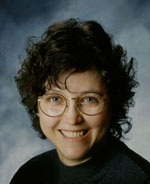 KL Wagoner loves creating worlds of fantasy and science fiction. Her current work in progress is The Last Bonekeeper fantasy trilogy and short stories in the same universe. A member of SouthWest Writers since 2006, Kat has worked as the organization’s secretary, newsletter editor, website manager, and author interview coordinator. Kat is also a veteran, a martial art student, and a grandmother. Visit her at klwagoner.com.

 Why did you write Catch a Twinkle, and who did you write it for?