
Gina Troisi decided to become a writer in third grade and went on to complete an MFA in creative nonfiction in 2009 through the University of Maine’s Stonecoast MFA Program. Since then, her stories and essays have been published in numerous literary journals and anthologies. The Angle of Flickering Light (Vine Leaves Press, April 2021) is her debut memoir that Domenica Ruta calls “a story of powerful recovery in the truest sense of the word, the journey of a woman who reclaims a sense of home in the sanctity of the self.” You’ll find Gina on her website at Gina-Troisi.com and on Facebook, Twitter, and Instagram.
 Why did you write The Angle of Flickering Light, and who did you write it for?
I didn’t initially set out to write a memoir, at least not at first. But in many ways, I’d been writing this book my entire life. Since I was a child, I have scribbled in notebooks and journals. I have escaped into art in order to make sense of the world around me—to process what I could not yet understand, and to make meaning of all that was beyond my control.
While working on my MFA, I began crafting and shaping stand-alone essays, and after I completed school, I began publishing them. However, many of the essays had overlapping themes and subject matter, and featured the same characters again and again. It became all too apparent that these essays wanted to come together as a book—that there was a larger story, an overarching narrative that wanted to be told.
At first, I was writing the material for myself—to question and make sense of my experiences, to assess my choices and find lessons from my mistakes, and to think deeply about circumstance. But as I began to shape the book, I saw that my personal experiences were clearly universal. This book speaks to the societal expectations of both girls and women; it addresses body image and eating disorders and trying to fill the roles that have been established for us by society. It explores the way we attempt to find our places in our families and in the world. But it is also meant for anyone who has ever struggled with addiction, or who has loved someone afflicted by addiction. Ultimately, I wrote this book for those who have experienced great despair or loneliness or confusion—anyone who has tried desperately to find their way out.
When readers turn the last page in the book, what do you hope they’ll take away from it?
Hope, and the power of perseverance. I think we are at such a place in time where people are hungry for something to believe in—perhaps it has always been this way, but the pandemic seems to have brought this even closer to the surface. I think, as humans, we want to recognize meaning and purpose in our lives, and we want to find fulfillment. My great wish is that readers will walk away from the book inspired and encouraged, with the belief that no matter how difficult things may become, they have the ability to emerge from their darkest moments, and to find their own truths.
What unique challenges did this work pose for you?
The structure was tricky. Since I had originally compiled the book as a collection of essays, in order to convert it to a memoir, I had to think deeply about the narrative throughline—the heart of the story I wanted to tell. I had to think, in the most traditional sense, of a beginning, middle and end, even though I was compiling essays that covered a huge span of time, and that sometimes varied in tone, voice, and style. And this took much experimentation, much study of other works, and of course much trial and error.
When did you know you wanted to write your memoir? What prompted the push to begin the project?
At first, I was very resistant to the idea of writing a memoir. I began writing much of this material as fiction, but of course it was completely autobiographical. When I entered my MFA Program in 2007, the mentors there encouraged me to focus on creative nonfiction, since it was clearly what I was writing, so I decided to be open to that, and to explore.
I was not only resistant to sharing such vulnerable parts of myself with the world, but I was sensitive to the negative connotation the word memoir can have, how some believe the genre is indulgent, or that it has oversaturated the market. For this particular project, it was as if the genre chose me rather than the other way around. In 2011, a couple of years after I had generated much of the material that eventually became this book, I went on a three-week writing retreat to Western Massachusetts, and I immersed myself in putting together a book-length work. At that time, I was thinking of the book as an essay collection rather than a memoir. But in 2013, I received interest in the book from a small university-run press, and the editor there encouraged me to transition the book from an essay collection to a memoir, so I began to do so.
Tell us a bit about your journey to publication.
In 2012, I began sending the original version of the manuscript to agents and small presses and book contests. In 2013, when I received interest from the small press, I restructured the book so it became a memoir with a narrative arc. In the end, the press passed, so I was left with two versions of the book: an essay collection and a not-quite-complete memoir version. In 2014, I attended the River Teeth Nonfiction Conference in Ashland, Ohio, and I had a consultation with the fabulous author, Sonya Huber, who was kind enough to read both versions of the book. What I wanted to hear is that one version of the manuscript was working over the other, but in the end, she and I agreed that the final version should contain elements of both of the working manuscripts. I knew I needed to gain some distance and clarity in order to see the work with fresh eyes, so I put the book away for almost five years, and continued to work on other projects.
In late 2018, I decided it was time to return to the manuscript. I began exchanging work on a monthly basis with my good friend, who was working on his novel. For eight months, we exchanged pages religiously, and I continued to revise. I began to send the new and final version of the book out to agents and publishers again in late 2019, and I signed the contract with Vine Leaves Press in March of 2020.
How did you choose the title of the book?
The Angle of Flickering Light was originally a title of one of the stand-alone essays I published. It’s now part of a line in the book, describing an intimate moment in the narrative, and I like that it’s an image, but also that it speaks to the idea of finding flickers of light in darkness. The book is largely about hope and resilience, and about searching for light within, rather than outside of oneself.
What was the most rewarding aspect of putting this project together?
I think that the most rewarding aspect was finishing—actually bringing the project to completion after such a long journey down this path. And the finality of signing the contract was exhilarating.
During the process of writing your memoir, it must have been difficult to re-live your experiences. If you found yourself scared of what you were writing or of revealing too much about yourself, how did you move past that fear and continue writing?
This is such an important question, and I think memoirists must all go through this fear at some point. I never felt as if I was reliving my experiences consciously, but when I was deep into the work, I would find myself dreaming about the events in the book, so it very much existed on a subconscious level. And I certainly lost many hours of sleep worrying about what others might think once it was published.
But I find that many of the lessons I discover about writing are also the lessons I discover about life. Stories often help people to feel less alone. So in that sense, I began to accept that the book was for others; it was no longer about me. A brilliant writer and friend told me, “You had a story, and now it’s a gift. It’s not yours anymore,” and I think that was such a sage thing to say. We have to honor the work we are creating by letting it become whatever it is meant to be, and we also need to let go of control when it comes to other people’s reactions. There is so much in this life that we cannot control, and I think the same can be said about art.
Do you prefer the creating, editing or researching aspect of a writing project?
I enjoy them all, but I particularly love the act of creating. I feel such freedom and possibility when beginning a new project. I love knowing that I can go in any direction I am compelled to go, and that I can experiment fully because I’ll be able to revise and re-envision the work later on. I love the timelessness of the beginning of a project—the way I can become fixated and lose myself to the point where it seems nothing else exists, at least for a short time.
What writing projects are you working on now?
I am working on two novels-in-stories. One of the collections revolves around a particular restaurant in a small New Hampshire mill town. It explores economic and class issues, and consists of a cast of characters who thread a larger narrative about the way it’s possible to find and form surrogate families.
The other collection takes place in a coastal Massachusetts town, and is focused on the lives of a married couple who lose their only child in a tragic car accident just after he turns eighteen. It poses questions about parenthood and loss and perseverance, and it sifts through what ultimately sustains us during times when it seems that nothing will.
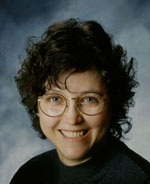 KL Wagoner (writing as Cate Macabe) is the author of This New Mountain: a memoir of AJ Jackson, private investigator, repossessor, and grandmother. Kathy posts to a speculative fiction blog at klwagoner.com and writes about memoir at ThisNewMountain.com.
