
Blog Archives

An Interview with Author Christie Palmer Lowrance

Christie Palmer Lowrance has used her passion for writing in her many careers including as editor, biographer and historian, speaker and instructor, and journalist, as well as author of two non-fiction books. Her most recent release is The Last Heath Hen: An Extinction Story (May 2024), written for young readers to show them the complexity of conservation and the importance of valuing all wildlife. You’ll find Christie on ChristieLowrance.com, on Facebook and LinkedIn. Look for The Last Heath Hen on Amazon and Barnes & Noble.


When readers turn the last page in the book, what do you hope they’ll take away from it?
I hope adult readers feel they have just had the great good fortune to discover a children’s book they MUST share with friends and colleagues running conservation programs or are Middle Grade classroom teachers — and I hope children feel the beginning of a call to stewardship of wildlife and nature.

What was the spark that got you started researching and writing about the plight of the Heath Hen?
The Heath Hen extinction story is well known to US conservationists. They strongly believe it is uniquely important because, as US Fish and Wildlife Service historian Mark Madison told me, the Heath Hen may be the only North American avian extinction of which the last individual in the wild was documented. I believed it was a worthy and valuable story for children.

In Nature’s Ambassador: The Legacy of Thornton W. Burgess (Schiffer, 2013), my biography of naturalist and children’s author Thornton Burgess, I devote seven pages to describing his role in the Heath Hen story. Burgess actually held briefly the last bird of its kind as it was being banded. My website site ChristieLowrance.com has video footage and more detail. My LinkedIn page has a link to my April 22, 2025 Earth Day presentation at US Fish and Wildlife center in West Virginia with actual film footage. It’s very exciting, knowing what you are watching, and it was exciting knowing what I was writing about.

What unique challenges did this work pose for you?
Working with an illustrator and a book designer were firsts for me as a writer. Never wanted to self-publish, also a first. However, 2024 was Thornton Burgess’ 150th birthday anniversary, so if I was going to publish the material as a book, it was necessary to get it done quickly.

The technical challenges of publishing would have been, for me as a researcher/writer, insurmountable without the incredibly talented book designer Rose Kern (who obviously needs no SWW introduction!). Ingram Spark has our book in hardcover, but they were impossible to work with for paperback. Amazon has it in hardcover, paperback and e-book.

It was a challenge to tell this extinction story for children without being grim or scary. I thought and thought and my ending finally came to me as a whole idea. Many people have said the ending is perfect. It soothes me and I hope it soothes readers young or old.

How did the book come together?
The text had been written shortly after my Burgess biography was published in 2013, figured I would use it sometime as a magazine article or maybe a book. Found the illustrator at a Sandwich Arts Alliance meet-and-greet of writers and illustrators, my very lucky day! Rose and I worked hard on all aspects of book layout and design. Couldn’t have done it, literally, without her expertise and ideas.

I knew the basic Heath Hen story well because as it was part of my research for the biography of Thornton Burgess. To flesh it out carefully and artistically, fact check, and create a narrative suitable for children took a year in all. The creation of the book with illustrations and design, in all maybe another year.

What was it like working with illustrator Michael Berndt? Do you have a favorite image or page spread from The Last Heath Hen?
Michael Berndt was a writer’s dream. I picked him because he could paint people, landscape and animals; he was effortless to work with: flexible, receptive, creative, supportive of the project. He knew nothing of Burgess or Heath Hens as he explained in his Illustrator Notes (which I asked him to write, to accompany my Author Notes, to explain our process). My PowerPoint presentations include many of his paintings, I admire them all but I so love the gorgeous cover illustration of the bird itself: so beautiful, so alone, expectant, alert, composed. A dessert plate with a painting of two game birds I bought on my 1968 honeymoon in Bermuda was a basis for the cover.

What was the most rewarding aspect of putting this project together?
I have been a professional writer for 50 years. My travel books, articles, etc. were to provide information. But this book has a bigger mission. It is intended to support the work of conservationists and teachers by giving them a teaching tool, a true, child-sized story of a small bird on a small island off Massachusetts, not dinosaurs millions of years ago. It is intended to help children understand extinction, a complex and increasingly common event in nature that we need to be fiercely attentive to. And as Burgess knew, children are the right and perfect audience to inspire.

What first inspired you to become a writer? When did you actually consider yourself a writer?
I simply love to write. Use of the written word has always made sense to me. It has always felt good. I wrote a story when I was 10, describing an old scary house up the street; seeing my thoughts down on a blank page felt so deeply satisfying. No one had required it of me, the idea and the words came from me, it was my child’s knowledge that had produced them. I think I was born feeling this way.

Being a Writer, however, that was a different matter. Even though I had literally hundreds and hundreds of bylines as a reporter for the Bath-Brunswick Times Record in Maine and the Cape Cod Times, I would never call myself “a Writer.” I wrote but that did not mean I was “a Writer.” I had to earn that title by some unknown internal standard. It was a matter of identity. After seeing my first major magazine article for Cape Cod Life magazine, probably 3,000 words, it started to change; as I wrote for regional and national magazines and publications, I became by my own standard a Writer. Over my career I’ve been an author, editor and marketing specialist, and taught writing at the University of Massachusetts Dartmouth and Cape Cod Community College. I love writing’s versatility.

Knowing what you know now, what would you do differently if you started your writing/publishing career today?
Nothing comes to mind. That said, it would be enormously helpful to be more tech savvy; when I started writing professionally, I used a manual typewriter and carbon paper and had a family and a household to care for.

Do I wish I had started writing books earlier? Sort of. But I was freelance writing, and every assignment was interesting, I was always learning. Also, I believe in the writing process. It’s a variation on “when the student is ready, the teacher appears.” With writers, it’s “When the writer is ready, the material appears.” So maybe I’m writing books when I’m ready to write books?

Do you prefer the creating or editing aspect of writing? How do you feel about research?
I love it all. I gave a talk a while ago for SouthWest Writers on “Finding the Story,” on the amazing and unexpected things a researcher comes across, deliberately and accidentally. Research is like free falling, you open up your mind, step forward and fall into it. Of course, I love the creating and the editing (who could stand being a writer if they didn’t). Editing is quite pleasant, creating is harder. I once edited two novels, 800 and 700 pages, for a non-native English-speaking writer gifted with narrative development but his use of idioms was constantly off, like a singer who is always flat. I wouldn’t have edited a third book.

What writing projects are you working on now?
I am writing a biography titled Ships and Shards: The Legacy of Dr. George F. Bass. It is tremendously important to me because it is a privilege and a massive challenge. Archaeologist George Bass, world renowned as “the Father of Underwater Archaeology” loved my Burgess biography and provided me with five years of interviews. I have amazing material to work with.

Is there anything else you’d like readers to know?
I don’t believe in writers block per se, but maybe it’s different with fiction and non-fiction? Don’t know. When things don’t come, I get up, go for a cup of coffee, a walk, anything to release my focus from the problem. Shifting my attention helps restore the clarity I need. That said, I do know what it feels like when your brain is tired and refuses to work. That happened with the Bass project I’m working on now, work started in 2015, and in 2019 I finally had to stop writing. I’d been working on biographies for 10 years. I took a break for two years (book not under contract) and when I returned, not only was I refreshed, but I had a stronger, seasoned, and more informed view of my subject. Lesson learned.

I’m working on Ships and Shards daily now and will be looking for an agent/publisher later this year.

…feel free to check out my website, which also soothes me.


KLWagoner150_2KL Wagoner loves creating worlds of fantasy and science fiction. Her current work in progress is The Last Bonekeeper fantasy trilogy and short stories in the same universe. A member of SouthWest Writers since 2006, Kat has worked as the organization’s secretary, newsletter editor, website manager, and author interview coordinator. Kat is also a veteran, a martial art student, and a grandmother. Visit her at klwagoner.com.


2024 New Releases for SWW Authors #4

David L. Harrison, R. M. Tembreull, Sequoia Rudolph, Heidi Marshall, and Gary Lucero are just a few examples of the genre-diverse membership of SouthWest Writers (SWW). Their releases couldn’t fit in the 2024 interview schedule, but look for 2025 interviews or updates for some of these authors.

A list of interviewed SWW authors with 2024 releases is included at the end of this post.


Children’s writer David L. Harrison authored, coauthored, or edited four books in 2024. The Fluency Development Lesson, Closing the Reading Gap (Benchmark Education, June 2024) — a must-have for elementary literacy educators — is a ready-to-implement set of 28 fluency development units organized into five knowledge strands.

Introduce poetry to students in the classroom and beyond with 40 Poems for 40 Weeks: Integrating Meaningful Poetry and Word Ladders into Grades 3–5 Literacy (Routledge; 1st edition, December 2024), an anthology of hand-chosen poems written by well-known, beloved poets.

Wild Brunch: Poems About How Creatures Eat (Charlesbridge, September 2024), a nonfiction poetry picture book collection for kids, invites young wildlife lovers to explore how and why animals eat what they do.

A Tree Is a Community (Books for a Better Earth) from Holiday House, October 2024. A tree is more than just a plant, but a whole ecosystem hiding in plain sight, on street corners and in backyards everywhere. Discover how one tree provides shelter, food, and clean air to a host of animals and insects.

Visit David on his website DavidLHarrison.com, his blog, and on Facebook. Look for his children’s books on all major retailers including Amazon.


Fractured State in the Blighted Earth (Atmosphere Press, September 2024) by R. M. Tembreull. Chaos, the Destroyer, has launched his most aggressive and expansive campaign yet. His objective: initiate the Great Cascade and bring about the Discordant on Earth. The eternal struggle between order and chaos is an inescapable condition of the universe. Caught in the middle is the delicate balance necessary for life to exist and prosper in our world. On Earth, the opposing sides in this timeless conflict are Earth Mother’s Natural Order and Chaos’s Force Corrupted.

You’ll find Raymund on his website TheBlightedEarth.com and Instagram. Look for his books on Amazon and Barnes & Noble.


In Time Out (September 2024) by Sequoia Rudolph. Where does a 45-year old Special Ed teacher go when her marriage finally slips through the cracks? Into a self-imposed time out in Paradise, of course. Cynthia Ferguson quickly learns that Paradise is not what it’s chalked up to be. Navigating a challenging school system, an evil principal, rambunctious students, and their fiery parents, Ms. Ferguson finds herself being burned by the real heat of Hawai’i. Hilarious, poignant, and provocative, this is a tale about a woman who takes chances, starts over, and finds out that the world can be yours when you step boldly out of your comfort zone.

You’ll find Sequoia on Medium and Amazon.


The Town That Lost Its Colors (September 2024) by Heidi Marshall. Princess Imogen has never spent a night away from the safety of her castle but, with her father the King on other business, she has no choice but to journey to a remote village and do her best to help the people solve a serious problem. Where have the town’s colors gone? Could someone really have taken them, and how? A story written in the tradition of fine tales of courage and respect, with modern themes of inclusion, forgiveness, and kindness. Illustrated by Adrienne Kinsella.

Look for The Town That Lost Its Colors on Amazon.


In Letting Go: poems of life and death (October 2024 ) by Gary Lucero. This collection of poems explores the travails of life, the inevitability of death, and a fantasy realm where nothing is black and white. It’s poetry that deals with aging, disappointment, war, suicide, grief, loss, and death. Its first chapter focuses on life, the second on death, and the third, on a fantasy world filled with flawed characters who inhabit a realm where the gods aid the nobility and ignore the poor, while the realm of the dead threatens them all.

The paperback is a deluxe print version that includes illustrations for each of the poems in the book.

You’ll find Gary on GaryLuceroWriter.com, Facebook, Instagram, and his Amazon author page.


SWW Author Interviews: 2024 Releases

Tim Amsden
Love Letter to Ramah

Michael Backus
The Heart is Meat

Rachel Bate
Hatch Chile Willie

Irene Blea
Dragonfly

E. Joe Brown
A Cowboy’s Fortune (Kelly Can Saga Book 2)

Gency Brown
A Right Fine Life

Mary Lou Dobbs
Badass Old White Woman: How to Flip the Script on Aging

Lynn Ellen Doxon
The Moonlight Cavalry

Robert D. Kidera
Burn Scars

Kendra Loring
The Saga of Henri Standing Bear

William Murray
Worn Out Saddles and Boot Leather

Jeff Otis
Raptor Lands: The Story of the Harrowing Return of the Dinosaurs

Léonie Rosenstiel
Protecting Mama: Surviving the Legal Guardianship Swamp


KLWagoner150_2KL Wagoner loves creating worlds of fantasy and science fiction. Her current work in progress is The Last Bonekeeper fantasy trilogy and short stories in the same universe. A member of SouthWest Writers since 2006, Kat has worked as the organization’s secretary, newsletter editor, website manager, and author interview coordinator. Kat is also a veteran, a martial art student, and a grandmother. Visit her at klwagoner.com.


Author Update: Shirley Raye Redmond

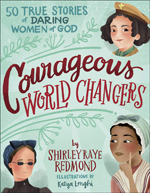
Award-winning author Shirley Raye Redmond has published romantic suspense and historical romance novels, over 450 articles, and nearly thirty nonfiction children’s books. Two of her children’s titles have sold more than 200,000 copies each. Her newest nonfiction release is Courageous World Changers: 50 True Stories of Daring Women of God (Harvest House Publishers, 2020). You’ll find Shirley Raye on several websites (ShirleyRayeRedmond.com, StitchesThruTime.blogspot, and WriteChildrensBook.com), as well as on Facebook. For more about her books, read SWW’s 2015 interview and visit her Amazon author page.

What is your elevator pitch for Courageous World Changers?
Faithful Christian women are salt and light in their communities. They all make a difference. But some have such a vibrant faith that—like a stone tossed into a pond— their influence ripples throughout the world. The fifty women included in this book fall into that category.

What unique challenges did this work pose for you?
Some of the women in the book, such as Florence Nightingale and Clara Barton, have been written about so many times already. Many readers, even kids, would suppose they know everything about those women. I wanted to find little known facts about their lives that would make readers say, “Wow, I had no idea she did such-and-such.”

Tells us how the book came together.
The Harvest House editors sparked the initial idea and let literary agents know they were looking for book proposals on the topic. My agent gave me the heads-up and told me to hustle because many other writers wanted to take on the project. I dropped everything to put together my list of 50 women and a couple of profile samples. I was delighted when the publisher made me an offer. I was given 16 weeks to turn in the completed manuscript.

What makes this book unique in the children’s market?
Well, there are many books about gutsy women and even several about spunky Christian women. But I think my list covers a wider ethnic diversity—Chinese, African American, Filipino, Romanian, Dutch, British, and others. I selected women as far back as Catherine of Siena (who was born in 1347) to contemporary women such as Joni Eareckson Tada, who actually wrote a lovely letter thanking me for including her in the book.

Did you discover anything surprising while doing research for Courageous World Changers?
Oh, lots of interesting things! For instance, I had no idea writer Flannery O’Connor made “doll clothes” for her pet chickens. Or that one of the child prostitutes rescued by Josephine Butler in England eventually was placed in the home of Antonia Keville, the daughter of a wealthy British family, who eventually became a midwife, took Holy Orders and became known as Sister Monica Joan—yes, the same Sister Monica Joan in Call the Midwife.

What was your favorite part of putting this project together?
I wanted to find quotations for each woman—something that revealed personality. For instance, on her deathbed, Katharina von Bora said, “I will stick to Christ like a burr to a topcoat.” I think that captures her spunky determination quite well. Harriet Beecher Stowe, while reflecting upon the enormous success of her novel Uncle Tom’s Cabin, said, “The power of fictitious writing, for good as well as for evil, is a thing which ought most seriously be reflected upon.”

What was your first reaction to seeing Katya Longhi’s cover and interior art?
I was delighted with the illustrations. Each portrait is colorful and friendly—I immediately noted all the smiles. And I love how Katya carries the artistic theme over onto the page of text. As the publisher arranged for all the illustrations, I did not know Katya nor was I familiar with her work. She lives in Italy, but we have since become “friends” on Facebook.

In your 2015 interview for SouthWest Writers, you said Patriots in Petticoats, Heroines of the American Revolution (Random House, 2004) was probably your favorite writing project. Courageous World Changers seems to be of a similar theme. What is it about these types of projects that draws you to them?
I love history and the thrill of the chase, digging up nuggets that others may overlook. It has proven to be a lucrative avenue of exploration for me as both of my first nonfiction titles for children were published by Random House and are still in print nearly twenty years later: Tentacles, Tales of the Giant Squid and Lewis & Clark: A Prairie Dog for the President—which became a Children’s Book of the Month club selection when it was first released.

What do beginning writers misunderstand about writing for children?
Many think writing for kids will be easy because the books are shorter. They don’t realize they still need a marketable story plot with character + action + conflict + climax + resolution. Even a nonfiction book like my Pigeon Hero! (Simon & Schuster), which is less than 600 words, still has a story arc.

Also, marketable books for children should tie-in to the school curriculum somehow. At least, that’s been my experience. Courageous World Changers is useful for teachers and librarians looking for something to use during Black History Month, Women’s History Month, Women in Science week, etc. When schools focus on a transportation unit in reading and social studies, teachers and librarians look for novels, picture books, and nonfiction titles about the Oregon Trail, trains, planes, and cars. I once had a lively picture book about Teddy Roosevelt’s reorganization of college football rejected because I’d aimed it at 5 to 8 year olds. The editor pointed out that young children seldom play football and elementary schools don’t sponsor football teams. Even successful fictional stories for kids often have a seasonal tie-in observed during the school year, such as Valentine’s Day or Halloween. When writing for adults, one doesn’t need to keep that sort of thing in mind.

KLWagoner150_2KL Wagoner (writing as Cate Macabe) is the author of This New Mountain: a memoir of AJ Jackson, private investigator, repossessor, and grandmother. Kathy posts to a speculative fiction blog at klwagoner.com and writes about memoir at ThisNewMountain.com.


In Archive