
Blog Archives

Author Update 2025: Zachry Wheeler

Zachry Wheeler is an award-winning science fiction author who has published over twenty books across four series. His newest release, Starship Eternity: A Sci-Fi Horror Short (January 2025), is the fifth addition to his Twisted Simulations series. Look for him on his website ZachryWheeler.com, his new YouTube channel, and his Amazon author page. For more about his writing, see his first interview for SouthWest Writers and his interview update.


Zachry, there’s a lot to catch up on in your world. You’ve taken a hiatus from writing to focus on photography. What lead up to that decision?
This is how I avoid burnout. I never shelve my creative drive, I just point it at something else until my batteries recharge. Photography has always served as a great counterweight, in that it scratches the creative itch while also forcing me to touch grass.

When you’re working on both writing and photography, do they share your time in equal measure?
Not at all. There is always a primary focus, otherwise the quality suffers. At the moment, I am delving deeper into photography while casually working on writing tasks. I still promote my books and develop new ideas, but without any goals or time pressure. For now, my brain is focused on what camera settings produce the best hummingbird photos.

As a creative, do you find one medium (writing or photography) more intimate than the other?
For me, writing is more intimate. I really enjoy the challenge of snapping good photos, but I’ve spent decades with my story characters and know them like family members.

What is the most rewarding aspect of both artistic endeavors?
In photography, it’s a perfect moment. You are constantly hunting for perfect weather, perfect lighting, and perfect timing. When you “get the shot,” it’s a fantastic feeling.

In writing, it’s a happy reader. When you put so much time and effort into creating, editing, and publishing a story, there is nothing more rewarding than a fan telling you why they loved it.

You’ve made big changes regarding your interaction with social media. According to your website, you’ve moved away from all platforms and you’re focusing more on your website, blog, and mailing list. You stated social media was “actively harming” your brand. Can you explain what you mean by “harming” and in what ways has changing focus helped your brand?
We all know that social media is catastrophic to mental health. In my opinion, trying to leverage it effectively is not worth the stress and reputational risk. Brands have done serious damage to themselves by posting the wrong things at the wrong times, no matter how innocent. It’s also a massive time sink that eats into valuable creative time.

In my own experience, I noticed that I was wasting too much effort chasing engagement. The resulting frustration would derail my process and cause me to rant in writing groups, which is never a good look. I realized that social media was more bane than boon, so I deleted all of my accounts and walked away. The resulting peace of mind was immeasurable. Many authors are waking up to the fact that you don’t need social media to be successful.

If I’m not mistaken, you spent some time as a script doctor. What was that experience like and are you still called upon from time to time to help?
I lucked into this role, which I found to be surreal yet enjoyable. Long story short, my novel Transient (Immortal Wake #1) got optioned for a feature film and landed in development for a time. That got my foot into the door and a few chance encounters resulted in some work as a script doctor. It’s different from writing the screenplay (which I have also done), in that you’re using your author skills to polish dialogue, fix structural errors, and find plot holes. It’s actually quite fun and engaging. I haven’t done much doctoring in recent years, but I’m always up for it when the producers need me.

What marketing techniques have been most helpful to you?
I spent many years in the marketing trenches, where I flushed piles of cash down the toilet. As with everything in advertising, some things work, most fail. I have found that the only surefire bet is BookBub. Their featured deals are very expensive and hard to get, but they offer the only guaranteed ROI in the game. It took me several years of patience and perseverance to get into their regular rotation. Now it’s the only service I use. I compiled my strategies into a marketing guide on my blog, which you can read here: https://zachrywheeler.com/an-authors-guide-to-marketing/

I’m seeing more and more authors put out short stories and novelettes in chapbook form. Has this been beneficial in gaining visibility for your work?
Very much so, and for many different reasons. First and foremost, it expands your readership net because the attention economy is a difficult nut to crack. People who read novels and people who read short stories are rarely the same. But, if they enjoy your writing and become fans, then they will cross over. In addition, shorts and novellas are much easier to produce and publish. It’s a great way to mitigate risk if you want to experiment with different styles or genres. Shorts are also great fodder for freebie promos and reader magnets.

What draws you to the dark side of literature?
I have always been a big horror fan, so it was only natural that it would creep into my writing. My first true horror title was The Bone Maiden, a prequel novella to the Immortal Wake book trilogy. I greatly enjoyed that writing process, which got me thinking about a new horror series. That became Twisted Simulations, a collection of short stories with sci-fi horror themes. This is another series that I have an abundance of ideas for, so I’m sure it will continue.

You have a tech noir series, Immortal Wake; a sci-fi comedy series, Max and the Multiverse; and a collection of chilling tales called Twisted Simulations, to name a few. All are diverse. Do you have a favorite?
I am proud of them all, but if I had to pick one, it would be Puki Horpocket Presents. This is a sci-fi comedy series that spun off from Max and the Multiverse. It’s about a famous journalist who profiles extraordinary beings in the cosmos. The stories are so much fun to write because I blend so many different styles. I use interview formats, first-person commentary, third-person narration, you name it. I definitely want to return to this series at some point because I have so many ideas for new tales.

What authors influenced your writing?
Douglas Adams has been my favorite author since childhood and his influence can be seen all over my works. Andy Weir is another big influence, as I greatly admire his ability to blend sharp humor with hard science. On the darker side, I have a wide range of influences, everyone from Max Brooks to George Orwell.

I always like to get an author’s take on critique groups: some can help, some can hinder. Do you work with a critique group or share your work with anyone prior to putting it out into the world?
Critique groups are double-edged swords. Good ones can elevate you to new heights. Bad ones can destroy your motivation or blind you to obvious issues. I have experienced both and it took a while to find what works best for me. I have a small group of trusted peers who serve as my beta team. The key is to find people who enjoy your work, but are willing to give you fair and honest feedback. Seems simple, but they are very hard to find. In my experience, most people are either pleasers (everything you do is great) or punishers (everything you do is crap). Sadly, fair is rare. And for the love of all that is good and holy, be receptive! A good critique group is worthless if you aren’t willing to heed the advice.

What’s on the horizon for you? Will you be adding to these series, or are there other series or standalones percolating that you can tell us about?
I honestly have no clue, but that’s only because I’m currently enjoying a hiatus. I have several new ideas and many works in progress, so who knows.

If you want to stay in the loop, the easiest way is to sign up for my newsletter. As a special gift, I will also send you a free limited edition eBook!


Su Lierz is a horror writer in the Land of Enchantment. Her short work can be found in anthologies and several publications including Grey Sparrow Journal and The Horror Zine. She lives in Corrales, New Mexico with her husband Dennis.


Author Updates: S.S. Bazinet & Zachry Wheeler

Sandy Bazinet (writing as S.S. Bazinet) and Zachry Wheeler both embrace the “what if” potential of speculative fiction. Sandy has published ten books since 2012, between four paranormal fantasy series and two standalone books (one self-help and one picture book for children). Since the publication of Zachry’s debut novel Transient in 2016, he has released two books in his new Max and the Multiverse series. He’s also been busy acquiring a screenwriting credit for Transient which is in development as a major motion picture. (This update focuses on each author’s newest work, but links to their first interviews regarding earlier books are included at the bottom of each section.)


S.S. Bazinet’s newest series, The Madonna Diaries, begins with Dying Takes it Out of You (2015) which follows a gifted artist, Dory, who fights a disease slowly stripping him of his humanity. Brother’s Blood (2016) is the fourth book in The Vampire Reclamation Project. What happens when vampire blood mixes with angelic blood? This book continues Arel’s journey as he seeks to overcome the darkness of his curse and find true fulfillment. A Vampire in Heaven (2016) is book two in Sandy’s Sentenced to Heaven series about the misadventure’s of Alan who is forced to enter heaven after being thrown out of hell and banned from every world in the cosmos.


What sparked the story idea for The Madonna Diaries: Dying Takes It Out of You?
I liked the idea of trying a new genre—and again, inspiration took over. A character named Dory showed up and a dystopian story unfolded. The strange part was I started writing the story from a third person point of view (POV). Then, without meaning to, I began writing from a first person POV. I tried to go back to third person, but as writers know our characters often dictate the how and why of a story. As I continued to write, I realized how rewarding the first person POV can be. I connected more intimately with what my character was feeling. He took me into the depths of his heart as an artist.

You released ten books in a span of four years. How did you keep on track to reach your goals?
My secret is I’m in love with the process of writing. But I didn’t always feel that way. For years, I wanted to write, and I’d start a story, but I was too analytical. The stories never went anywhere. It was only after I surrendered to a sense of just having fun that the inspiration kicked in. Now, writing is almost effortless. However, I do believe in editing and making sure the story is told in the best way possible. I’ve learned that inspiration and learning the “nuts and bolts” of writing are both extremely important. That’s where an organization like SouthWest Writers (SWW) comes in. I’ve learned so much by attending their meetings and workshops.

Book five of The Vampire Reclamation Project (Tainted Blood) is set to release in 2018. After so many books, do the characters still surprise you as their stories unfold?
Yes, the characters are always changing and growing. My main guy, Arel, started off as a recluse. That quickly changed. The stories are full of his interactions with people he considers his new family. Now in book five Arel thinks he’s ready for a relationship. Yikes! As I write the current story, I feel like a concerned mother who’s wishing Arel didn’t have to trip over every landmine in the road. But that’s kind of his nature. Thankfully, his friends and angelic buddies are always there to help him find his way.

Do you have a message or a theme that recurs in your writing?
When I look at all my stories, the overall theme seems to revolve around flawed characters and their journeys back to their authentic selves. For example, Alan from the Sentenced to Heaven series starts off feeling completely justified in being egocentric. When he finds out he has the capacity to care about others, he’s appalled. For Alan, caring really hurts! But once his Grinch heart opens, he’s stuck with the condition. His only option is to go forward. So like it or not, my characters are forced to expand their capacity to relate to others and themselves in a more meaningful, heartfelt way.

Your newest book in the Sentenced to Heaven series, A Vampire in Heaven, takes a lighter look at the supernatural. Tell us about the book and how it came together (and are you having fun writing this series)?
First of all, I don’t decide what to write about. A story, like a baby in a basket, simply shows up on the doorstep of my mind. That’s how I started writing the Sentenced to Heaven series. I opened some mental door and there was Alan, a rebellious soul who was such a one-of-a-kind rascal that not even hell would have him. Luckily, Raphael, an angel who ran a part of heaven, took Alan in when nobody else would have him. But for Alan the thought of living forever in heaven was the worst of punishments. Again, the story is told from a first person POV. And yes, I love writing about Alan’s adventures. He’s very funny. He’s always fighting the system, but he’s learning how to care about others along the way. He’s also made friends. They include some of heaven’s pet population. A dog name Nippy sees Alan’s good side and becomes a trusted companion. I’m currently working on the third book in the series.

How has your writing style changed since you wrote your first novel?
Hopefully I’m better able to create an emotional atmosphere the reader can relate to. I was very pleased by a recent review of The Madonna Diaries: Dying Takes It Out of You. The reviewer said, “Wow, from the get-go, this story grabs you by the throat.” Another person called it a “beautiful, heart grabbing book!”

What writing projects are you working on now?
I’m in the final editing stages of book five of The Vampire Reclamation Project. Hopefully, book three of the Sentenced to Heaven series will come out in 2018. But I’m most excited about a new romance series I’m writing! It’s called Open Wide My Heart, and I can’t help but spend most of my days working on book one. If all goes well, it might come out around Valentine’s Day 2018.

Read more about Sandy and her writing in her first interview for SWW. You’ll find her on her website S.S.Bazinet.com and her Amazon author page.


After Zachry Wheeler gave readers “a re-imagination of vampire lore through the lens of science fiction” in his first novel Transient (2016), he offers us a humorous look at a teenage gamer’s dull life turned bizarre in Max and the Multiverse (2017). Book two in the series, Max and the Snoodlecock (2017), continues the misadventures of Max and his band of quirky space jockeys.


What is a Snoodlecock, and how did you come up with the name? And while you’re at it, define multiverse.
Ha! I get that question a lot these days. Without giving too much away, a snoodlecock is a colorful bird-like creature. Max, the protagonist, described it as a “disco chicken.” The name arose from several tedious brainstorming sessions. I wanted it to be unique, funny, weird, and compelling all at the same time. That’s why I dedicated this book to my wife: For Evelyn, who suffered through every dumb name before snoodlecock.

The multiverse is another name for parallel universes, the theory that our universe is one of an infinite number of concurrent universes with infinite variations.

What sparked the story idea for Max and the Multiverse?
Whenever a story revolves around parallel universes, there is always a reason to interact with them, often in the form of a mission (think Stargate and Doctor Who). But, I got this nutty idea of someone being forced to interact with the multiverse, some random nobody who bumbles through new realities against their will. The story sprung from there.

Tell us about your main protagonist and his sidekick Ross.
From the first book’s cover blurb: “Max is a teenage gamer with an exceptionally dull life. That is, until a bizarre accident leaves him with the ability to shift between parallel universes, but only when he falls asleep. Every time he wakes, he confronts a distressing new reality, be it talking cats or 80s pop culture.” That sums him up pretty well. Ross is his orange tabby cat, more of an indifferent prick than trusty sidekick. He speaks with a British accent and berates Max every chance he gets.

Transient is dark and serious; your Max series is the opposite. Does writing humor come naturally to you? What’s the hardest thing about weaving humor into a story?
I feel comfortable writing on both sides of the spectrum, but I enjoy humor more. It comes naturally to a point because I have always loved stand-up comedy. The structure of a good joke has always fascinated me, so I spent a lot of time studying it. The hardest aspect of writing humor is maintaining subtlety. I’ve seen authors go for a big punchline, only to botch the delivery and leave the reader confused. You need to trust your readers to derive the humor from the narrative. Don’t just tell them a joke.

In your last interview for SWW, you said the most difficult aspect of world building for Transient was the creation of a believable sociopolitical environment. What about world building for Max?
The world building for Max is sooooo much easier than Transient. Writing a story inside the multiverse gives me the freedom to do anything. I can throw the protagonist into any “what if” scenario because the multiverse validates it at a conceptual baseline. The humor comes from how he handles the shift.

What is the best compliment you’ve received as an author?
Douglas Adams has been my favorite author since childhood. I even dedicated Max and the Multiverse to his memory. One of my readers, also a big Adams’ fan, told me he loved Max more than The Hitchhiker’s Guide to the Galaxy. I nearly cried.

Looking back to the beginning of your writing career, what do you know now that you wish you’d known then?
I wish I had known that writing is the easy part. Ninety percent of authorship has little to do with writing. It’s editing, publishing, networking, marketing, all that tedious stuff. It’s much like leveling up in gaming. Once you grind it out, then the game begins.

If time and money weren’t a concern (or if you possessed a magic ring), what skill would you like to learn or acquire?
One of my longstanding dreams is to be an astrophysicist. I have been a space junkie for as long as I can remember. If I could wave a magic wand, I would join the ranks of Carl Sagan and Neil deGrasse Tyson.

What do beginning writers misunderstand about telling a story?
Many think that world building is a step, not a process. One of the hallmarks of poor writing is info-loading the beginning of a story. Skilled writers know how to dole out info during the narrative, usually near its relevance.

Do you have a favorite how-to writing book you’d like to recommend?
Stephen King’s On Writing. That one book gave me more practical knowledge and insight than every other book, blog, and article combined.

What writing projects are you working on now?
Now that Max and the Snoodlecock is out, and with the Transient movie in development, I’m switching all of my focus to the Transient sequel. I have the entire series mapped out, just need to hunker down and get to work.

Find out more about Zachry and his writing in part one and part two of his first SWW interview, and connect with him on his website ZachryWheeler.com.
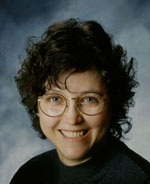

KLWagoner150_2KL Wagoner (writing as Cate Macabe) is the author of This New Mountain: a memoir of AJ Jackson, private investigator, repossessor, and grandmother. She has a new speculative fiction blog at klwagoner.com and writes about memoir at ThisNewMountain.com.


An Interview with Author Zachry Wheeler, Part 1

Science fiction novelist Zachry Wheeler is a web applications developer and self-professed nerd who also writes nonfiction articles for BrewChief.com and HerringtonPost.com. You’ll find him on his website ZachryWheeler.com and at SFF conferences throughout the Southwestern United States (see his website’s Events page). Transient, published in 2016, is his debut novel.


What is your elevator pitch for Transient?
I got a lot of pitch practice at the Albuquerque Comic Con this year. It sold a lot of books, so I guess I’m doing something right:

“You can think of Transient as a re-imagination of vampire lore through the lens of science fiction. Now here’s the fun part. I took the widely abused trope of a young adult vampire romance … and shoved it face-first through the meat grinder of post-apocalyptic science fiction. The story is dark, sinister, and morally ambiguous. Consider it the anti-Twilight.”

Tell us about your main character in the book.
From the rear cover blurb: “Jonas is a young transient deep undercover in downtown Seattle. He lives underground, works at night, and drinks his daily blood rations, just like any normal eternal. He is a model spy, but also an apostate among extremists, torn between ideologies (as well as lovers) from either side.” That sums him up quite well and foreshadows his struggles as the protagonist. You can think of him as a young idealist trying to navigate a world of extreme moralities. He’s an easy character to connect with because, at a baseline, we all just want to get along.

How did Transient come together?
Transient took 10 years to publish. When I wrote the first draft, I wasn’t a writer at all. I was barely a reader. I just had an interesting idea that I put down on paper. And boy was it terrible. It was a study in how not to write. I used every crutch and cliché you could imagine, but I didn’t know any better. Once I learned how bad it was, I set it aside and went on to other things with the assumption I sucked at writing.

I credit beer for teaching me how to write (totally serious). I started a craft beer review site (BrewChief.com) shortly after I wrote the first draft of Transient. I had no intentions of becoming a writer at that point; I just wanted to talk about the wonders of the craft beer movement. A thousand articles later, I realized my writing had improved dramatically. I decided to revisit the Transient manuscript and was surprised by how much I had learned. Not only could I see what was wrong, I knew how to fix it.

What is your writing process like?
Stephen King said, “Amateurs sit and wait for inspiration, the rest of us just get up and go to work.” That’s me in a nutshell. I’m a very motivated person, a task master who is uncomfortable with idle time. I write every day, and I never have trouble getting started. The only x-factor is topic. Writer’s block is not something I experience. I’ll get hung up on an idea from time to time, but instead of faltering, I just shift focus onto another writing avenue while it simmers. I own and operate several online writing ventures, including BrewChief.com and HerringtonPost.com. So if I get stuck on something in a novel, I’ll go write an article or blog post to reset my brain.

What comes first for you before you write: a character, a scene, a story idea?
Definitely the story idea. Every novel I write can be boiled down to a “what if” question. I refuse to outline my stories, so the characters and plot emerge organically.

Do you have a message or a theme that recurs in your work?
I don’t construct messages or themes because I never want to come across as preachy. I let the settings and the characters do that for me, no matter how ambiguous (I downright loathe some of my characters). However, I do employ some recurring elements. I enjoy taking jabs at religion, both critically and comically. I also like to explore misanthropic personalities.

What are the hardest kinds of scenes for you to write, and what do you do to get over this hurdle?
Sex scenes are quite vexing, mostly because everyone’s sexuality is so different. The things I enjoy will turn off someone else, and vice versa. To get around it, I just set up the foreplay and kill the scene, leaving the reader to their own imagination.

Who are your favorite authors, and what do you admire most about their writing?
My favorite author by far is Douglas Adams. I adore his entire catalogue. When writing humor, there are a few ways to do it right and a million ways to do it wrong. Adams had an unapologetic wit and a storytelling voice that hooked you from the first sentence. I dedicated my latest work to his memory (a science fiction comedy entitled Max and the Multiverse).

When did you first consider yourself a writer?
To be honest, I still don’t. I consider myself a compulsive dabbler.

What writing project are you working on now?
I just released my latest, a young adult science fiction novel titled Max and the Multiverse. It was so much fun to write that I immediately launched into the sequel. From the back cover of Max and the Multiverse: “Max is a teenage gamer with an exceptionally dull life. That is, until a bizarre accident leaves him with the ability to shift between parallel universes, but only when he falls asleep… Determined to escape his mundane existence, Max and his cyborg cat venture into the black, only to entangle themselves in an intergalactic conflict. A ruthless criminal overlord, a corrupt planetary system, an ornery walrus, a secret society of super nerds, and a pair of plucky orange lesbians round out this crazy, clumsy adventure.”

To learn more about Zack and his writing, go to Part 2 of this interview.


KLWagoner150_2KL Wagoner (writing as Cate Macabe) is the author of This New Mountain: a memoir of AJ Jackson, private investigator, repossessor, and grandmother. She has a new speculative fiction blog at klwagoner.com and writes about memoir at ThisNewMountain.com.


In Archive