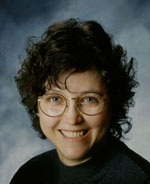
Since starting his first book during the Covid-19 pandemic, retired engineer A. Michael Hibner has published three historical fiction novels inspired by family history. His newest release, The Gangs of Santa Fe (February 2025), follows Nazario Alarid as he struggles to walk the straight and narrow in nineteenth century New Mexico. Look for all of Mike’s books on Amazon: The Gangs of Santa Fe on this page and his first two novels here.
What would you like readers to know about The Gangs of Santa Fe?
The Gangs of Santa Fe is historical fiction—well, that’s not quite correct. Fictionalized history might be a better definition. Every named character in the book actually existed. Every incident in the book actually happened. The fictionalization is the relationships between the characters. For instance, Billy the Kid was in Santa Fe when Nazario Alarid was about age five. Whether they actually met is unknown, to my knowledge.
What unique challenges did this work pose for you?
When writing historical fiction, the facts must be correct, or else someone will call you on it. So, dates and places must be accurate. Finding pictures can also be daunting. It took a lot of searching to find a photograph of the Capitol Cafe. I was ready to send the book to be published when I finally found the postcard photo I used in the book on Ebay. I paid twenty bucks for it and was happy to get it!
Share a little about your main characters and why you chose them to carry your story. Will those who know you recognize you in any of your characters?
Nazario Alarid is the main character and the narrator. I think that he must have been a good person that got put into bad situations and handled them the best he could. Had Ramon Garcia been a good father and husband, Nazario could have lived with that, but Ramon was not a good person. He would have, sooner or later, harmed his wife and daughter, and Nazario could not let that happen. When given the facts about his son, Ramon Garcia’s dad bore witness in Nazario’s defense, and that was a fact, not fiction.
Same with Camilo Martinez, a bad person that was going to kill Nazario sooner or later. Nazario was just quicker. This was a time when “he needed killing” was a viable defense in a murder trial. Had Nazario gone to trial for the murder of Camilo he most likely would have been found not guilty, but the fear was that if he had been convicted he would have been executed. Who knows?
I can think of no character in The Gangs of Santa Fe that would be mistaken for me. My other books, sure, I am probably the protagonist. But in those books the protagonist, while based on someone who actually lived, is in a fictional situation. Thus, probably based on my Dad, my brothers, my uncles, and, certainly, me. In The Gangs of Santa Fe, every character is a depiction of someone that was discussed in the Santa Fe New Mexican or some other newspaper or tome.
Why did you choose New Mexico as the setting for the book? How does the setting impact the story and the characters?
Santa Fe is where the actual story happened. I can’t think of any other place where the story could have taken place.
Tell us more about how the book came together.
After writing three historical novels based on ancestors in my family tree, I thought I’d see if I could find anyone interesting in my wife’s family tree. I did. Doing a search on one of her great-uncles, Nazario Alarid, I found that he might not have been of good character. In fact, I found a blog run by Qwen Kubberness (she does criminal genealogies) that had documentation concerning the murder of Camilo Martinez by Nazario. Since it was likely that any murder that took place in the late 1800s would be covered in the Santa Fe New Mexican, I bought access to their archives. A query on the name Alarid between 1885 and 1925 yielded over one hundred hits. I was on my way!
I don’t keep track of the time it takes to put out a book. I would guess, from talking to other writers, that I am quick about it. I think six books in six years would bear that out, though some authors turn out two books a year. I do my own editing. By the time I’m done with a book, I’ve probably read it four or five times. I read it through once with Microsoft Word’s read function. That catches a lot of things. When I’m happy with it, I send it to my son, Rhian, and my wife, Priscilla, and they read and check it for errors that I’ve missed. Then Rhian turns it into book format acceptable by Amazon Publishing. I don’t have an agent or editor other than that.
The book cover is significant to me. The book covers for my first two books have been public domain paintings that have some significance to the book. For this book I knew I was unlikely to find a suitable painting, so I looked at photographs that might work. They had to be at least seventy years old to be public domain. The front and back cover is a continuous photo of Saint Michaels College and the San Miguel Church. The college building no longer exists (the college does, but not at this location) but San Miguel does. I looked at the photo several times before I noticed the two children sitting on a wall in the foreground. “Hmm,” I thought. “Could this be Nazario and Rebeca walking home from school?” It would have been where they would have walked. The photo was taken in 1885 as I recall. Nazario was born in November of 1876, so would have been eight or nine when the photo was taken, Rebecca two years later, so, it’s possible. Wouldn’t that be amazing?
Bernardino Sena is buried under the floor of the San Miguel Church. He is an ancestor of Gregorio Sena, the blacksmith and a classmate of Nazario in the book. Bernardino is also an ancestor of mine, my mother being a Sena from Santa Rosa. All Sena’s, most likely, at least in New Mexico, are descendants of Bernardino.
Any “Oh, wow!” moments while doing research for the book?
I think the biggest “Oh, wow!” for The Gangs of Santa Fe was, “Oh, wow! They actually hanged my wife’s great-great uncle!!!”
What was your favorite part of putting this project together?
I love this book and story. I grew up in Española, New Mexico and Rio Arriba County. Thus, I can picture these people in my head. My books that took place in Europe are tougher as I’ve never been there, other than walking the towns and countries in Google Maps. But I’ve physically walked the streets and plaza of Santa Fe hundreds of times. I love Santa Fe, but wouldn’t want to live there full time.
If choosing the book title was a long process, tell us about that journey.
I thought early on that the book was about the confrontations between political parties and thus had some similarities with the book and movie The Gangs of New York. I’ve not seen that movie nor read the book. Maybe I should, now. But it seemed to me that the Democrats and Republicans in the book were a bunch of hoodlums—sometimes I think they still are.
What sort of decisions did you make about including or portraying historical figures or events in order for your book to work?
I think Thomas Benton Catron comes off better in this book than he actually was. But then, this book is not about the Santa Fe Ring (powerful politicians, attorneys, and land speculators in New Mexico from 1865 until 1912). I seem to recall a conversation that took place many years ago, and might have been with my father-in-law about his grandfather in which he told me that his grandfather—I assume it was Canuto Alarid—had been a member of the Santa Fe Ring. But this book is not about the Santa Fe Ring, but rather the Alarid family.
What first inspired you to become a writer?
I think I’ve always been a writer. English composition was the one class that I could count on to make an ‘A’ throughout my scholastic endeavors. When Covid struck, I decided that I would put my writing prowess to good use and write a book. I’m now working on my sixth book since 2019.
What is it about historical fiction that draws you to write in that genre?
I don’t have enough imagination to make up characters and plots, so I must use actual people and facts, and can then make up the story to fit them. I don’t think I’ve ever written any pure fiction. Maybe in high school or college classes.
What writing projects are you working on now?
I’m finishing the story of my Dad’s Navy career. A couple of years ago I sent to the National Archives for his equivalent DD-214 form. For non-military, that’s the form you get after discharge from the military. My Dad talked little about his time in the Navy during WWII. I found that he had been a Torpedoman’s Mate on submarines for the two years he was in. He had been drafted into the Navy, which was not common, but did happen. When I found out he was on USS Redfish, a Balao class submarine, I went back to the National Archives and found the boat’s logs for the year that Redfish spent in the Pacific in waters surrounding Japan and the Philippines. What a year it was! I was born a little less than nine months after my Dad left for bootcamp in San Diego—I now tell my younger siblings that they are lucky that I was not an only child!
Is there anything else you’d like readers to know?
You are never too old to write. I started in my late seventies. I sometimes wish I had started when I was younger, but truth be told, I would never have had the patience to do research at the local library, so I had to wait for the internet. Google, Wikipedia, and MyHeritage are my research library. And I do a lot of research. I suspect I have three or four hours, maybe more, of research for every hour of writing.
KL Wagoner loves creating worlds of fantasy and science fiction. Her current work in progress is The Last Bonekeeper fantasy trilogy and short stories in the same universe. A member of SouthWest Writers since 2006, Kat has worked as the organization’s secretary, newsletter editor, website manager, and author interview coordinator. Kat is also a veteran, a martial art student, and a grandmother. Visit her at klwagoner.com.