Blog Archives

An Interview with Author Wanda W. Jerome

Award-winning poet and nonfiction author Wanda W. Jerome has been channeling spiritual messages in fixed and free poetry and prose since 2022. Her newest memoir in verse, After the Journey: Returning the Heart to Home (The Journey Book Series 2, September 2025), bids readers to “experience her heartful transition back from a spiritual journey to her home place.” Look for Wanda on her website Awakeful.life and on Youtube at @MagicalMorningMoments and @Awakeful. Her books are available on her Amazon author page.


Why did you write After the Journey, and what do you hope readers will take away from it?
After the Journey is the second memoir in verse of my Journey Book Series. I wrote this book to share with readers the continuation and final portion of my spiritual awakening journey. Coming back down to Earth after such a profound experience was more difficult than I’d imagined.

The beauty of our natural environment here in New Mexico provides the foundation for my experience across the series. The desert with its flora and fauna influence my soul’s expression in both poetry and prose. I hope readers will resonate with the natural world I call home. In this book, I eventually settle into manifesting my soul’s purpose for the remainder of my lifetime. I desire to leave readers with a strong sense of hope and faith in their capacity to choose a bountiful, beautiful lifetime while they’re here, and through my writing, I want to help readers build that capacity.

How is the book structured?
The book begins with my return to homeplace — to a normal life. The second section revisits the darkness and confusion associated with living partly in Heaven on Earth and partly in the darkness, struggling to cope with the chaos and destruction in our world. The third section brings me full circle — finding the light in the darkness, learning both are important and necessary for a fulfilling human life on Earth.

Is there one poem from the book that gets to the heart of the whole?
Yes. Here is a poem and piece of prose that touch the entire vision for the series:

WATER ON STONES (Haibun)

Moist desert air from last night’s storms floats,
hovers over steep mountain pathways. I see
distant highways to heavenly places, tucked
behind mists cascading into deepest green.

In their midst, I feel drops of liquid gold effervesce;
leave tiny sand patterns of water on stones. Ah, ah,
breathe deep. Take your deepest yet. Fill hungry
lungs with the rarest of these morning breezes.

Hear the birds sing for their pure joy. For your joy!
Revel in this moment. Before it disappears, escapes,
evaporates – back to where it started from, where it
was born – high in your desert mountains.

What a scene! Quick! Feel your each and every
sensation! Savor the tender nature of your life, your
tendermost dream – so timely, temporary, temporally.
Like water on desert stones.

let this place, this peace
rest in your happy heartspace
and never forget


WHAT I’VE LEARNED

I never knew, until it was time for me to know, the perfect
nature of God’s love.

I’d heard people talk about an all-knowing, all-forgiving,
all-encompassing love for years but had no vision of what
it was or what it could possibly truly feel like. Until it did.

Well, it shimmers.
It envelops your soul in shivers of joy and happiness.
You aren’t hungry or thirsty.
You have no needs.
You are totally perfect.
You are in bliss.

And, no – this isn’t alcohol. This isn’t mind-altering drugs.
This is real – Reality with a capital R.

So, how can a person live and walk in this work-a-day
world and know these feelings, think these thoughts, and
behave accordingly?

Try as I might, mere mortal words fail me here, but in a
sincere attempt to convey what it feels like to know God’s
love personally and deeply, I’ll try.

I’ve learned in my seventy plus years of living that
forgiveness is the only way to go home. Forgiveness
removes the veil that separates us from each other.

And, when we forgive ourselves, love touches our souls
and lets itself in. After that, it grows and grows.

I believe this is our work, our service to humanity:

… to forgive the unforgivable,
… to love the unlovable,
… to embrace the unembraceable,
… to hold the unholdable,
… to see the unseeable,
… to know the unknowable, and then,
… to let it all go.

So, let God move through you, give through you to heal
humanity as part of the Divine’s plan. It’s not that hard to
understand once you know.

That’s why I thought I’d help lift the veil for you a little, so
you could take a peek at what’s in store. All you’ve got to
do – is to want tomore than anything else in the whole wide
world. And there’s nothing more than that to where it’s at.

How many poems did you write specifically for After the Journey and how many were already written?
My journey from retirement through Covid-19 and sobriety has enabled my writings to flourish. Most of these poems were written after the first book, Journey Beyond the Veil, was published in 2024, though a few were kept out of the first book to keep the length in check. As my poems and prose are almost always channeled messages I receive during morning meditation, they kept coming as I was completing the first book’s publication. So six months after the first book was for sale online, I started compiling this second book, which was published in 2025. There are over 200 poems and prose pieces in this book.

Tell us how the book came together.
September 2025 was publication month for After the Journey. It took ten months to finish the content, organize, edit, design, and publish the book. My dear friend Jasmine Tritten once again gave me permission to use her image of the hand-painted mask for the cover, and my husband Ric Speed digitized various colorful masks based on that image for artwork throughout the book. Importantly, this book required more time for detailed formatting due to my increased use of visual poetry. I discovered that certain software I’d come to depend upon with my earlier books did not accommodate such formatting. Nevertheless, I was pleased with the result — eventually.

Did you ever worry you were revealing too much about yourself through your writing?
This is an interesting and important question. I did reveal quite a lot to help my readers see where I came from and where I ended up. Fortunately, I am not afraid or embarrassed about anything I have done in this lifetime, though I know there were many times I could have been a more loving person (including of myself) along the way. As a recovering, grateful alcoholic, I am used to sharing deeply personal information in my A.A. meeting groups with other women, and so I understood that I needed my readers to know who was sharing her story. Growing up and being alone a lot, plus traveling abroad during my adulthood as a flight attendant and singer-songwriter/musician on the road, made for quite the ride.

What was the most rewarding aspect of completing this project?
My soul’s purpose is to share these channeled poems and prose pieces in order to help others see that Heaven can be here on Earth if they choose. This is a hard place, this Earth School, and to learn that love is why we are here, what we are a part of, and to whom we will be returning — to share this with others is my mission. This is the most rewarding aspect of my work on the Journey Series project.

When you began the first book in the series, Journey Beyond the Veil: Awakening the Heart to Love, did you plan on writing After the Journey: Returning the Heart to Home?
Not at first. But it became clear that the messages were continuing, life was getting more challenging, and the poems and prose would want another book.

Looking back to the beginning of your writing/publishing career, what do you know now that you wish you’d known then?
I wish I’d understood that by self-publishing my work, I can submit few, if any, poems I’ve already published to traditional publishers, literary journals, and contests. This was news to me, and I imagine it may be news to other emerging author-publishers. Recently, I purchased a major literary magazine known for its multitude of contests and writing retreats and was shocked that the opportunities listed for submissions included the words “accepting unpublished work only.” In addition, many require fees for submission, though the fees are minimal.

The good news is it does seem that opportunities for small independent presses are expanding and this is extremely hopeful for emerging writers. Also, a number of organizations offer awards contests, recognition and reviews for independent publishers and author-publishers. More every day are reaching out to those of us who self-publish. After the Journey has received recognition recently from Literary Global and some lovely reviews from Reader Views. One caveat is that these organizations often require substantial fees along with submissions. From my experience, it’s best to be selective in your choosing. Do research before submitting your work, and consider these efforts as part of the marketing strategy for your work.

Do you remember what inspired you to write your first poem?
My first real poem was about the view I could see out the airplane windows at night when all the passengers were asleep. Back in the 1970s, there were usually empty seats in first class, and I could snuggle up by the windows and see the lights sparkle across a beautiful world. No fences, no state lines — just our beautiful planet. As a 19-year-old flight attendant for an international airline, I discovered many people, places, and things to write poems about. That’s when my writing really took off!

What do you consider the most essential elements of a well-written memoir? A well-written poem?
For me, I think the essential element of memoir and poetry is to speak from your heart directly to the heart of your reader. To share enough of yourself that your reader finds a commonality to attach onto with their own heart and mind. Let them find themselves in your words.

How important is accessibility of meaning? Should a reader have to work to understand a poem?
Great question! I’m not sure about most readers, but I am basically bored if I can’t find anything to relate to in a poem. Some poetry seems like the rambling of a mind to whom I cannot relate. So, I guess, yes — for me to enjoy a poem (whether haiku, tanka, fixed or free), I must find something to which I can relate. If I learn something about myself in the process, I am fulfilled.

Is there something that always inspires you or triggers your creativity?
Our nature in New Mexico. Our delicious sunrises. Majestic mountains. Owls, geese, cranes, hawks, crows and ravens, songbirds, quail, roadrunners, cottontail bunnies, coyotes, dragonflies, bees, butterflies — our spring winds, dry summer heat, golden fall colors, blustery winter snows. We live in this most beautiful place. Let’s share it as often as we can with others who for whatever reasons don’t or can’t live here.

What writing projects are you working on now?
I have a large library of poetry waiting for a three-book series (smaller books in scope, possibly 100 poems each) all about hope. Faith in ourselves, in others and the future figure prominently, too. The title I’m considering is something like “Hope for a Hopeless World” — but I would rather not self-publish this time. My goal is to find a great New Mexico INDIE publisher who wants to work with me to get these books out to readers who need the messages they share.

Is there anything else you’d like readers to know?
I believe poetry does not have to be stuffy, rigid, or scary. Poetry can be enticing, practical, expansive, purposeful, and meaningful in many different forms, including its formlessness. I am especially excited about visual poetry — using the white space on the page to inform how words are read and which ones to which the reader’s eyes are drawn. The year 2026 is a wonderful time for poets! So many rules and requirements are flexing. It will be interesting to see what the future holds for poetry.

To me, poetry is the language of the heart. My sense is we need more of that these days.


KLWagoner150_2KL Wagoner loves creating worlds of fantasy and science fiction. Her current work in progress is The Last Bonekeeper fantasy trilogy and short stories in the same universe. A member of SouthWest Writers since 2006, Kat has worked as the organization’s secretary, newsletter editor, website manager, and author interview coordinator. Kat is also a veteran, a martial art student, and a grandmother. Visit her at klwagoner.com.


2025 New Releases for SWW Authors #3

Jasmine Tritten, Jim Tritten, O’Labumi Brown, Wanda W. Jerome, and E. Joe Brown represent the diverse membership of SouthWest Writers (SWW) with one or more books published in 2025. Their new releases couldn’t fit in this year’s interview schedule, but look for 2026 interviews or updates for some of these authors.

A list of interviewed SWW authors with 2025 releases is included at the end of this post.


Around the World in 80 Years (April 2025) by Jasmine Tritten and Jim Tritten.

This book contains selected stories inspired by Jasmine’s travels worldwide and some of the two hundred thirty trips she has taken with her husband, Jim, during the last thirty-five years. She developed an interest in other cultures and languages as a little girl growing up in Denmark. Geography and English were her favorite subjects. She traveled with her parents around Europe and learned to speak five languages, Danish, English, German, French, and Swedish, in school. Her thirst for travel and adventure escalated with age and continued throughout her life. Join Jasmine and Jim as they recount some of their travels and adventures during their journey Around the World in 80 Years.

Look for Jasmine on Facebook and Goodreads and on her SWW author page. Around the World in 80 Years is available on Amazon.


Hairalujah (June 2025) by O’Labumi Brown.

Hairalujah is an inspirational memoir about one woman’s fight for respect, love and recovery. Leaving her close-knit Caribbean-American family, Dee leaves home to explore lesbian life and meets Quinn. They fall into love and then addiction on the drug infested streets of New York City in the 80s. Amid these epic events, Dee embarks on a journey to find her authentic self. Hairalujah is the tale of how community unites to save us and affirms our worth.

You’ll find O’Labumi on her website olabumi.com and her Amazon author page.


Seasons of New Mexico: A Natural High (July 2025) by SWW members Wanda W. Jerome and Jasmine Tritten, with co-authors John J. Candelaria and Ric Speed.

A poetic picture of the many ways New Mexico calls people to love her land — the flora and fauna — the diverse cultures that make her The Land of Enchantment. This tapestry of poetry and photography captures both ancient and new places with words, colors and vistas — her glorious sunrises and blue skies — the TRUE essence of the homeplace known as New Mexico.

Visit Wanda on her website Awakeful.life and on Youtube at @MagicalMorningMoments and @Awakeful. Look for Jasmine on Facebook and Goodreads and on her SWW author page. Seasons of New Mexico: A Natural High is available on Amazon.


A Cowboy’s Dilemma (Kelly Can Saga Book 3, Artemesia Publishing, August 2025) by E. Joe Brown.

Building a business empire is bound to make enemies, but when your rivals brandish Tommy Guns it will take a cowboy’s grit to face them down as only KELLY CAN! A new day dawns for Charlie and Susan Kelly after Susan’s kidnapping as the young couple looks to grow the Kramer Group business empire. New opportunities in ranching give Charlie a chance to save the ranch that gave him his start. But among all the joys, a new threat raises its ugly head as vandalism strikes several of the Kramer Group businesses, each incident signed with, “Your friends from Chicago.” Charlie and Susan are not going to let any threats sideline their plans to grow their businesses. Even if those threats come from Chicago’s biggest mob boss. When the mobsters cross the line, Charlie takes matters into his own hands to make sure the mobster never threatens the Kellys again.

You’ll find Joe on his website EJoeBrown.com and on his Happy Trails blog, as well as on Facebook. Look for his books on his Amazon author page and at most online or local bookstores.


SWW Author Interviews: 2025 Releases

Tom Andes
Wait There Till You Hear From Me: A Charles Prentiss Novel

Irene Blea
Talking with Rudy: Platicando con Rudolfo Anaya

Marcia Butler
Dear Virginia, Wait for Me

Kira Córdova
Carma: How It Is

Dita Dow
Sins in Black

Patricia Gable
The Right Discovery

Peter Gooch
LIPS: Kiss The Lips That Lie

Holly Harrison
Death in the Land of Enchantment

A. Michael Hibner
The Gangs of Santa Fe

Wendy Johnson
Kinship Medicine: Cultivating Interdependence to Heal the Earth and Ourselves

Sharon Kayne
The Green Silk Gown

Ed Lehner
Sunset in Paris

Jack Woodville London
Dangerous Latitudes

Gary Lucero
The Unknown Race

David Menicucci
Two Centuries to Freedom, The True Story of One Family’s Two-Century Migration from Lucca, Italy, to New Mexico and Other American States

Lisa Page
Saving Cottonwood

Douglas W. Price
Livengoods Living Well

Lisa C. Taylor
The Shape of What Remains

Zachry Wheeler
Starship Eternity


KLWagoner150_2KL Wagoner loves creating worlds of fantasy and science fiction. Her current work in progress is The Last Bonekeeper fantasy trilogy and short stories in the same universe. A member of SouthWest Writers since 2006, Kat has worked as the organization’s secretary, newsletter editor, website manager, and author interview coordinator. Kat is also a veteran, a martial art student, and a grandmother. Visit her at klwagoner.com.


Author Update: E. Joe Brown

After retiring from careers in the United States Air Force and civil service, E. Joe Brown began a third career as a writer. He is now an award-winning author who focuses on historical fiction and memoir. A Cowboy’s Fortune (Artemesia Publishing, January 2024) is his newest fiction release and the second book in The Kelly Can Saga set in early twentieth century Oklahoma. You’ll find Joe on his website EJoeBrown.com and Happy Trails blog, as well as on Facebook and his Amazon author page. For more about his work, read his 2022 SWW interview.


Distill the story you tell in A Cowboy’s Fortune into a few sentences.
The main characters, Charlie and Susan, are recently married and we follow them as they take charge of The Kramer Group (business empire of Walter Kramer, Susan’s father) and grow as people as they expand the business. They deal with some very bad people along the way.

For those who aren’t familiar with book one in the series, A Cowboy’s Destiny, tell us about your main character.
Charlie is a young ambitious cowboy who meets his future bride Susan as he travels across Oklahoma heading to the Miller’s 101 Ranch, the largest and most famous ranch in the state. Charlie proves himself as a cowboy, a man, and a leader at the 101.

Did your characters surprise you as you wrote their story?
Yes. I had ideas as I began, but I let my characters tell me the story as we moved through the pages.

Two books into The Kelly Can Saga, what have you found are the most challenging aspects of writing a series?
The research required to keep the story honest to the time frame as I incorporate real people into the storyline.

Is there a scene in either of your books you’d love to see play out in a movie?
Actually several. There are action scenes where Charlie shows his character, and there are scenes where you see his romantic side and Susan’s response that would jump off the screen in my opinion.

What makes this novel unique in the historical fiction market?
I don’t know of any other novel that focuses the reader on what was happening as society transitioned from ranching, farming, and rural life into what we call the Industrial Revolution. At least not in Oklahoma.

Was there anything surprising you discovered while doing research for this book?
The oil business and the overall population exploded during this exciting period in my home state of Oklahoma. After World War I many folks came West and homesteaded 160-acre parcels.

What did you learn in writing/publishing A Cowboy’s Fortune that you can apply to your future projects?
I continue to learn more about time management as an author. It takes a lot of time to write, revise, edit, and market a book.

What is the best compliment you’ve received as an author?
People have told me time and again how much the enjoy the storyline and how readable my writing style is.

Do you prefer the creating or editing aspect of writing? How do you feel about research?
I love the creative side and truly enjoy research. I’ve always enjoyed history.

What advice do you have for writers still striving for publication?
Attend conferences and conventions and meet publishers. It helps when you develop a relationship with a publisher.

What writing projects are you working on now?
I’m writing book three of at least five books in The Kelly Can Saga. I’m also working on more memoirs.

Is there anything else you’d like readers to know?
I appreciate my readers more than I have the words to express.


KLWagoner150_2KL Wagoner (writing as Cate Macabe) is the author of This New Mountain: a memoir of AJ Jackson, private investigator, repossessor, and grandmother. Kat has a speculative fiction blog at klwagoner.com and writes about memoir at ThisNewMountain.com.


An Interview with Author Fil A. Chavez

Author Fil A. Chavez is a U.S. Air Force veteran and a retired management and consulting professional who became serious about writing after he won first place in a romantic essay contest. Unused Towels (2022) is a collection of honest, real-life stories from his business and personal life meant to encourage readers, especially those whose lives are impacted by suicidal depression. Look for Unused Towels on Amazon.


Who are your ideal readers, and what do you hope they’ll take away from the book?
The ideal reader for 19 of the 23 chapters is anyone who enjoys a very short story that is humorous, entertaining, and uplifting (there are over 75 very short stories in the book). For the other four chapters, the ideal reader is anyone dealing with suicidal thoughts or dealing with someone who may be suicidal. Also, anyone who has questions about why a loved one (who seemed to be happy) committed suicide. In addition, my main message includes those who may be more absorbed with the negatives rather than with the positives in their lives. For all readers, I hope they will take away a more supportive feeling for their loved ones, as well as have a better feeling about themselves.

Looking at the Table of Contents, it’s obvious Unused Towels is a different sort of story collection. Explain how the book is structured and why you use towels to tie it together.
All 23 chapters are standalones—they can be read in any order. Chapter titles include one of four designations: Bath Towel (very serious), Beach Towel (lighthearted), Hand Towel (serious but easy to handle), or Wash Cloth (series of quick reads).

“Unused towels” is a metaphor for assuring that we use all the talents the good Lord has loaned us while we are on this earth. The genesis of the words “unused towels” harkens to my lovely mother who saved the good towels, over two dozen of them, for company. After my mom died, we found several dozen unused towels in one of her closets, towels which I was not allowed to use when I visited. Were there an expiration date on those towels, they would fundamentally have served no purpose, ditto for talents which I might leave unused when I die.

Tell us more about the book.
As a counter-balance to the four chapters dealing with depression, I have added 19 entertaining, funny, uplifting chapters, including various lessons learned told in a humorous, encouraging way. The book is a result of years of writing notes about various experiences and thoughts in my life. The earliest note is marked with a date from 1983. The actual book took about 2 1/2 years to put together, with editing being an on-going process.

The last chapter deals specifically with the cycle of suicidal depression in a way I have not read or heard anywhere else; it is a result of personal experiences dealing with the very dark place where suicidal depression roosts. This final chapter, titled “TOSTI,” is a journey into a very lonely world without feelings, where love, help, and caring do not exist—even God is absent. TOSTI is my acronym for The Other Side of The Ice. I offer what I have learned to those struggling with how to understand why a loved took his/her life leaving no clues that they were suicidally depressed, as well as to those in the throes of suicidal depression, so that they know they are not alone and that God genuinely cares about them.

Do you have a favorite quote from Unused Towels that you’d like to share?
One quote on the lighter side: As I was standing in line to get coffee and a Danish, a stranger kept staring at me with a big smile on his face. When I got close to him—before I could ask him “Do I know you?”—he grinned even wider and said, “I don’t know if you care or not, but your fly is open.”

On the heavier side, two quotes: (1) General Mark and Carole Graham’s comments about their son, Kevin, who took his life. (See the last page of the book for their full comments at the 2022 Memorial Day Concert.) “We knew Kevin was sad, but we didn’t know one could die from being too sad. We know there are a lot of Kevins suffering in silence.” (2) The saying that “words matter” is not relevant when dealing with someone who is suicidal. This is one time when words do not matter. Only actions matter!

Any “Oh, wow!” moments while doing research for this book?
The research for the book was mostly digging into my notes and memories, resulting in lots of “Wows!” in my little head. In terms of statistics, a big “Wow” is how many people take their lives, especially veterans (more than 20 per day).

When did you know you had taken the manuscript as far as it could go, that it was finished and ready for publishing?
When my wonderful wife Mary finally said, “I’m exhausted. I can’t do this anymore.” Mary really ought to be listed as a co-author for her priceless editing assistance and for providing critical improvements to the words. Also, Rose Kern’s gentle push that a writer has to call a book “Done” at some point even though in my mind it wasn’t quite done. Mary, being what she describes as a “recovering perfectionist,” made me realize that a perfectionist is never really finished. There is always a way to improve whatever you’re doing, but sometimes you just have to say, “Done!”

What was your favorite part of putting this project together, and what did you struggle with most?
Without a doubt, my most favorite part was working with my wife Mary. Without her invaluable partnering on this, Unused Towels would not be a book. The truly biggest struggle was wondering if the book was worth publishing, or whether I should just write it off as merely a hobby.

What writing advice did you find most helpful while you worked on the book?
I was guided by Malcolm Gladwell’s advice that: (1) A writer who is concerned about always being right should not write; (2) I would rather be interesting than correct; and (3) A writer’s job is to be interesting, to raise questions that need raising, to get people to think through difficult subjects. I was also guided by the advice that “a book needs to be felt not just read.” With these pieces of sage advice in mind, I jumped into writing wherever my mind took me, gathering different stories from my life. Regarding the advice that “I would rather be interesting than correct,” Mary and I found our formatting easier and more inviting to read rather than following the dictums of the Chicago Manual of Style. Based on the comments received from some of my “ideal readers,” not following the Chicago Manual one hundred percent was not an issue!

During the writing process for Unused Towels, were you ever afraid you were revealing too much about yourself?
Interestingly, it was never an issue, although I did delete some things. Also, after reading an early draft which included two of my embarrassing blunders as a first-time manager, Mary described the book as “refreshingly honest.” That made me feel good about sharing some critical lessons learned. In terms of the references to my suicidal depression experiences, not at all. It is important to let anyone dealing with depression, especially suicidal depression, know in a very honest way that they are not alone. Based on the comments I have received from readers, that was effectively done. I also had this comment from a reader, “Fil, I am still too embarrassed to tell anyone what I am dealing with. Thank you for talking for me.”

What is the best compliment you’ve received as an author?
The best compliments have been the honest comments from readers who connected with the book. Here are a few comments:

“You may have saved some lives very close to you and not even realized it! I have just read of your pain, anguish, remorse and the range of emotions and events which lead you into the spiral of depression. I find myself mixed and moved with feelings and share the pain. I read your words and saw better what my dad must have been going through before he “transitioned.” I understand why he sounded so “up” during the last time we spoke over the phone. I want to learn more how to “hug” someone long distance. I want to know how a person who has lost their sense of “self-preservation” and rejects proffered “hugs” can be reached. … THIS IS A MESSAGE WORTH GETTING OUT.”

“Hey Fil! I just ordered 9 books to give to family and friends. … I have struggled with depression my entire life. Am just trying for the first time in decades to do it without pharma, so am feeling lots of feels that have been hiding out for a LONG time.”

What has writing taught you about yourself?
That what God has guided me to do in life was His desire, and I should let “Trust in God” control me.

Have you ever suffered from writer’s block? If so, how did you break through?
At times, every few weeks. The breakthroughs were varied, the good Lord always being there. For example, when I ran into a nurse, Stephanie, waiting in the Covid vaccination line who, after briefly talking about me writing a book, inspired me to continue writing the book with her encouraging words. The full story is on pages 37-39.

What writing projects are you working on now?
None in a serious way; Mary and I are exhausted. My focus right now is getting the book out to as many veterans and their families as I can.

Is there anything else you’d like readers to know?
Live in your successes! Let living in your successes control you; do not let living in your failures control you.
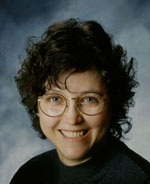

KLWagoner150_2KL Wagoner (writing as Cate Macabe) is the author of This New Mountain: a memoir of AJ Jackson, private investigator, repossessor, and grandmother. Kat has a speculative fiction blog at klwagoner.com and writes about memoir at ThisNewMountain.com.



In Archive