Blog Archives

Why Writers Need Wills

by Sherri Burr


SherriBurr

What do President Abraham Lincoln, actor James Dean, and business mogul Howard Hughes have in common? If you guessed that they all died without wills, you would be correct. In any given year, approximately one-half to two-thirds of all deceased Americans expire intestate, or without wills.

The reasons for not making a will are many. Some, like Abraham Lincoln and James Dean, just never got around to it. They both died suddenly. Others, like Howard Hughes, may be superstitious, afraid to give others incentives to wish or plan for their early exit to the business arena in the sky.

Whatever the excuse, to die without a will is to give the state the authority to decide how your estate will be divided. Your surviving relatives will either accept the outcome or contest it. The brawl between billionaire Howard Hughes’ distant relatives was settled in 1996, 20 years after his demise. It cost $20 million in legal fees.

So what does this mean to you as a writer? Simply put, some of your most important estate assets may be the copyrights in your work.

Dr. Martin Luther King, Jr. can serve as an inspiration to other writers. King copyrighted everything, his speeches, editorials, books, and other writings. He may have anticipated that an early death would lesson his family’s means of support. As a consequence, his estate, which was valued at $66,492.29 after his assassination in 1968, is now worth several million.

Currently, copyrights endure for the lifetime of the author, plus 70 years. This means that you can plan to give away your copyrights for up to 70 years after your death. The copyright contains six rights: (1) the right to copy, (2) the right to adapt or prepare derivative works, (3) the right to economically exploit the work through sale, lease, rental, or other transfer, (4) the right of public performance, (5) the right of public display, and (6) the right of digital audio transmission.

You can assign all these rights to one person, or divide them up. A romance novelist, for example, could devise the movie rights to one child and the translation rights to a second, or all the adaptation rights to a third. A playwright could leave public performance rights to grandchildren.

The possibilities are limited only by your imagination. When meeting with an attorney to prepare your will, be sure to inform him or her that you are a writer and that you wish to make provisions for your copyrights. Even if you write your will from online software, remember your copyrights.


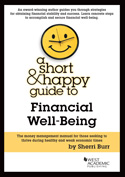
A Short and Happy Guide to Financial Well BeingSherri Burr is the Regents’ Professor of Law at the University of New Mexico School of Law where she teaches Entertainment Law, Intellectual Property Law, and Art Law. A graduate of Mount Holyoke College, Princeton University, and the Yale Law School, she has authored or co-authored 20 books, including A Short and Happy Guide to Financial Well-Being (West Academic, 2014). Sherri is also a long-time member of SouthWest Writers and a regular contributor to the organization’s newsletter SouthWest Sage.


This article was originally published in the January 2008 issue of SouthWest Sage and is reprinted here by permission of the author.


On Making Legal Writing More Interesting

by Bentley Clark


Out of Ones Head1I get paid to write. There is much jet-setting and hob-nobbing. I wear pearls and go to fancy, fancy parties. I pluck fascinating characters from the ether and build exquisite worlds around them.

Nah. Not really. I do earn most of my living by writing, but I am a paralegal, so the bulk of my job is writing incredibly boring, yet incredibly important court documents. Incredibly boring. If you’ve never picked up a court pleading, you are missing out on a really satisfying nap.

And yet, storytelling is the very foundation of our legal system—replete with character archetypes, story arcs and plot twists. However, unlike a John Grisham novel or the TV series “Damages,” the actual story-telling is absolutely mind-numbing.

Take for example this passage: “Counsel for Petitioner spoke with Respondent on the phone on January 32nd and informed him that he needed to contact counsel when he had a date and time that he wished to retrieve his belongings from the marital home.” Succinct, informative and not overly verbose. Only what the court needs to know; no more, no less.

I think the court would rather I paint it a picture:

The fragile peace of the mid-summer afternoon was shattered by the violent pummeling of the front door. Jane froze in the doorway of the kitchen and watched as if paralyzed as the glass of sweet tea slipped from her hand and shattered on the just-swept hardwood floor. She knew this day would come. Though the police had removed John from the house only days before with a warning that he was not to return, Jane knew he would never heed that warning.

“You better let me in.” John’s voice, low and hostile, tripped into the house through the open living room window. “I know you have the yellow extension cord! If you don’t open this door right now, I will kick it down! That’s my yellow extension cord and I’m not leaving without it!”

In fear for her well-being, Jane turned on her heels back into the kitchen to call 911. Brimming with adrenaline, she knocked the phone from the counter. It fell to the floor and exploded into pieces.

I know the court would rather read something along those lines. I have no doubt that the client would rather have her story told to the court as a narrative. And I would rather have left the bone-dry style of expository writing behind after my freshman year in the English department.

As I am not allowed to use narrative in my daily professional writing, I have been toying with the idea of using rhetoric and persuasive argument. Mind you, I have no training in either. But, I have been taking note of the correspondence from opposing attorneys that comes across my desk. My favorite example of this style of writing so far has been something along the lines of:

Dear Ms. Bentley’s Boss,

My client and I have grown weary of working with you to hash out a visitation and custody plan for her son. We feel that your client is a big poopy-pants and we have decided that he is not playing nice so we are going to take our toys and go home. If your client would like to see his son, he will have to provide my client with the following: a pink Big Wheel with befringed handlebars (circa 1979), a hair off the great Cham’s beard (circa 1598) and a box of assorted Godiva chocolates (cream-filled truffles removed). Should your client choose not to comply with these requests, then we never want to hear him say “I love my son” again.

Sincerely,

Tommy Picked-Last-in-Team-Sports, Esq.

Using this attorney’s example, I have been crafting a new pleading to the court. Tell me what you think:

Your Honor,

Seriously. Mr. Doe is such a horse’s behind. He will not stop calling Mrs. Doe to demand the yellow extension cord. She gave him the orange extension cord when he was removed from the home by the police, but he really wants the yellow one. Honestly, Judge, I have no idea what the difference is between the yellow extension cord and the orange extension cord.

Oh, and he wants the brown laundry hamper, not the white one. And he wants all the tea cups and half of the dessert plates. Thankfully, he doesn’t want the beer stein collection. Katy bar the door if he wanted the beer stein collection!

Anyway, Judge, I digress. So. Yeah. Could you tell Mr. Doe to stop being a booger-eater and have him call us instead of breaking down the door to get to the yellow extension cord? ‘Cause that would be really cool.

Thanks,

B


BentleyClark125Bentley Clark is tickled silly that she found a way to work “Katy bar the door” into a column. You can praise or admonish her for this by sending her a message here.


This article was originally published in the February 2012 issue of SouthWest Sage, and is reprinted here by permission of the author.


Image “Out Of One\’s Head, Relax The Brain” courtesy of thaikrit / FreeDigitalPhotos.net


An Interview with Author S.S. Bazinet

After years of writer’s block, S.S. Bazinet gave in to her creative muse and has been passionately writing ever since. She is the author of the visionary fantasy series The Vampire Reclamation Project. She has also published two other fantasy books, a children’s book, and a self-help book. Stop by her website at ssbazinet.com to see what she’s up to and read interviews she’s posted with authors like Anne Hillerman, Joseph Badal, Slim Randles, Sarah Baker, and Steve Brewer. Better yet, stop by the snack table at the next SouthWest Writers meeting. She’ll be the bright light at the back of the room encouraging everyone to pursue their dreams.


Arel's_Blood_200When readers turn the last page of one of your books, what do you hope they’ll say about it? I hope that they feel entertained, satisfied and uplifted. One of my readers expressed my desire best in her review when she wrote, “If you’ve ever had nightmares about unspeakable horrors, and you know inexplicably that man’s inhumanity to man is part of your personal history, this book will ultimately give you courage to carry on.”

Give us your elevator pitch for your book series, The Vampire Reclamation Project. This series is a grand journey of the spirit with angels, vampires and everyday people coming together to reclaim lost lives. Resolving issues surrounding love, hate, trust and betrayal, they struggle to find ways to reach for the stars while grounding themselves in brotherhood.

How was writing this series different from your other projects? From the moment I started writing it, I was possessed with a need to tell the story. I wrote for ten and twelve hours a day, sometimes more. I barely slept. Most nights I got maybe four hours of sleep, but I wasn’t tired. I’d get up around 3:00 or 4:00 a.m., write for a while, then take three mile walks. The creative fount I tapped into gave me everything I needed to complete not only the first book, but five more in the series in the year that followed. I’ve since completed a seventh book and have the eighth one waiting to take form.

Where did the inspiration for the story come from? I never planned to write a book about vampires or angels. Instead, I got fed up with having writer’s block. One day I decided to just have fun and not care about writing for anyone but me. That decision seemed to be the permission slip I needed to open the doors to my creativity. When I sat down with pad and pencil, the story flowed out on its own. Yet it contained all the things I felt passionate about. Soon I needed a keyboard to keep up with the torrent of words and feelings that poured forth from my heart and soul. The first book was completed in a little over a month. However, I did about nine edits on the novel before I felt I’d done it justice.

What was the most rewarding aspect of writing Michael’s Blood, the first book in the series? Writing the series gave me an opportunity to purge many deep down, sometimes hidden, fears–the ones I didn’t have the courage to face head on. At times, I doubted my ability to plunge into the depths of pain the story required me to understand and then to give it a voice. When I completed the first six books in the series, I felt a little like my character, Arel. We had both reclaimed large portions of our lives.

What are the challenges in writing a series? The characters keep evolving with each successive book. As they gradually reveal more of their complex natures, it impacts the overall story. That poses a problem when it comes to editing. I usually have to scrap large portions of the original manuscripts.

Which of your books did you enjoy writing the most? I didn’t think I could write a thriller, but my novel In the Care of Wolves surprised me. It started off rather innocently, but quickly demanded that I find a way to express the non-stop action and emotional upheaval that drives the story. When I finished the book, I felt a wonderful sense of pride and achievement.

What first inspired you to become a writer? The inspiration has always come from within, from the “greater” me that doesn’t seem to know anything but possibility and the joy of creation. However, to truly access that part of myself, I have to let go of all my expectations about writing and the story I’m telling. I have to allow whatever wants to come forth, whether it is dark or light, to have a voice. When I do, when I put aside my judgments and criticisms, I experience a true lightness of being.

What do you struggle with most in your writing? One of the fears I still entertain is that I’ve purged so much of my angst–and I’m generally so happy with my life–that I won’t have the ability to write passionate stories anymore. However, I recently started a new novel that soothed my fear. All the depths of feeling within are not only available, but my ability to express emotion is better than ever. What a thrill that is.

Why do you write in the fantasy genre? I love fantasy because I love to create worlds that go beyond the boundaries of the reality we live in. These worlds allow my characters to do whatever they need to do to free themselves from situations and belief systems that have kept them shackled. More than anything, I’d like to be thought of as a writer who helps people to strip away the barriers that keep them from connecting with who they are on a heart and soul level.

Do you have unfinished projects keeping you busy? I’m in the final stages of editing book three of the vampire series. I have another novel, The Madonna Diaries, that’s nearly finished. It’s written with a first person POV. It wasn’t something I planned, but once I realized I’d slipped into first person, I enjoyed it and decided it was right for the story. I recommend that every writer give first person POV a try. It can provide an opportunity to delve deeper into the main character’s view of life.

Which has been more challenging for you—writing or promoting? Promoting has been more of a challenge, but maybe that’s a good thing. I’m overcoming more fears as I learn how to get my creations out in the world. SouthWest Writers has been a blessing in that regard. The organization provides a great environment for writers to grow in knowledge and self-confidence. With these attributes under one’s belt, promoting becomes easier.

Is there anything else you’d like readers to know? Writing can be a box with rigid structures that are demanding and restrictive to one’s creative nature. On the other hand, writing can be as fluid as the ink that flows onto the paper. It can become a vehicle that opens up doors to new worlds of possibility and to dreams that have never been expressed. My hope is that every writer who feels the need for more freedom chooses the latter.


KLWagoner150_2KL Wagoner (writing as Cate Macabe) is the author of This New Mountain: a memoir of AJ Jackson, private investigator, repossessor, and grandmother. KL has a new speculative fiction blog at klwagoner.com and writes about memoir at ThisNewMountain.com.




Trimming the Fat (aka Expendable Scenes) in Your Novel

by Lorena Hughes


frustrated-writer3I don’t blame you if you don’t want to read this post. Revisions can be dreadful, overwhelming, confusing and frustrating for many writers, and the idea of doing them (or reading about them) may sound as fun and exciting as standing in line at an airport security check point. But revisions have a strange quality, they can also be infinitely satisfying once you figure out what needs to be done, and the end result is a stronger manuscript.

One of the reasons why revisions are so difficult is because you must tackle several elements at once: character development, plot progression, pace, prose (to include style, grammar and dialogue), among other monsters. Today, I’m going to focus on what constitutes the structure of your novel: scenes.

Since your novel is basically a sequence of scenes with transitional sentences/paragraphs/thoughts, it’s essential to evaluate each and every one of them as both a unit and a part of a whole. My writer friends tease me because I’m ruthless with them (“If I were you, I would delete this scene” is my motto!). But there is a good reason for my callousness. More often than not, a pacing issue is the result of a scene—or several—that aren’t serving an important purpose in your novel. These “problem scenes” are difficult to spot because we often grow so attached to them. (Very often we need someone else to point them out.) So how do we determine if a scene is important enough to keep or if it’s more problematic than useful?

Here are the five questions I ask myself when evaluating a scene.

1. Is the scene active or reflective?

Ideally, you should have a good balance between active and reflective scenes. Active scenes being the ones where something important happens (an action that moves the story forward), and reflective scenes are those where the character ponders on his situation, informs other characters of his problem or fills the reader with backstory and/or information dumps. In my experience, agents and editors often complain that novels are “too slow.” This problem may be the result of too many introspective scenes or instances where characters engage in ordinary activities.

Arguably, you will need more active than reflective scenes to create a good progression, but the balance of active vs. reflective heavily depends on the genre you’re writing (though the consensus seems to be that even in literary fiction there must be enough action to keep the reader’s interest). In genres such as adventure and thrillers, most of your scenes should be active, but in Women’s Fiction, for example, it’s tolerated and even expected to have many introspective scenes to reflect the author’s voice and the character’s personality.

Once you figure out if your scene is active or reflective, determine whether or not you have too many of one or the other. Perhaps you have too many reflective scenes in a row and the pace would benefit from moving them around (if it doesn’t affect your sequence of events, of course). The same goes for active scenes. Perhaps it’s time to give your character a coffee break from all the chaos surrounding him!

2. Is the scene repetitive?

Do you have similar scenes throughout your book? In other words, have you used the same setting many times before, have you had similar conversations or too many scenes between the same characters? Perhaps it’s just a matter of condensing two scenes together.

3. Is an entire scene necessary to convey this information?

Sometimes we hold on to a scene because we think that the information shared on a particular line of dialogue is vital but we don’t realize that an entire scene may not be necessary in order to divulge this one, tiny, bit of information. When I’ve recommended to my friends to cut scenes that are dragging forever, I try to spot what is important about them and suggest they move this information elsewhere. But what about “show, don’t tell,” you may ask? As you know, “showing” (in this case, enacting a scene) is fundamental for a reader to identify with a character or situation, but not all events are equally interesting or deserve this much attention. It’s your job to determine which events are relevant enough to turn into a scene.

4. What purpose is this scene serving?

It’s important for a writer to understand why a scene deserves to take room in his or her novel. Is the scene in question advancing the story? Enlightening the reader about the character’s past or his quirky personality? Developing a bond or conflict between characters? If you don’t understand the purpose of a scene you’re holding on to for dear life, you may have a problem.

5. If I remove this scene, will it affect the flow of my novel?

My first novel started as a telenovela for the Latin American market. As you know, soap operas have tons of characters and last A VERY LONG TIME. Therefore, writers have the luxury of penning what I call “peripheral scenes.” These are scenes where secondary characters catch up with the main action, or where the heroine ponders her decision with friends, or where a subplot between secondary characters develops (but does nothing for the main plot). When I translated my soap opera to English and formatted it as a novel, I had tons of scenes like these (no wonder my novel was over 143,000 words!). In novels, these scenes are sometimes hard to spot because they can be considered “bonding scenes” between characters. A good test is to evaluate if your novel will suffer if you remove a particular scene. From my experience, it probably won’t. Readers are smart and will catch up with the action without you having to overexplain how things came to be. If you’re doubting the validity of a scene, you’re probably on to something.

In conclusion, the trick to revisions (especially if you’re going to do them on your own) is to be honest with yourself—which can be difficult considering your emotional attachment to your work. As a critique partner, I have noticed that many writers are very resistant to deleting superfluous scenes. (Sometimes they’re more willing to kill a character than a beloved scene!) I think it has to do with the fact that these scenes become familiar to us and it becomes harder to envision our novels without them. However, many times after the deed is done, writers realize how much better their novel flows, and they don’t look back (it’s happened to me several times). It’s rare that after deleting a scene, a writer will bring it back (at least not in its entirety).

What do you think? Do you have an emotional attachment to your scenes or are you ruthless when it comes to evaluating (and getting rid of) them?


LorenaHughes2Lorena Hughes was born and raised in Ecuador. At age eighteen, she moved to the US to go to college and got a degree in Fine Arts and Mass Communication & Journalism. She has worked in advertising, graphic design and illustration, but her biggest passion is storytelling. Her historical novel set in South America, The Black Letter, took first place in the 2011 Southwest Writers International Writing Contest (Historical Fiction category), an Honorable Mention at the 2012 Soul-Making Keats Literary Competition and was a quarter-finalist at the 2014 Amazon Breakout Novel Award (ABNA). She is represented by Liza Fleissig of the Liza Royce Agency and is a freelance writer for What’s Up Weekly. You can find her on Twitter at twitter.com/SisterLorena.


This article was originally published on The Writing Sisterhood blog, and is reprinted here by permission of the author.


Revising Fiction: 13 Ways to Show Character Emotions, Part 1

by Kirt Hickman


Revising Fiction

In some ways, the telling of emotions is easier to identify than other forms of tell. Simply look for the name of any emotion:

He felt defensive.
Chase was relieved.
It concerned him.

Consider the following passage from an early draft of my own science fiction novel, Worlds Asunder:

Dana spent most of the day after Bill’s surgery sitting at his bedside, battling a tumult of unfamiliar emotions. Frustration at her helplessness, fear that she’d lose her best friend, anger at those who had done this to him, regret for never having expressed her feelings in any meaningful way, and sadness for the loss of her fallen companions.

This tells what Dana is feeling. The revised passage below shows the same emotions.

Dana spent most of the day after Bill’s surgery sitting at his bedside. The doctors and nurses came and went, but she didn’t talk to them, afraid her voice would fail her if she did. Instead, she watched their faces and tried to read Bill’s progress in their expressions [ fear of losing her best friend].

She’d lost her friends and her innocence, taken by an enemy upon whom she’d fired the first shot [sadness and regret]. So she buried her head in her hands to block out everything from her sight but the man she was helpless to aid [helplessness].

Anger and frustration are missing from the second passage. I decided they would have faded to the background, supplanted by deeper, more profound feelings. Besides, the original passage contained too many emotions to begin with.

If you’re having difficulty determining whether you’ve told or shown an emotion, find a way to render it without using the name of the emotion or a synonym. You can’t tell an emotion without using its name or a synonym. Though the telling of emotions may be easy to spot, for many writers it’s one of the most difficult problems to correct. Here are some techniques that will help you show your characters’ emotions effectively:1

1. Use emotional honesty

Emotions are complex, and each is part of an emotional spectrum. The passage above that shows Dana sitting at Bill’s bedside, is a good example of the complexity of human emotions. Don’t restrict your characters to one emotion at a time or to emotional extremes.

2. Convey the source of the emotion

Consider the following passage:

Several minutes went by. Dana’s chest tightened with each passing second. It was nothing, she told herself. She should have expected it. But she was sweating in her pressure suit.

Clearly, Dana is worried about something, or something bad and unexpected has happened; the reader can’t be sure which. Though I’ve shown Dana’s physical response to her emotion, the emotion itself is lost. Now read the unabridged passage:

Several minutes went by. Still no word came. Dana’s chest tightened with each passing second. It was nothing, she told herself. Bill was always late. She should have expected it. But she was sweating in her pressure suit.

More minutes passed. Come on, Bill. The mission was timed to bring down the first four targets in the first two minutes of the attack. Yet no report came from the Puma.

The reader now knows what Dana is worried about and why. Show the cause, and the emotion becomes real.

3. Avoid clichés

Mad as hell
Green with envy
Love so much it hurts
Hate with a passion

Overused phrases like these may tell the reader what your character feels, but they don’t allow him to experience what your character is going through. Simply put, they don’t show. Find more original ways to express your characters’ emotions.

4. Use metaphor

In the following passage, Dana has spent the past several hours in the trauma center waiting for news on Bill’s condition.

Finally, Bill’s doctor emerged from the surgical wing wearing a white smock that looked like it had never been worn before. He was an angel or an apparition, his face devoid of any emotion that might reveal the state of his patient. Dana might have imagined him. Nonetheless, she rushed forward.

Comparing the doctor to an angel or an apparition, two disparate beings, shows the complexity of Dana’s emotions. Her action in the final sentence shows that her hope is stronger than her fear.

Read the rest of Kirt Hickman’s series:
“13 Ways to Show Character Emotions,” Part 2
“13 Ways to Show Character Emotions,” Part 3

1Ann Hood, Creating Character Emotions, Story Press Books, 1998.


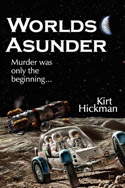
WorldsAsunderKirt Hickman is a technical writer turned fiction author. His books include three sci-fi thriller novels Worlds Asunder (2008), Venus Rain (2010) and Mercury Sun (2014), the high fantasy novel Fabler’s Legend (2011), and the writers’ how-to Revising Fiction: Making Sense of the Madness (2009).


This article was originally published in the September 2008 issue of SouthWest Sage, and is reprinted here by permission of the author.


One Writer’s Journey: To Not Write Crap

by A.R. Aeby


fantastic-landscapeI’ve never aimed to write the great American novel or an award-winning new classic or, dare I even say, a New York Times bestseller. My goal as an author has always been to not write crap.

Don’t get me wrong. I would love that kind of recognition. I would love to suddenly find myself sought after and interviewed as the newest talent with a long and prestigious career ahead of me. To have those in my life want to link themselves to me as a pseudo-celebrity and share I-remember-when-stories and other anecdotes. To finally put my obsessive need to read to great use and pretend this was the plan all along. But here is the reality. I, along with massive numbers of other people, have deluded myself into writing a book.

Now this was not my first attempt at writing a book over my lifetime. I have deluded myself countless times, with varying results. The beginnings of chapters, character sketches and possible plot lines litter my old computer and notebooks. But, I had a problem—I was not a finisher. My interest would quickly wane; the enthusiasm and seemingly boundless amount of energy I wished to put into my latest project would disappear. Some might chalk it up to writer’s block or lack of inspiration or another such thing, but the truth was the material wasn’t the problem. I was the problem.

I have heard from others attempting to cross over the line to being a writer, that they spent their whole life writing with almost a compulsive need to express themselves in this medium. At first I was completely distraught, because I don’t remember that compulsion. My expression was a bit different; my mother says I lived my stories. I would compose just enough of a story line to act out my favorite parts, occasionally aided by my little brother. A costume was always necessary, and an audience, when I struck a particularly brilliant idea. To me, my imaginary characters in some ways were more real than the reality around me. Like my heroine, Anne Shirley, I found the interactions with them quite a bit more satisfying than those in my mundane surroundings.

As I transitioned from child to adult I never gave up the fantastical worlds I lived in. Sure, as an adult I pursued them in secret with a certain amount of shame, but I could never really let them go. My imaginary worlds could go on for years morphing into different things, based on where I was in life and what was interesting to me right then. They fed me and nurtured me—along with the books I read—in a way I could find nowhere else.

As a child, I thought being an author a very grand thing, but even then I had a problem with limiting myself in the real world. I always told myself that I wasn’t capable of being a writer. I allowed my grammar issues and my poor self-esteem to stop me. I gave in to the fear of failure with barely a token resistance. Because when you write, you are putting yourself out there in a way you can never take back. You leave yourself open to all the opinions and criticism of the reader. You offer up something very precious and commit yourself in completely binding ways. I didn’t think I could take that chance. Until about four years ago.

It finally came to me as I fed my baby an orange substance vaguely called food, when I was taking yet another foray into a more pleasant place than the one my body occupied, that maybe I should take another stab at writing. Maybe this time I could make sure things were different. And to my complete and utter astonishment, I did. I threw off the shackles of my fear long enough to actually complete my goal.

Now I can say I’m a finisher. I wrote a book, and maybe it will never get published, and maybe, occasionally I feel like my efforts were wasted. But at times I wrote the perfect combination of words to express exactly what I wanted to, and it felt almost like they were singing to me. Now, granted, not everything I wrote carries the perfect tune, but no matter what anyone else might think, to me it’s not crap.


AR Aeby2A.R. Aeby received a Bachelor of Arts in history almost solely from the love of stories, even nonfiction ones. She is the author of the book review blog Whymsy Likes Books, where her goal is simply to share her passion for books. But she is a book author with the eternal hope of becoming a published book author. She lives in the deserts of New Mexico with her two young daughters and her husband of ten years.


This article was originally published in the January 2013 issue of SouthWest Sage and is reprinted here by permission of the author.


SWW Bimonthly Contest Call for Submissions

ID-10047735After taking a two-year break, SouthWest Writers is restarting its popular Bimonthly Writing Contest with a call for one-page poems on any subject. The entry fee is $10.00. Prizes for First, Second, and Third Place will be awarded for each bimonthly topic, along with Honorable Mentions. Winning entries could be published in a subsequent issue of SouthWest Sage at the editor’s discretion. Winners will be announced two weeks following the end of each submission window.

The Bimonthly Contest will accept submissions for the first contest topic beginning May 1, 2015. You may submit your entries online or by regular mail.

Topics and Submission Windows

May 1-31: A Poem (on any subject, one page maximum)
July 1-31: Your Most Unforgettable Character (essay, up to 500 words)
Sept 1-30: Blog Post (any subject, up to 400 words)
Nov 1-30: Love Poem (one page maximum, can include bad romance)

Entry Fees and Prizes

Entry fee is $10. Multiple entries will be accepted with $10 payment for each. Prizes: $100 (1st place), $50 (2nd place), and $25 (3rd place). Winners and Honorable Mentions will be announced on the website two weeks after each contest deadline and in the next month’s SWW newsletter.

Contest Rules

Unpublished submissions only. See Topics and Submission Windows for word length. Entries submitted outside the specified submission windows will not be accepted. Previous first-place Quarterly or Bimonthly Contest winning entries are not eligible to be entered in the current contest.

Manuscript Format

For poems, formatting is at the writer’s discretion. All other entries use standard manuscript format: 1 inch margins, Times New Roman or Courier 12 pt, double-spacing. Do not include identifying information on the manuscript.

How to Submit

Online:

Do not include identifying information on the manuscript. You do not need to send a cover sheet — the online form includes the necessary information. You may upload your entry formatted as .doc, .docx, or .rtf. Click here to submit your entry online and pay through PayPal.

Regular Mail:

Your entry must be postmarked by the last day of the submission window. Do not include identifying information on the manuscript, but do include a simple cover sheet with:

  • Bimonthly topic
  • Title of entry
  • Your name, address, email, phone number
  • Are you an SWW member? (Your answer does not affect your entry fee.)
  • Do you give SWW permission to publish your entry in the SWW newsletter? You retain all rights.

Send your cover sheet, entry, and payment of $10 for each entry to:

SouthWest Writers
Attn: Bimonthly Contest
3200 Carlisle Blvd NE, Suite 114
Albuquerque, NM 87110

Good Luck!


Image “Pencil Holding Trophy” courtesy of digitalart / FreeDigitalPhotos.net


The Late-Blooming Writer

by Olive Balla


Olive Balla245You’re over fifty, your kids are raised, your relationships are simple, you’ve learned most of life’s lessons firsthand, and now you want to write. Welcome. Welcome to the ranks of Late-Blooming Writers. As one of the aforementioned, I’ll share some of the bits and pieces of information gleaned along my path toward publication.

First, set a goal. Want to write meaningful poetry? Want to knock out a bestselling novel? Write down what you want to make happen. And then put it someplace where you’ll see it. Often. Next, stretch your brain-muscle. A good way to do that is to meditate. Thousands of pages of research indicate that meditating a few minutes a day will change the actual physical make-up of your brain. So will Sudoku, or jigsaw and crossword puzzles. And you’ll need to grow a tough skin. Not the kind that insulates you from the world, or squeezes the juice from your sensitivities. But the kind that allows the slings and arrows of rejection to roll harmlessly off as you do the trial and error thing to find your Writer’s Voice.

Then you’ll need to bone up on the basic rules of grammar and the elements of style. Strunk and White offers a small but priceless treasure trove of style tidbits. Besides learning the difference between showing and telling, you’ll need to use strong verbs, stay away from passive voice, and use few, if any, adjectives or adverbs. Oh, and you would be wise to eschew any iteration of the verb “to be.” You get the idea. Just as with any craft, you must first learn the rules, beginning with the basics.

Pitfall number one: Writer Entitlement. It’s an interesting but recurring phenomenon in wannabe writers, that their opinions about their own writing skills outshine the reality. I’ve read this in countless articles and blogs, so there must be something to it. We’ve always been told how well we write, so we figure our success is assured. However, none of us have been born with the Consummate Writer Gene already firmly installed. The kind of writing that gets published requires hard work and focused attention, followed by vigorous, time-consuming (often painful) revision.

Pitfall number two: Memoirs. Once you’ve generated dozens of chapters of the novel you can’t quite finish, after writing several essays and short stories, and once you’re absolutely certain you’ve reached the apex of writing competency, you’ll find yourself considering the possibility of writing your memoirs. Some would say it’s never too early to chronicle your life experiences. But unless your aim is to produce something solely for the historical value it might have to your family, it seems to me a better idea to put a memoir on hold—at least until after your first book is published. Although your life has doubtless resembled a roller coaster in its hairpin curves and surprising twists and turns, it’s tough to sell a memoir until someone, somewhere, knows your name. That is, unless you dated someone famous and decide to write a kiss-and-tell. Note: Just a suggestion, but if you want to write your memoirs as revenge for a lifetime of wrongs, you might consider finding a good attorney to cover your back. Libel suits can be expensive indulgences.

Pitfall number three: You believe the only-partially-true statement that all one has to do to achieve publication is to write. A lot. But the sad truth is it takes much more than cranking out ream upon ream of verbiage to make one’s way into the semi-rarified strata of published writer. Unless writers have occasion to be catapulted into the focus of the national news media, they must learn the ropes of the publishing industry, subscribe to various writers’ magazines and e-zines (or better yet, start one), join critique groups, build an extensive platform, and basically eat, drink and sleep writing. The key is to never stop learning and revising yourself.

Pitfall number four: You fear time is against you. Late bloomers often fall victim to this downward spiral of thought. You grow more and more impatient as the days, weeks, and months go by and your folder of rejections thickens. But hang in there. The process will not be hurried. Google writers who were published after the age of fifty and revel in the knowledge that you’re not alone.

The good news is that hundreds of books have been written on the subject of writing. Everything from workbooks to software is available. Pick one and get started. You’re on the ground floor, so there’s nowhere to go but up. Good luck. And as Tiny Tim said, “God bless us every one.”


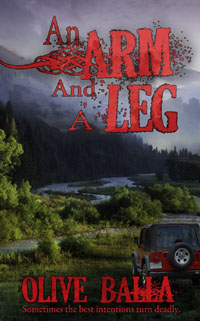
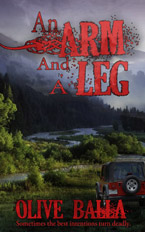
AnArmAndALeg72Olive Balla, author of suspense novel An Arm and a Leg, is mother of 3, grandmother to 13, great-grandmother of 4, a retired educator, and part-time professional musician. Having been everything from secretary at a used car dealership, a university student, and a high school Spanish teacher, Balla states her characters are, in part, amalgamations of people she’s met. Living with her husband Victor in the Albuquerque area, she spends her spare time in a small woodworking shop designing and building everything from breadboxes and wine racks, to a porch bench. Visit her website at: omballa.com.


This article was originally published in the January 2013 issue of SouthWest Sage and is reprinted here by permission of the author.


Grammatically Correct: Me, Myself, and I

by Dodici Azpadu


061957-firey-orange-jelly-icon-people-things-people-singing200

The personal pronouns, I and me are frequently used incorrectly because writers do not remember the rules for case. Case is the grammatical functions pronouns have in sentences. To make matters worse, speakers regularly use myself in place of I or me because they do not know which is correct.

Do not be confused by celebrities who have a penchant for me, myself, and I.

Use subjective case I for all subjects.

My co-star and me are just friends. [Wrong]
My co-star and myself flirted innocently at the gala. [Wrong]
My co-star and I are cheating on our spouses. [Correct]
I lived above the garage because my mother and me argued constantly. [Wrong]
I lived above the garage because my mother and I argued constantly. [Correct]

Use subjective case I for subject complements. Subject complements are additional information about the subject/actor, and they follow linking verbs. In dialog, writers can have characters speak idiomatically. A character enters a house, and his spouse calls to him from another room. “Is that you?” The character will probably answer, “It’s me.” Regardless of how often It’s me is said, writers should know the correct form.

It is I. [Correct]

Notice this strange subject complement structure.

I denied that the thief was me.

Sometimes it helps to reorganize the sentence to tease out the correct form. Me was the thief, obviously does not work.

I denied that the thief was I. [Correct]

In this instance, the correct form is stiff. If writers prefer, they can rewrite the sentence.

I denied that I was the thief. [Correct]

None of the above examples will support the use of myself. Remember: Myself is always wrong as a substitute for I or me.

Use the objective case me for all object positions.

Object of a preposition. The easiest usage to remember is object of a preposition. Prepositions are words that connect nouns or pronouns to other words in the sentence, usually for purposes of modifying the other words. To, from, and with, for example, are prepositions, and they are always followed by objective case pronouns.

The clerk gave the bag to my girlfriend and myself. [Always wrong]
The clerk gave the bag to my girlfriend and I. [Wrong]
The clerk gave the bag to me. [Correct]

Direct or indirect objects of verbs. Briefly, a direct object receives the action of a verb. An indirect object tells the reader to whom or for whom the action of the sentence is done. Thus,

They gave I the gift. [Obviously wrong]
They gave me the gift. [Correct]
They gave the gift to Robert and I. [Familiar, but wrong]
They gave the gift to Robert and me. [Correct]

When speakers and writers are unsure about this structure, they are often tempted to use myself.

They gave the gift to Robert and myself. [Wrong]

Resist the temptation. Myself is a reflexive or intensive pronoun. It should never be substituted for I or me.

I weighed myself. [Reflexive]
I took him to the doctor myself. [Intensive]

A simple matrix will help keep the important elements in order.

Subjective Case Objective Case Possessive Case
Singular I Me My
You You You
He, She, It Him, Her, It His, Her, Its
Plural We Us Our
You You Your
They Them Their

Although the focus of this article is on I and me, case rules that apply to I and me apply to all personal pronouns.


TracesOfAWoman

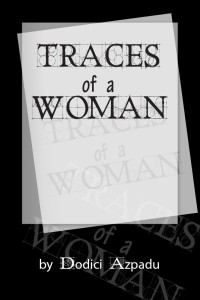
Dodici Azpadu, MFA, PhD is a novelist, short story writer, and poet. Her fiction publications include: Saturday Night in the Prime of Life and Goat Song (Aunt Lute/Spinsters Ink) and subsequently Onlywoman (London, England). Living Room (2010) and Traces of a Woman (2014), both by Neuma Books, are available as ebooks. She’s currently at work on a novel, tentatively titled Living Lies.

WearingThePhantomOut100Her poetry publications include Wearing the Phantom Out (2013) and Rumi’s Falcon from Neuma Books. Individual poems have appeared in Malpais Review, Adobe Walls, ContraACultura (online), Parnassus, Sinister Wisdom, Latuca, The Rag, and The Burning Bush. Her work has also been anthologized in Centos: A Collage of Poems and Hey Pasean!
Dodici teaches “The Joy of Poetry” and “Craft of Creating Writing” classes through University of New Mexico’s Osher Lifelong Learning.


This article was originally published in the July 2011 issue of SouthWest Sage and is reprinted here by permission of the author.


There’s No Such Thing as a True Story

by Joycelyn Campbell


website-hamster-75Autobiographical memory is a factor in almost every genre of writing, including fiction, memoir, poetry, history, and journalism. So it’s important to understand how autobiographical memory actually works and how reliable it is—or isn’t.

The scientists are telling us that memory is a reconstruction, and yet we, as people, tend to stick to our old-fashioned ideas that memory works like a video camera, for example, that it just records, and it files things away in mental DVDs that we can pull down and set playing. And in a way, that’s not surprising, because we see memories as foundational for who we are. We commonly feel that we are our memories; our memories define us. So something needs to change. … Accepting that memories are not literal representations of the past as it happened doesn’t mean that we have to forget about them or start disbelieving them all. But they’re shaped by who we are now. They’re shaped by what we feel, what we believe, what our biases are. (Charles Fernyhough, Pieces of Light)

According to neuroscientist Karim Nadar, it may be impossible to bring a memory to mind without altering it in some way. Memories we replay mentally over and over or talk about a lot with others are especially susceptible to such alterations. And when you retell it, the memory becomes plastic, and whatever is present around you in the environment can interfere with the original content of the memory.

What we now know is that our brains happily reconstruct memories, though we are frequently fooled into thinking that the reconstructions are seamlessly recorded recollections. … Even for the sharper memories born from strong emotions (often called flashbulb memories), time erodes the infrastructure, leaving cracks and gaps. Instead of remembering specific, perfectly accurate details, what constitutes memory over time are general impressions of events with spotty details—and the older we get, the spottier they become. (Daniel Kahneman, Thinking, Fast and Slow)

There is more than one way to lay down a memory. We’re not talking about a memory of different events, but multiple memories of the same event—as though two journalists with different personalities were jotting down notes about a single unfolding story. … The conviction that memory is one thing is an illusion. (David Eagleman, Incognito)

The world is made of stories, not of atoms.

So said poet Muriel Rukeyser. And she was correct. The world of atoms is composed of facts, details, events, objects, phenomena, information, etc. In the world of atoms, things happen (events take place).

The world of stories consists of our perceptions and interpretations of what happened, as well as the meaning we assign to it.

The things that happen to, or around, us and our stories or explanations about those things are not the same thing. But because of the speed with which our unconscious brain processes information—and the fact that we’re not aware of what it’s doing—we think that our story about what happened is what happened.

It usually goes like this:

  • Something happens.
  • We pay attention to selected aspects of what happens. How do we decide what to pay attention to? For the most part, our unconscious makes that decision for us, based on the model of the world it maintains.
  • We miss most of it! We’re not capable of consciously perceiving everything that is going on around us. Our unconscious can process around 11,000,000 bits of information at a time compared to the 40 bits we can process consciously. There’s an amazing amount of filtering going on every single moment.
  • We come up with an explanation for the parts we paid attention to. We have an inner interpreter/narrator whose job it is to maintain an ongoing narrative of our lives, creating order out of chaos, making cause-and-effect connections, and generally leading us to believe we understand what’s going on. Our inner narrator is a great confabulator. If it doesn’t have all the information, it will make something up. We will almost always believe what it tells us, and we can’t stop ourselves from interpreting or explaining.
  • A set of brain circuits—usually brilliant, sometimes buffoonish—force narrative structure on the chaos of our lives. Our minds constantly struggle to extract meaning from the data rivering through our senses. … In the same way that your mind sees an abstract pattern and resolves it into a face, your imagination sees a pattern of events and resolves it into a story. If there is no story there, we are only too happy to invent one. (Jonathan Gottschall, The Storytelling Animal)
  • We assign meaning to our explanation of what we paid attention to or noticed. We decide the meaning of things. And we can’t stop ourselves from making meaning.
  • After the fact, we have a memory of what happened, which is really a memory of our fragmentary perception overlaid by our explanation and the meaning we attached to it. This is not a memory of what actually happened in the world of atoms. Our memory tells us stories. So what we get to keep from our experience is a story. The kinds of memories that make the best stories—and the easiest ones to recall—are of events that had a strong emotional impact.
  • Each time we tell the story (to ourselves or others), we edit it. Talking and/or writing about an experience interferes with our memory of it. We remember not what we have experienced but what we have said about what we experienced. Usually the editing is unintentional, but if you pay attention, you can catch yourself in the act of editing to suit your audience, your purpose in telling the story, the impression you’re trying to make, or even your mood.
  • We have a tendency to reshape the irregular features of our world into smoother, more symmetrical forms. Inconvenient details tend to be pruned from our memories, and facts that do not fit together in a coherent way tend to be forgotten, deemphasized, or reinterpreted. The process of retelling a story in our own narrative style places certain constraints on what we recall, and these constraints guide our reconstruction of events. (Joseph T. Hallinan, Why We Make Mistakes) Essentially, we edit the stories of our lives the same way we edit our writing; the only difference is that when we edit our writing, we’re doing it on purpose.
  • What we are left with is the latest version of our altered recollection (and selected perception) of something that happened and what it means to us.

Everyone always has a point of view, in real life as well as in stories. We—and our characters—can’t help but view the world subjectively since everything that happens, happens to us. When you’re writing a story from a character’s point of view (POV), you include only what that character is aware of. But unless you’re a really bad writer, you don’t include random bits of information just because you find them interesting or because you discovered them in the course of your research. You edit those out.

Your POV character acts, reacts, and interprets events based on his or her model of the world the same as we do in real life. No one is a completely reliable narrator because we are all selectively paying attention to—or screening out—various things, interpreting what we pay attention to, creating cause-and-effect explanations, and assigning meaning.

Furthermore, our experiences modify the lens through which we view our entire past, present, and future, and like any lens, our worldview lens shapes and distorts what we see. The way we—and our characters—change is by altering the way in which we view the world.

Given the manner in which autobiographical memory works, it’s clear that there can be no such thing as a true story, whether the story in question is entirely made up or is based on actual events. A story can be more or less “truthy,” but it can never be absolutely accurate and true.


Joycelyn Campbell PhotoJoycelyn Campbell is a writer, teacher, and self-styled metacognition specialist (for lack of a better word). Through Farther to Go! she helps people discover what they really want in life and how to use their brain—and narrative structure—to get more of what they want and less of what they don’t want. She also facilitates Monthly Meetings of the Mind (& Brain) at North Domingo Baca Multigenerational Center in Albuquerque. Find out more at farthertogo.com.


In Archive