
Retired journalist Sharon Vander Meer is a poet and an author of contemporary fiction and futuristic novels. Her newest release is the second edition of Future Imperfect (December 2025), a fast-paced, dystopian novel that “delves into the conflict between good and evil after a scientific breakthrough produces catastrophic consequences.” Look for Sharon on her website VanderMeerBooks.com and on Facebook. Future Imperfect is available at Amazon and Barnes & Noble. Read more about Sharon’s work in her 2019 interview for SouthWest Writers.
 What is at the heart of Future Imperfect?
Nothing in life is perfect or predictable. Yes, we can plan for the probable, but we can’t predict what will happen tomorrow or even a heartbeat from this moment. Future Imperfect answers the what if question with sci-fi suspense, a villain with something to hide and something to prove, a woman determined to regain her identity, and a man seeking justice and to serve honorably in a changing world. Thought-provoking and hauntingly vivid, Future Imperfect explores a near-future transformed by self-interest and suspicion. More than an environmental disaster, the story delves into the conflict between good and evil after a scientific breakthrough produces catastrophic consequences.
Who are your main characters? What are their most endearing qualities?
Hana Evans, wary and distrustful, navigates a world she doesn’t understand and a painful block where her memories should be. Commander Stone Walker battles a crumbling system that hinders his every move. Escalating political and environmental chaos conspire to drive a wedge of mistrust between Hana and Stone as the world spirals toward ruin. Although her past is out of reach, there is sturdy resilience in Hana that keeps her moving forward. Stone follows a long tradition of service, integrity, and courage. Together they seek peace, understanding and justice.
Describe one or more of the main settings.
Following the plague war that decimated society, those who could went to ground, literally, creating a warren of underground habitats, air kept pure with elaborate filtering systems and heavily guarded entrances. Above ground existed a broken society, trying to survive in a world gone mad and an environment under siege by plague infested vegetation that can only be controlled by fire. The problem is that the vegetation grows back and with it spread of the plague.
This is the second edition of Future Imperfect. What kind of revisions did you make to the first edition, and why did you feel they were necessary?
I found a serious plot hole in the first edition and errors in grammar and spelling. It made sense to fix them.
Tell us more about the book.
Future Imperfect is a cautionary tale. Not everything painted as “good” turns out to be, in fact “good.” The scientists who developed inoculated saplings intended to create fast growing forests to eliminate or control global warming instead introduced an environmental disaster that led to a devastating plague that decimated entire cities. It’s the question every politician and policy maker should ask before making decisions about the future of our environment, of our world: Will the decisions we make today have a negative impact on tomorrow and all the tomorrows that follow?
How did you go about choosing the title of the book?
Future Imperfect was the title from day one. Everyone’s future is imperfect, but it’s our imperfect future to do with what we will.
What did you learn in writing/publishing Future Imperfect that you can apply to future projects?
Trust the process and write from your heart first. Your head will fix what is broken in the editing process.
Your writing takes many forms — articles, essays, short stories, novels, poetry. Is there one form you’re drawn to the most when you write or read?
My husband passed away in May 2024. I didn’t realize how much of an inspiration he was and how much I relied on his encouragement. I feel like it’s time to get back at it, with my husband’s magical smile spurring me on. After all, writing is what I do; being a writer is who I am. At the heart of that is being a lifelong reader of just about everything (except horror!), sorry Stephen King.
What do many beginning writers misunderstand about telling a story?
Characters are real people, as weird and flawed and funny and foolish as your nextdoor neighbor.
What is the greatest challenge of writing for the speculative fiction market?
World building.
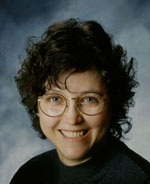 KL Wagoner loves creating worlds of fantasy and science fiction. Her current work in progress is The Last Bonekeeper fantasy trilogy and short stories in the same universe. A member of SouthWest Writers since 2006, Kat has volunteered as the organization’s secretary, newsletter editor, website manager, and author interview coordinator. Kat is also a veteran, a martial art student, and a grandmother. Visit her at klwagoner.com.
Leave a Reply