Blog Archives

2026 Call for Submissions: SWW Annual Writing Contest

The SouthWest Writers (SWW) annual writing competition is now open for submissions.

All writers, new and experienced, are welcome to enter the contest.

Contestants don’t have to be members of SWW or live in the Southwest to participate.

First-, second-, and third-place winners will be awarded monetary prizes and the chance for publication in the 2026 contest anthology By Human Hands.

The submission window closes at midnight on June 8, 2026. Fees vary depending on submission date.

This year’s contest offers eighteen writing categories of fiction, nonfiction, and poetry, plus one for short screenplay:

◆ Fiction

  • Opening Chapter of an unpublished novel/novella (three subcategories)
  • Short Story (six subcategories including Young Reader/Middle Grade and Young Adult)
  • Flash Fiction

◆ Nonfiction

  • Opening Chapter of an unpublished book (two subcategories)
  • Short Memoir, Article/Essay

◆ Poetry (three categories)

◆ Short Screenplay

Go to the Contest Page for more details and to enter the contest.

Good luck!


SouthWest Writers is a nonprofit 501(c)(3) organization devoted to helping both published and unpublished writers improve their craft and further their careers. In 2026, SWW celebrates forty-two years dedicated to this goal.


An Interview with Linda Bairstow

Linda Bairstow is an educator, a retired preschool teacher, and an author whose writing is a hybrid of verse and poetic essays. Her 2025 release from Sunstone Press, Catch a Twinkle: A Foreverness of Life in Verse, offers readers “a year of literary engagement, day-by-day, that comes together in the end as if you have read an entire fresh, distinctive, narrative book. Odds are it will leave you ‘twinkling.'” Look for Catch a Twinkle on Amazon, Barnes & Noble, and Books-a-Million.


Why did you write Catch a Twinkle, and who did you write it for?
It started as a challenge I posed for myself. I noticed an abundance of books in stores with daily meditative stories, but they all had religious themes. I wanted there to be a book with daily engaging, thought-provoking, deep entries that were secular—but didn’t know if I could come up with 365 of them. That’s a lot! I started off writing it for myself, as a fun pastime, but then it evolved into something more serious.

What themes do you explore in the collection?
Themes include: nature, fundamental humanity, animals, philosophy, evolution, child development, the metaphysical, psychology, religion, the cosmos, personal relationships, self-help, aging, sports, holidays, beauty, art, new dances, music. Love. Then the themes tie together by December 31st.

What challenges did this work pose for you?
The biggest skill challenge was working with a computer. The toughest, most soul-searching decision was how personal to let it become, and how honest to be. I decided on total honesty.

Tell us about the journey from inspiration to completed book.
The spark was the self-challenge to write 365 distinctive, interesting verses. It took about eight years total, editing them along as I went. Sunstone Press published Catch a Twinkle in November 2025.

When did you know you had taken the manuscript as far as it could go, that it was finished and ready for publication?
Once I had a verse for over 400 days I felt totally drained and thought I had enough to edit out the less interesting ones, then organized the remainder into a “master poem” of the book itself, which has the theme of “personal memoir.” Having a master poem is what enabled all the other themes to tie together.

What was the most rewarding aspect of putting this project together?
Throughout my life, because I’m a “quiet” person, people have tended to be at a loss to know who I am—whereas talkative folks are easier to get to know. With this book I feel I have a voice, so those who want to know me won’t have to work so hard at it. It evens us out! That’s the second most rewarding aspect of this project. What is most rewarding is indulging in the thought that maybe—a possibility—my book might heighten public understanding to the point where it’s a better world because I wrote and decided to publish it.

Do you remember what inspired you to write your first poem?
Yes, I remember! I was about 3-1/2 years old, in our back yard at the water faucet, when the most awesome, out-of-this-world-confounding thought occurred to me, and, fixed to the spot, I composed a jingly little poem. It was about the infinitesimally small probability that I existed—that any living creature existed. It can be said that Catch a Twinkle is the adult version—now a lifetime later—of that very poem.


KLWagoner150_2KL Wagoner loves creating worlds of fantasy and science fiction. Her current work in progress is The Last Bonekeeper fantasy trilogy and short stories in the same universe. A member of SouthWest Writers since 2006, Kat has worked as the organization’s secretary, newsletter editor, website manager, and author interview coordinator. Kat is also a veteran, a martial art student, and a grandmother. Visit her at klwagoner.com.



Author Update: Sherri L. Burr

Sherri L. Burr is a graduate of Mount Holyoke College, Princeton University’s School of Public and International Affairs, and the Yale Law School. Following her retirement from a decades-long career as a full-time law professor, she became the Dickason Chair and Regents Professor of Law Emerita at the University of New Mexico. Sherri is the author or co-author of over thirty nonfiction books, one of which, Complicated Lives: Free Blacks in Virginia, 1619-1865 (Carolina Academic Press, 2019), was nominated for the Pulitzer Prize in History. Her first memoir, Living with Nephew: How I Got Voted the Meanest Parent in the World (January 2026), is “a hilarious and weighty adventure” in which “Sherri and Nephew challenge and educate each other. And in the process, each becomes a better person.” Look for Sherri on SherriBurr.com, RMK Publications, and Facebook. You’ll find her books at Amazon, Barnes & Noble, Bookworks, and Collected Works. To learn about Sherri’s previous work, go to her 2019 interview for SouthWest Writers.


What would you like readers to know about the story you tell in Living with Nephew?
I want readers to know that they too have experiences that can be turned into literature. Life brings everyone unique experiences that are simultaneously universal. All individuals can transfer lived experiences into essays or a book with the appropriate training and enthusiasm.

What challenges did this work pose for you? Were you surprised by any aspect of the project as it unfolded or did it meet your expectations?
When I first started writing Living with Nephew in 2004 it was after Terrance had returned to California after living with me for two years in New Mexico. Simply put, I missed him. Drafting the book permitted me to relive the experience and decipher its meaning.

One challenge came from crafting events and scenes into a complete storyline. Moreover, the early draft was only 37,000 words and it needed to be at least 50,000. Different challenges came from potential publishers who wanted me to fictionalize parts of the story to make myself nicer. I decided to avoid turning what I believed to be a meaningful story into fiction. Instead, I changed the subtitle from “Humorous Parenting Tales” to “How I Got Voted the Meanest Parent in the World.” This way people picking up the book would not expect a different type of protagonist from the one I present in the narrative.

The project met my expectations, and I felt gratified by the positive responses and reviews the book received.

When did you know you wanted to write the memoir? What prompted the push to begin?
I began writing essays about my life when I was a teenager and still have my first rejection letter that I received as a 16 year old. I particularly like writing about relatives whom I consider interesting. My pistol-packing grandmother, who loved telling stories about the Old South to her grandchildren, shows up frequently in my writing and appears in Living with Nephew.

What prompted me to finish the book was my mother’s terminal diagnosis that immediately prompted Terrance to fly from California to help me take care of her during the last month of her life. We were once again living together and planned her services together. Living with Nephew was the book my mother most wanted to see published. She thought it would be turned into a film and win Academy Awards.

Tell us more about the book.
Living with Nephew is a double fish out-of-water story about a Yale Law School educated, globe-trotting aunt who takes on a 12-year-old Hip Hop generation kid who was failing sixth grade while remaining popular with girls. The aunt uses contracts to motivate her nephew to focus on learning.

The book turned out to be a 22-year project from crafting the first chapter to publication. I brought chapters to various critique groups for review. I workshopped the book during memoir classes at the Taos School of Writing and University of New Mexico Continuing Education. A frequent response from reviewers was to share my interior thoughts. That was hard for me, but I did it.

Early on, I secured blurbs from well-known authors and an agent who was unable to sell the book. I then submitted the book directly to university and small presses. After hearing SouthWest Writers members rave about RMK Publishers, I decided to work with Rose, the owner and a superb book designer. The cover was fashioned by the owner of Images by Rosa using pictures by Denise Tessier and myself, along with text that I supplied. It took over two dozen drafts before we approved the cover design.

Did you ever worry you were revealing too much about yourself or your family through your writing?
Absolutely. As a lawyer and historian, I write from a distance with very little of me in my over 30 published books. For Living with Nephew, the most challenging part was that I had to reveal what I was thinking and painful family events. To give the book more depth, I braided into chapters what happened to my family when I was 12 years old. In the end, I found the writing of my story to be healing.

If choosing the book title/subtitle was a long process, tell us about that journey.
Living with Nephew has always been the title, and that never changed. The subtitle migrated from “Humorous Parenting Tales” to “How I Got Voted the Meanest Parent in the World” after some publishers wanted me to fictionalize parts of the book to make myself nicer. One publisher suggested turning the book into Young Adult, but that would have made the title “Living with Auntie.” I rejected that idea because I would have had to re-write the book from my nephew’s perspective and turn it into a work of fiction. Also with the Young Adult genre, the parenting figures are incompetent or absent. My story did not fit squarely within the genre.

What was your favorite part of putting this project together?
The laughter. Reliving, writing, and reading the scenes with my nephew still makes me laugh out loud.

What did you learn from writing/publishing Living with Nephew that you can use in future projects?
The importance of pacing. Several people commented on how much they love the short chapters and that they kept them turning the pages to find out what happens next. This is a technique deployed by numerous successful novelists, such as Lee and Andrew Child, David Baldacci, and James Patterson. I loved Patterson’s book with Viola Davis, called Judge Stone. It was so well paced that I finished it in less than two days.

What genre do you enjoy reading the most?
I aim to read at least two books a week and over 104 books a year. I read across genres and do not have an absolute favorite. I read history, memoirs and biographies, thrillers, mysteries, and novels. All these genres can depict elements of the “fish-out-of-water” tale. Think Cinderella. There is no story when she is cleaning her stepmother’s attic. It’s only when Cinderella shows up at the palace ball that her life elevates to a realm that readers want to experience as she meets her prince.

One of my favorite examples of the “fish-out-of-water” tale is Diana Galbadon’s Outlander series. Her protagonist Claire Randall is a former English World War II army nurse on vacation in Scotland with her academic husband when she travels through the stones back two hundred years. Claire is out of her element in space and time. As a reader and viewer of the television series I enjoyed experiencing Claire navigating the environment of Scotland in 1743 and finding the love of her life whom she marries becoming a multi-century bigamist.

What are your strengths as a writer?
The ability to craft sentences that others like reading, and the gift of humor.

What writing projects are you working on now?
I am researching and writing a book with the working title Generational Impact: The Divergent Enslavement Legacies of George and Martha Washington. This project flows out of having been a 2024-2025 Fellow at the George Washington Presidential Library to examine what happened to Mount Vernon’s enslaved population after George and Martha died. He arranged to free his bondsmen in his will and most of the enslaved population attached to Martha remained enslaved until after the Civil War. My challenge is to humanize the enslaved people who were previously regarded as “this species of property” by George.


KLWagoner150_2KL Wagoner loves creating worlds of fantasy and science fiction. Her current work in progress is The Last Bonekeeper fantasy trilogy and short stories in the same universe. A member of SouthWest Writers since 2006, Kat has worked as the organization’s secretary, newsletter editor, website manager, and author interview coordinator. Kat is also a veteran, a martial art student, and a grandmother. Visit her at klwagoner.com.


SWW’s 2026 Writing Contest Opens May 1

The annual SouthWest Writers (SWW) writing competition opens for submissions on May 1, 2026.

Hey AI, tell me a story in the style of…STOP! STOP! STOP! No one wants to hear an artificial story imitating the work of someone else, no matter how smart it might be. We want to hear you, your voice, your story, your passion, by your own hands.

The 2026 competition offers seven main contest categories divided into a total of eighteen subcategories for unpublished fiction, nonfiction, poetry, and short screenplay.

All entries that meet the rules for submission will be judged by a panel of experienced writers and/or experts. First-, second-, and third-place winners will receive monetary awards in each category that receives enough entries for judging.

The contest is open to new and experienced writers. Contestants don’t have to be members of SWW or live in the Southwest to enter. Winners have the opportunity to publish their entries in this year’s SWW contest anthology.

For details about the categories and a complete list of rules, please see the Contest Page.


SouthWest Writers is a nonprofit 501(c)(3) organization devoted to helping both published and unpublished writers improve their craft and further their careers. In 2026, SWW celebrates forty-two years dedicated to this goal.


An Interview with Author James C. Wilson

James C. Wilson is Emeritus Professor of English and Journalism at the University of Cincinnati and a former journalist for two Santa Fe newspapers. He is also the author of more than twenty books, both fiction and nonfiction. His novel Dancing with Dennis Hopper’s Ghost (Sunstone Press, November 2025) is the newest installment in the Fernando Lopez Santa Fe Mystery series set in northern New Mexico. Look for Jim on Facebook, and find his books on Amazon and Barnes & Noble.


In a few sentences, distill the story you tell in Dancing with Dennis Hopper’s Ghost.
Ghost-ridden and on his death bed, a professional assassin by the name of Jack Lacy arrives in Santa Fe and enlists his old Marine buddy Antonio Blake and former Santa Fe Police detective Fernando Lopez to help him obtain a burial site near his friend Dennis Hopper’s grave in Jesus Nazareno Cemetery outside Taos. Blake and Lopez take Lacy up to the haunted Mabel Lodge Luhan House in Taos and arrange for a local curandera to conduct a crossover ceremony so Lacy can join the ghost of Dennis Hopper. After the ceremony Lacy’s body disappears, snatched by a couple of local hoodlums who try to ransom the body. Blake and Lopez have to use all their wits—and brawn—to retrieve Lacy’s body and give it a proper send-off at Jesus Nazareno Cemetery. But under the mystery plot, the ghosts and the crossover ceremonies, the book is really a simple story of human mortality and end-of-life issues.

How did the book come together?
Dennis Hopper’s Taos years coincided with my Santa Fe years. Indeed, I spent a couple of afternoons at the Mabel Dodge Luhan House when he owned it, though I don’t remember seeing him there. Typical of his/my generation, Dennis was as wild as a tornado and often as destructive, but he found something in Taos that meant a great deal to him. Sure, he occasionally ran afoul of the Taoseños because of his behavior, but many years later that something brought him back to Taos to be buried in the humble Jesus Nazareno Cemetery. Likewise, that something brought me back to New Mexico after thirty years of teaching at the University of Cincinnati.

Santa Fe in the 1970s was where I became who I am. It’s where I discovered what I valued and what I wanted to do with my life. Because of this I owe Santa Fe a great debt and it’s why I consider myself a Santa Fe writer. All the characters in my Fernando Lopez Santa Fe Mysteries are based on people I knew there in the 1970s. I consider my mysteries love letters to Santa Fe and Northern New Mexico.

Dancing with Dennis Hopper’s Ghost took about six months total to come together, for first draft, a content edit, and a copy edit.

Tell us about your main characters and why they will intrigue readers. Did your characters surprise you as you wrote their newest story?
To me, characters are the most important element in any story, mine included. I subscribe to the classical theory that character IS plot. In addition, I believe that characters need to be both vivid and engrossing. I can’t read (or watch) any fiction (or movie) where the characters aren’t vivid and engrossing. The characters in my 15-volume Santa Fe Mystery Series are all based on people I knew in Santa Fe during the wild and wicked 1970s. All were larger than life. Fernando, Ruby, Blaine and my other characters come out of that era and are very dear to me, like family really. And the thing is, I know them so well that once I get started and set the mystery in motion in my first chapter, I can turn the plot over to the characters and let them carry the story. As we say about people, my characters will do what they will do. Sometimes I have no control over them. However, in editing, if I decide that a character took a wrong turn or didn’t act in character, I will rewrite. In some of the mysteries I have no idea who did the ugly deed until the very end. I like it that way because it’s more fun to keep writing if you don’t know how it will end.

Why is New Mexico the perfect setting for the book (and the series)?
It’s an ancient haunted landscape overlaid with Native American, Hispanic, and Anglo cultures—perfect for a mystery series.

Is there a scene in your book that you’d love to see play out in a movie?
I find the last scene, set at Jesus Nazareno Cemetery in Ranchos de Taos, very moving. That would be interesting to film.

What was your favorite part of putting this project together?
Revisiting my 1970s years, which included Dennis Hopper and the Mabel Dodge Luhan House in Taos.

Of all your novels, which one was the most challenging to write?
The first, Peyote Wolf, was the most difficult, because I was working with a New York agent who kept telling me to add more violence and sex (I kid you not). He wanted violence on every page and non-stop action, which wasn’t what I wanted to do. I was much more interested in the culture surrounding the characters. Anyway, that’s why Peyote Wolf is different from the mysteries that followed. I said goodby to my agent and wrote what I wanted to write!

What are the key issues in writing a series to keep readers coming back for more?
Vivid, engrossing characters and great opening chapters to draw the readers in.

Who are your favorite authors?
Well, my favorite authors are the classic modernists: Faulkner, Joyce, and old Hemingway (whose advice to writers is still invaluable). My favorite mystery writer is Raymond Chandler, and his The Long Goodbye is one of my favorite novels.

What writing projects are you working on now?
My next mystery in the series is more political. In fact it could be called a political novel: Fire and ICE at World’s End, which involves Fernando’s response to ICE terrorizing Santa Fe.


KLWagoner150_2KL Wagoner loves creating worlds of fantasy and science fiction. Her current work in progress is The Last Bonekeeper fantasy trilogy and short stories in the same universe. A member of SouthWest Writers since 2006, Kat has worked as the organization’s secretary, newsletter editor, website manager, and author interview coordinator. Kat is also a veteran, a martial art student, and a grandmother. Visit her at klwagoner.com.


An Interview with Author Mike Kimmel

Mike Kimmel is a film, television, stage, and commercial actor and acting coach. He is also a screenwriter and playwright, as well as the author of over a dozen books across two series focused on the performing arts. His December 2025 release, 50 Secrets Nobody Tells You in Hollywood: The Working Actor’s Guide to Avoiding Pitfalls and Supercharging Your Career (The Professional Actor Series, Ben Rose Creative Arts), is a “guide that prepares you for rejection, equips you with perspective, and reminds you to keep your integrity intact.” Look for Mike on MikeKimmelAuthor.com, on IMDb.com, and on Facebook, Instagram, Twitter/X, and YouTube. His books are available through his Amazon author page and other major bookstores.


Give us your elevator pitch for 50 Secrets Nobody Tells You in Hollywood.
Show business is not for the faint of heart—and even the best actors will hear “No” more often than “Yes” throughout their careers. Most actors don’t know what they’re up against until it’s too late. Even those with great talent and potential don’t truly understand how difficult this industry is when they’re first getting started. I wanted to create a book to help actors answer all the questions they didn’t know they needed to ask. You can’t win a fight you don’t know you’re in.

What unique challenges did this work pose for you?
I wanted to find ways to encourage actors on their creative path, and help them find specific strategies to succeed. I didn’t want to sugarcoat the industry or gloss over all the difficulties actors will encounter—particularly when they touch down in Los Angeles, the largest and most competitive market in the entertainment industry. In spite of the difficulties, though, people book acting jobs every day. New stars are discovered every year. I believe there’s always something actors can do to move their careers forward. I wanted very much to instill a sense of optimism and hope into this book despite the harsh realities of the industry I was revealing.

My challenge was to present the real-life truths of the industry and offer practical suggestions to help actors stay in the business, enjoy long careers and thrive—and without losing themselves or compromising their integrity in the process. The only way to fail in show business is to quit, and I believe most actors give up much too soon.

What hole does the book fill in the performing arts market? Who else besides the acting community might enjoy reading the book?
This book is intended to fill in the gaps between what you’ll learn in acting class and what you’ll need to know to land substantive speaking roles out in the real world. This book is practical. It contains advice, strategy, and guidelines to help actors avoid the common traps and pitfalls that have sabotaged careers since the early days of silent film. There are also many suggestions for building your credits and careers while protecting your heart, your soul, and your sanity in Hollywood. I’ve always said that not everyone can be a star, but everyone can learn the rules that govern our industry, hone their craft, build their credits and enjoy a fabulous long-term career in film, television, theater, commercials, hosting, voice-over, and print.

The strategies and mindset shifts suggested in 50 Secrets will also be helpful to artists in any other medium, and to anyone pursuing work in a creative field.

Tell us how 50 Secrets came together.
I’ve been working on this book for ten years on and off. I published other books in the performing arts during that time, but kept working away at this one in between all of the others. I wanted to create a book of lasting value that will help actors navigate one of the most competitive industries on the planet. Because the entertainment industry is so competitive, there are many secrets and bits of advice people will be reluctant to share with aspiring actors. Being unaware of the unspoken show business rules, unfortunately, can still negatively impact a performer’s career.

I also wanted to make the book as accessible and relatable as possible. I’ve found that people learn best through stories and anecdotes. Therefore, I sprinkled many real life Hollywood stories throughout the book. These are stories of wonderful successes and embarrassing failures from my personal experiences and those of trusted friends and colleagues. It’s extremely important to have a solid support system in Hollywood—and to learn from those who have traveled this path before us. There’s simply not enough time, money, and Kleenex to figure it all out on your own.

Do you have a favorite quote or secret from the book that you’d like to share?
Yes. I arrived in Hollywood with ten years of solid experience as a New York actor. I had strong credits, training, and audition skills. However, I still found there was a great deal to learn that was specific to the Hollywood market.

In Hollywood, things work very differently from New York, where I grew up and began my acting career. In New York, you always know where you stand with agents and casting directors. Believe me, if a fellow New Yorker doesn’t like you, you will know it. Subtlety is not our strong point. In Hollywood, industry professionals will tell you “No,” but seldom to your face. Hollywood runs on fear and uncertainty. Who will be the next big star? Who will sign the next big deal? Who will be the next TV series regular? It could be you. New stars are discovered—and created—every year. Many Hollywood insiders will be reluctant to tell an actor “No” today because they may want to piggyback off the success someone else helps that actor achieve tomorrow. For this reason, many newcomers express a vague feeling of being “strung along” and “never knowing where they stand.” As you can imagine, this only fuels the overall sensation of fear, uncertainty, and hyper-competitiveness running rampant throughout the city.

I also had the experience of being hired—and then “un-hired” right before filming began by someone I thought was a very close friend. That’s not unusual either—even among our biggest stars. Lauren Bacall said it best: “I’ll miss Hollywood. Of the twenty friends I thought I had, I’ll miss the six I really had.”

Was there anything surprising you discovered while doing research?
Yes, I’ve been putting ideas together for this book for a very long time. I’ve been a working actor for more than thirty years. I try to keep in touch with actors I’ve worked with and respect. I keep a file in a desk drawer of cast lists and contact sheets from productions I’ve worked on through the years. From time to time, I go through them and pick up the phone to reconnect with actors I worked with on those long-ago projects. I’m always surprised, and more than a little disappointed, at how many old friends and colleagues have quit the business. The reason is usually the same. My former cast-mates would tell me that they always considered themselves very good at handling the inevitable rejection. And then one day, they received particularly harsh criticism from someone whose opinion they respected—someone considered an industry expert. I believe these actors quit much too soon. Their stories prompted me to write a chapter in 50 Secrets titled “The Experts Aren’t Always Right.”

What was your favorite part of putting this project together?
I’ve known that I wanted to be an actor and writer since I was five years old. When I finally started acting in my twenties, I promised myself that if I were someday able to break into the business and build a career, then I would do everything I could to teach everything I’ve learned to others. We don’t gain much in life from holding back.

50 Secrets is the fulfillment of the early promise I made to myself. As I grow older, I realize that the things I regret most in life are the promises I failed to keep to myself or others. I’m glad this is one of the promises I’ve kept.

What prompted you to switch gears from releasing books in The Young Actor Series to focusing on The Professional Actor series?
I like to work on three books at a time. Whenever I get stuck on one title, I switch gears and move on to another. This process has worked well for me since 2014, when I published my first book, Scenes for Teens. I tend to switch back and forth, but in recent years I’ve focused on the books in The Professional Actor Series, the books for adult actors. I have another adult book coming out next, but after that I’m planning to do a new book of two-character scenes for our youngest actors—children from age six to twelve.

Of all the books you’ve written, which one was the most challenging?
50 Secrets Nobody Tells You in Hollywood has definitely been the most challenging. I wanted to create a book that would be equally valuable for newcomers and veteran actors alike. I wanted this book to be accessible enough for newcomers while still providing enough solid content to give actors with many years of experience their own “Aha” moments.

GiGi Erneta, the actor who wrote the wonderful foreword, is a lifelong friend and trusted colleague, so I also wanted to make sure 50 Secrets would be a book she’d be proud of contributing to for many years to come. That was very important to me.

If the stars aligned, what past or present television or movie series would you love to be involved with (in any capacity)?
If I could jump back in a time machine, I would love to play a supporting role on The Dick Van Dyke Show. I believe that was the best TV sitcom of all time. Yes, including I Love Lucy and Seinfeld. What I really liked about that show was that most episodes contained a life lesson or optimistic spin woven throughout the scripts. I try to do the same thing with my books. Pete Seegar, the old-time folk singer, said that we have to look for the optimistic stories in life and bring them out into the world.

Interestingly too, The Dick Van Dyke Show started out as a flop. Carl Reiner wrote a pilot called Head of the Family for CBS. The network didn’t want it, and nobody else in Hollywood would touch it. Carl Reiner spent a year reworking that script and turned it into The Dick Van Dyke Show. There’s a lesson there for all of us.

I was always a big fan of the Indiana Jones franchise too. I was fortunate enough to meet Karen Allen, who played Marian Ravenswood in the films, several times. We have a great deal in common and hit it off really well. It seems like they’re always coming out with a new Indiana Jones movie, so I’m maintaining a good attitude and keeping hope alive for the future. Maybe someday I’ll get to crack that whip.


KLWagoner150_2KL Wagoner loves creating worlds of fantasy and science fiction. Her current work in progress is The Last Bonekeeper fantasy trilogy and short stories in the same universe. A member of SouthWest Writers since 2006, Kat has worked as the organization’s secretary, newsletter editor, website manager, and author interview coordinator. Kat is also a veteran, a martial art student, and a grandmother. Visit her at klwagoner.com.


An Interview with Author Wanda W. Jerome

Award-winning poet and nonfiction author Wanda W. Jerome has been channeling spiritual messages in fixed and free poetry and prose since 2022. Her newest memoir in verse, After the Journey: Returning the Heart to Home (The Journey Book Series 2, September 2025), bids readers to “experience her heartful transition back from a spiritual journey to her home place.” Look for Wanda on her website Awakeful.life and on Youtube at @MagicalMorningMoments and @Awakeful. Her books are available on her Amazon author page.


Why did you write After the Journey, and what do you hope readers will take away from it?
After the Journey is the second memoir in verse of my Journey Book Series. I wrote this book to share with readers the continuation and final portion of my spiritual awakening journey. Coming back down to Earth after such a profound experience was more difficult than I’d imagined.

The beauty of our natural environment here in New Mexico provides the foundation for my experience across the series. The desert with its flora and fauna influence my soul’s expression in both poetry and prose. I hope readers will resonate with the natural world I call home. In this book, I eventually settle into manifesting my soul’s purpose for the remainder of my lifetime. I desire to leave readers with a strong sense of hope and faith in their capacity to choose a bountiful, beautiful lifetime while they’re here, and through my writing, I want to help readers build that capacity.

How is the book structured?
The book begins with my return to homeplace — to a normal life. The second section revisits the darkness and confusion associated with living partly in Heaven on Earth and partly in the darkness, struggling to cope with the chaos and destruction in our world. The third section brings me full circle — finding the light in the darkness, learning both are important and necessary for a fulfilling human life on Earth.

Is there one poem from the book that gets to the heart of the whole?
Yes. Here is a poem and piece of prose that touch the entire vision for the series:

WATER ON STONES (Haibun)

Moist desert air from last night’s storms floats,
hovers over steep mountain pathways. I see
distant highways to heavenly places, tucked
behind mists cascading into deepest green.

In their midst, I feel drops of liquid gold effervesce;
leave tiny sand patterns of water on stones. Ah, ah,
breathe deep. Take your deepest yet. Fill hungry
lungs with the rarest of these morning breezes.

Hear the birds sing for their pure joy. For your joy!
Revel in this moment. Before it disappears, escapes,
evaporates – back to where it started from, where it
was born – high in your desert mountains.

What a scene! Quick! Feel your each and every
sensation! Savor the tender nature of your life, your
tendermost dream – so timely, temporary, temporally.
Like water on desert stones.

let this place, this peace
rest in your happy heartspace
and never forget


WHAT I’VE LEARNED

I never knew, until it was time for me to know, the perfect
nature of God’s love.

I’d heard people talk about an all-knowing, all-forgiving,
all-encompassing love for years but had no vision of what
it was or what it could possibly truly feel like. Until it did.

Well, it shimmers.
It envelops your soul in shivers of joy and happiness.
You aren’t hungry or thirsty.
You have no needs.
You are totally perfect.
You are in bliss.

And, no – this isn’t alcohol. This isn’t mind-altering drugs.
This is real – Reality with a capital R.

So, how can a person live and walk in this work-a-day
world and know these feelings, think these thoughts, and
behave accordingly?

Try as I might, mere mortal words fail me here, but in a
sincere attempt to convey what it feels like to know God’s
love personally and deeply, I’ll try.

I’ve learned in my seventy plus years of living that
forgiveness is the only way to go home. Forgiveness
removes the veil that separates us from each other.

And, when we forgive ourselves, love touches our souls
and lets itself in. After that, it grows and grows.

I believe this is our work, our service to humanity:

… to forgive the unforgivable,
… to love the unlovable,
… to embrace the unembraceable,
… to hold the unholdable,
… to see the unseeable,
… to know the unknowable, and then,
… to let it all go.

So, let God move through you, give through you to heal
humanity as part of the Divine’s plan. It’s not that hard to
understand once you know.

That’s why I thought I’d help lift the veil for you a little, so
you could take a peek at what’s in store. All you’ve got to
do – is to want tomore than anything else in the whole wide
world. And there’s nothing more than that to where it’s at.

How many poems did you write specifically for After the Journey and how many were already written?
My journey from retirement through Covid-19 and sobriety has enabled my writings to flourish. Most of these poems were written after the first book, Journey Beyond the Veil, was published in 2024, though a few were kept out of the first book to keep the length in check. As my poems and prose are almost always channeled messages I receive during morning meditation, they kept coming as I was completing the first book’s publication. So six months after the first book was for sale online, I started compiling this second book, which was published in 2025. There are over 200 poems and prose pieces in this book.

Tell us how the book came together.
September 2025 was publication month for After the Journey. It took ten months to finish the content, organize, edit, design, and publish the book. My dear friend Jasmine Tritten once again gave me permission to use her image of the hand-painted mask for the cover, and my husband Ric Speed digitized various colorful masks based on that image for artwork throughout the book. Importantly, this book required more time for detailed formatting due to my increased use of visual poetry. I discovered that certain software I’d come to depend upon with my earlier books did not accommodate such formatting. Nevertheless, I was pleased with the result — eventually.

Did you ever worry you were revealing too much about yourself through your writing?
This is an interesting and important question. I did reveal quite a lot to help my readers see where I came from and where I ended up. Fortunately, I am not afraid or embarrassed about anything I have done in this lifetime, though I know there were many times I could have been a more loving person (including of myself) along the way. As a recovering, grateful alcoholic, I am used to sharing deeply personal information in my A.A. meeting groups with other women, and so I understood that I needed my readers to know who was sharing her story. Growing up and being alone a lot, plus traveling abroad during my adulthood as a flight attendant and singer-songwriter/musician on the road, made for quite the ride.

What was the most rewarding aspect of completing this project?
My soul’s purpose is to share these channeled poems and prose pieces in order to help others see that Heaven can be here on Earth if they choose. This is a hard place, this Earth School, and to learn that love is why we are here, what we are a part of, and to whom we will be returning — to share this with others is my mission. This is the most rewarding aspect of my work on the Journey Series project.

When you began the first book in the series, Journey Beyond the Veil: Awakening the Heart to Love, did you plan on writing After the Journey: Returning the Heart to Home?
Not at first. But it became clear that the messages were continuing, life was getting more challenging, and the poems and prose would want another book.

Looking back to the beginning of your writing/publishing career, what do you know now that you wish you’d known then?
I wish I’d understood that by self-publishing my work, I can submit few, if any, poems I’ve already published to traditional publishers, literary journals, and contests. This was news to me, and I imagine it may be news to other emerging author-publishers. Recently, I purchased a major literary magazine known for its multitude of contests and writing retreats and was shocked that the opportunities listed for submissions included the words “accepting unpublished work only.” In addition, many require fees for submission, though the fees are minimal.

The good news is it does seem that opportunities for small independent presses are expanding and this is extremely hopeful for emerging writers. Also, a number of organizations offer awards contests, recognition and reviews for independent publishers and author-publishers. More every day are reaching out to those of us who self-publish. After the Journey has received recognition recently from Literary Global and some lovely reviews from Reader Views. One caveat is that these organizations often require substantial fees along with submissions. From my experience, it’s best to be selective in your choosing. Do research before submitting your work, and consider these efforts as part of the marketing strategy for your work.

Do you remember what inspired you to write your first poem?
My first real poem was about the view I could see out the airplane windows at night when all the passengers were asleep. Back in the 1970s, there were usually empty seats in first class, and I could snuggle up by the windows and see the lights sparkle across a beautiful world. No fences, no state lines — just our beautiful planet. As a 19-year-old flight attendant for an international airline, I discovered many people, places, and things to write poems about. That’s when my writing really took off!

What do you consider the most essential elements of a well-written memoir? A well-written poem?
For me, I think the essential element of memoir and poetry is to speak from your heart directly to the heart of your reader. To share enough of yourself that your reader finds a commonality to attach onto with their own heart and mind. Let them find themselves in your words.

How important is accessibility of meaning? Should a reader have to work to understand a poem?
Great question! I’m not sure about most readers, but I am basically bored if I can’t find anything to relate to in a poem. Some poetry seems like the rambling of a mind to whom I cannot relate. So, I guess, yes — for me to enjoy a poem (whether haiku, tanka, fixed or free), I must find something to which I can relate. If I learn something about myself in the process, I am fulfilled.

Is there something that always inspires you or triggers your creativity?
Our nature in New Mexico. Our delicious sunrises. Majestic mountains. Owls, geese, cranes, hawks, crows and ravens, songbirds, quail, roadrunners, cottontail bunnies, coyotes, dragonflies, bees, butterflies — our spring winds, dry summer heat, golden fall colors, blustery winter snows. We live in this most beautiful place. Let’s share it as often as we can with others who for whatever reasons don’t or can’t live here.

What writing projects are you working on now?
I have a large library of poetry waiting for a three-book series (smaller books in scope, possibly 100 poems each) all about hope. Faith in ourselves, in others and the future figure prominently, too. The title I’m considering is something like “Hope for a Hopeless World” — but I would rather not self-publish this time. My goal is to find a great New Mexico INDIE publisher who wants to work with me to get these books out to readers who need the messages they share.

Is there anything else you’d like readers to know?
I believe poetry does not have to be stuffy, rigid, or scary. Poetry can be enticing, practical, expansive, purposeful, and meaningful in many different forms, including its formlessness. I am especially excited about visual poetry — using the white space on the page to inform how words are read and which ones to which the reader’s eyes are drawn. The year 2026 is a wonderful time for poets! So many rules and requirements are flexing. It will be interesting to see what the future holds for poetry.

To me, poetry is the language of the heart. My sense is we need more of that these days.


KLWagoner150_2KL Wagoner loves creating worlds of fantasy and science fiction. Her current work in progress is The Last Bonekeeper fantasy trilogy and short stories in the same universe. A member of SouthWest Writers since 2006, Kat has worked as the organization’s secretary, newsletter editor, website manager, and author interview coordinator. Kat is also a veteran, a martial art student, and a grandmother. Visit her at klwagoner.com.


Author Update: Keith Pyeatt

Keith Pyeatt is a retired mechanical engineer who writes “horror with heart”—a combination of psychological thriller, paranormal horror, and dark fantasy. His newest novel, The Sirens of Sayhurn (December 2025), brings readers relatable characters and a fresh take on mythical sirens. Look for Keith on KeithPyeatt.com, Bluesky, Facebook, and Goodreads, as well as his Amazon book store. To learn about his previous novels, go to his 2015 interview for SouthWest Writers.


What would you like readers to know about the story you tell in The Sirens of Sayhurn?
The Sirens of Sayhurn is my fifth published novel. It’s an urban fantasy that reimagines the mystical role of sirens in a dark tale of passion, addiction, and sacrifice. A subtle love story with a long arc runs through the novel, giving it some overlap into the romantasy genre. The novel’s setting is right here in Albuquerque with frequent trips to an alternate world in peril.

Who are your main characters, and why will readers connect to them?
Clayton’s an easygoing handyman and maintenance worker who is too closed off to experience passion. Three events initiate change. First, he hears a duet of feminine voices singing a haunting melody that tugs at his heart and lingers in his mind. Next, he meets Brent, a troubled boy who reaches out to Clayton for help. Finally, he develops feelings for Erin, a woman with troubles of her own. These flawed, sympathetic characters are all on the cusp of a life change, and they give readers people to identify with and pull for.

And then there’s Ayanna, one of three sirens in the parallel world of Sayhurn. She’s different than the other sirens, with needs the others don’t feel. When Ayanna satisfies a forbidden passion, she inadvertently exposes her idyllic world to an outside force that corrupts and endangers Sayhurn. Ayanna suffers through a tough time, but she never feels wrong about being who she is or what she feels, and she does everything in her power to repair her world. I love Ayanna’s strength, independence, and heart, and I hope readers will too.

What themes do you explore in the book?
I play with several themes, most notably how introducing greed and addiction into an idealized world can quickly corrupt and endanger it. Passion is another dominant theme—the need for it, the power it holds, and the trouble it can cause. Compassion gets plenty of play as well. A lack of it creates a fiendish villain, and an abundance shapes heroes.

What was the most difficult aspect of world building for The Sirens of Sayhurn?
Defining the culture took effort. Even after I decided to make Sayhurn an idyllic world, I needed to establish the siren’s surprising role in the society, define how this world interacts with Earth, and come up with the details of day-to-day life on Sayhurn. I ended up planting a past crisis in Sayhurn’s history that shaped how they function today, and that helped link all the variables together. Then I faced the familiar task of working backstory into the narrative without stopping the story for a history lesson, always a challenge.

How did the book come together?
Many years ago, when I lived in the rural woods of Vermont, I had a very noisy propane water heater in the basement of my little cabin. If I was in the basement when the heater kicked on, somewhere behind its echoing racket, I’d swear I could hear feminine voices singing to me. The singers didn’t consistently harmonize, but their voices weaved together a strange melody, and I’d stand still and listen to them until the water heater shut off and their song evaporated. That experience inspired this novel. It’s also the first scene.

The Sirens of Sayhurn took either sixteen years or eight months to write, depending on how you look at it. I began writing it the first time we lived in Albuquerque. When we moved away, I stopped writing. Fifteen years later, we returned to Albuquerque, and lo and behold I soon began writing again. I salvaged about 15,000 words of my original effort and hammered out a first draft in four months. Another four months of editing, and I had a novel that made me proud.

I made my own cover. AI doesn’t touch my writing, but I turned to it for the cover image I wanted. Then I modified that image to suit me using paint.net, just as I used to do when I bought the rights to photos to use in my other cover designs.

Tell us about the challenges this work posed for you.
World building was a challenge I didn’t see coming. I’m comfortable writing dark fantasy thrillers and creating alternate worlds like the mind-world in Dark Knowledge and the first stage of the afterlife in Above Haldis Notch, so I thought creating Sayhurn would come naturally. It didn’t. My previous alternate worlds were as abstract as I wanted them to be. I made all the rules there. But Sayhurn functions in a way that’s similar to Earth, so the world needed an established, somewhat recognizable infrastructure and society. The weird mix of freedom and boundaries caused a lot of head scratching.

What was your favorite part of putting the project together?
I always enjoy the editing process, taking the raw material, cutting the excess, and sharpening the rest into a compelling story. In this novel, I stumbled into a hybrid writing style that made writing the first draft a favorite part of the project too. I went full “pantser” to begin with—no outline, no restraints, and only a glimmer of an ending in mind. The unfolding story led me, and if walk-through characters tried to stick around and expand their roles, I let them.

Being a pantser stimulates my creativity, but it often creates problems down the road. Sure enough, I stalled halfway through the first draft. Once I saw that the storylines, character arcs, and timelines didn’t mesh, I couldn’t move forward. I did a 180 with my writing style and went full “plotter” by creating a detailed timeline and flowchart. Those tools helped untangle my mess, but they also left me with some major rearranging to do, moving blocks of text around and then building bridges to tie it all together again. It was a chore but a surprisingly pleasant one, like a writer’s version of a jigsaw puzzle, except if the pieces didn’t fit, I could alter them. The experience taught me something important about the pantser vs. plotter debate: The best writing process for me might not lie in one camp or the other, but in a space where they overlap.

Do you have writing rituals or something you absolutely need in order to write? What does a typical writing session look like for you?
I don’t have rituals, but I’m intense when actively writing. I like to write every day, preferably for long stretches of time.

What usually comes first for you, a character, a scene, a story idea? How do you proceed from there?
I start with a story idea and overall theme. Then I define main characters (subject to change as needed). If scenes pop into my head as I ponder, I make notes and often incorporate those scenes in the novel. When an opening scene shows itself, it’s usually time to start writing. As I mentioned earlier, I vary between using outlines and writing without boundaries, whatever it takes to get me typing words. You’ve got to write to be a writer.

What writing projects are you working on now?
I’m planning a sequel to The Sirens of Sayhurn. I left myself many directions I could take with it. I have a long list, in fact. I keep poking at my ideas, mixing, matching, and expanding on them. So far, that opening scene I need to begin writing still eludes me, but I’m closing in. Maybe if I think back on my days in Vermont, I’ll find my focus. It worked before!


KLWagoner150_2KL Wagoner loves creating worlds of fantasy and science fiction. Her current work in progress is The Last Bonekeeper fantasy trilogy and short stories in the same universe. A member of SouthWest Writers since 2006, Kat has worked as the organization’s secretary, newsletter editor, website manager, and author interview coordinator. Kat is also a veteran, a martial art student, and a grandmother. Visit her at klwagoner.com.


An Interview with Author Sondra Diepen

When author, artist, and photographer Sondra Diepen wondered what to do with the hundreds of photos that documented her travels along New Mexico’s section of Route 66, she discovered a lack of details for the Land of Enchantment’s contribution to the Mother Road. To fill that gap, she released Route 66 New Mexico: A Visual Tour (Sunstone Press) in May 2024. The guidebook is filled with photographs, maps, stories, and interesting facts about 51 locations along the historic route from the New Mexico/Texas border to the Arizona state line. Look for Sondra on her website at Route66InNewMexico.com and on Amazon.


You spent over a decade traveling Route 66 in New Mexico and keeping a photographic record of the treasures you found. At what point did you think about putting it all together in a guidebook? What was the push to begin the project?
After exploring every length of Route 66 I could find here in New Mexico, I had hundreds of photographs now residing on my desktop. It felt like I should do something with six years of photographs. But what? A friend loaned me a new book she was given about Route 66, full page photographs of different sites, scattered along Route 66 from Chicago to Santa Monica. I thought: I could put together a book of photos of Route 66 that would be only of New Mexico’s sites. I would arrange them in driving order from the Texas to the Arizona state line.

Why was 2024 the perfect time to publish the book?
The publishing of this book just happened to coincide with the Centennial of Route 66. I started organizing and writing this book just as Covid entered this country. It became my focus as I endured the years of being shut in because of Covid.

Route 66 New Mexico was “Book of the Week” in the August 6, 2024 issue of Albuquerque Journal. How did seeing that review make you feel?
Of course I was pleased. Sunstone Press initially contacted the Journal and David Steinberg read the book and called me for an interview. In a couple of weeks his article appeared in Albuquerque Journal. This was a great launching point for the book.

What unique challenges did this work pose for you?
Everything was basically a challenge since I had never considered writing a book. Selecting photographs. Researching histories. Writing interesting narratives. Finding an editor. Looking into laws and regulations pertaining to publishing a book. How to publish a book. Finding a publisher. Promoting a book.

Tell us more about how the book came together.
I designed the cover of the book with Photoshop help, laying out the design. The bulk of writing and assembling the book was done during the years of Covid.

Any surprising discoveries while doing research?
I didn’t realize the extent of the craze for the Wild West and the Cowboy Culture during the 1930s, 1940s, and 1950s. (Even though growing up in the 50s, I was caught up in it too. I had a Hopalong Cassidy outfit that included a shirt, cowboy hat, chaps, holsters with cap guns, Levis, and Acme boots, and I had a real pony named Tony.) I found this craze played a great role in luring tourists driving Route 66 to stop, relax. and spend their money. There were many trading posts and frontier themed amusement stops with rattlesnakes, Navajo jewelry, museums, Gay 90s bars, and a cold Nehi, that were dotted across New Mexico.

What was your favorite part of putting this project together?
That’s the easy question. I loved driving out with maps I had accumulated, with a ladder and pruners in the back, my dog Zephyr in the front, and two Nikon cameras, to start trolling these sections of Route 66. I looked for sites with an abandoned building, a fragment of walls or a concrete pad that once supported gas pumps. Many times a site was overgrown with weeds and Chinese elms, so the pruners came in handy. I would then grab my camera and start taking photographs at different angles and times of day. When I got home I’d begin searching the internet, hoping to find any information about that site. More than once I went back to the same place for even more photos.

What makes this book unique in the Route 66 market?
I started accumulating books about Route 66 and found New Mexico was hardly mentioned. Since I had discovered over 50 locations and had read about these places, I realized the vast contribution New Mexico had made to the history of Route 66.

To make this history available for people fascinated with Route 66, this book was designed not only as a photographic and historical record but as a way for tourists to visit these sites and read about their history. So for those traveling from the New Mexico/Texas border to Arizona’s state line, it can be a tour guide with photos, maps and directions to these various locations. The tour is divided into six parts—each could be an outing for a day trip.

Do you have a favorite spot on the Mother Road or a favorite stretch of the Route?
Yes. From Grants to Thoreau. There were several trading posts and curio shops that not only catered to the tourists passing by but they also supplied, traded with, and hired the Navajos living in the area. Claude Bowlin, original owner of the Old Crater Trading Post in 1936, even organized races and entertainment that drew in people from the surroundings to participate and enjoy the fun.

Looking back to the beginning of the project that became Route 66 New Mexico: A Visual Tour, what do you know now that you wish you’d known then?
Before making my first discovery that was Bowlin’s Old Crater Trading Post, all I knew about Route 66 was that it was a road and a song. I wish I had paid more attention to the route in the past. As a child my parents would never stop at these places. They called them ‘tourist traps.’ As a young adult traveling on Route 66, my parents’ words kept echoing in my ears, and I drove right on by.

What advice do you have for beginning or discouraged writers?
To keep in mind there is a tremendous amount of work involved to writing a book. But when it’s complete, there such a good feeling of accomplishment and pride in what you’ve been struggling to do.

What writing projects are you working on now?

I’m just involved in promoting my book, giving talks, showing slides and having book signings. After the dust settles, and if I begin to feel bored, I might start writing about being Born Before Plastic.


KLWagoner150_2KL Wagoner loves creating worlds of fantasy and science fiction. Her current work in progress is The Last Bonekeeper fantasy trilogy and short stories in the same universe. A member of SouthWest Writers since 2006, Kat has worked as the organization’s secretary, newsletter editor, website manager, and author interview coordinator. Kat is also a veteran, a martial art student, and a grandmother. Visit her at klwagoner.com.


An Interview with Author Bryan James Beck

Author and artist Bryan James Beck has always believed that storytelling has the power to transform lives, and as a storyteller the genres he loves to write are as varied as his reading interests. To that end, he published five novels in a five-month period from late 2025 to early 2026. His debut, A Debt in Time (September 2025), is book one in the time travel Ancestral Debt Anthology, with A Debt Remembered (October 2025) and A Debt Returned (February 2026) making up books two and three, respectively, in the ongoing series. He also managed to release the murder mystery Blood & Wine (Michael Flaherty Noir, Book 1) in November 2025 plus a secret novel in January 2026 written under a pen name. Look for Bryan on Facebook and his Amazon author store.


How did you manage to publish five books in less than six months?
To be fully transparent, I’m diagnosed as AuDHD, and I experience intense periods of hyperfocus. When I lock into a story, I am fully absorbed in it until it’s finished. Even while working a full-time 9–5 job as a bank manager, I’ve been putting an additional 40–80 hours a week into writing, editing, and marketing.

I’m also a perfectionist, and I hold myself to a very high standard. While some of these books were written quickly—sometimes in as little as a week—I spent anywhere from a month to several months editing each one. By the time I published my debut novel, I already had several strong rough manuscripts completed. I simply chose the one I felt was strongest to lead with, which made the publishing schedule much more manageable.

What would you like readers to know about the story you tell in the Ancestral Debt Anthology?
At its core, the anthology is an emotional story about family legacy and learning to believe in oneself. It isn’t afraid to explore deeper emotional truths about life—and the thin line that separates life from death. It’s about the cost of time travel, and how one family’s destiny is intertwined with a mysterious chest that passes from generation to generation. It also explores the debts and karma we inherit from our ancestors, alongside the treasures they leave behind.

Family legacy is woven throughout the series, and while these are the first three books, they represent only the beginning. Each novel follows a different character’s journey through time, and there are many more stories still to come.

Who are the main characters, and why will readers connect to them? Is there one point of view you enjoyed writing more than another?
The first book, A Debt in Time, follows James Manning, a capable but brokenhearted young man who inherits the ancestral debt after his great-grandfather’s death—along with a strange, magical chest. At the beginning, James doesn’t believe in himself, but through his travels, he learns that he’s far more capable than he ever imagined. He also discovers that he’s more worthy of love than his ex-girlfriend led him to believe.

The second book, A Debt Remembered, follows Robert Gagne, James’s great-grandfather. Robert survives his journey through time using a different kind of strength. He relies on wit, intelligence, and sheer determination. He isn’t a fighter like James; he values love and knowledge above all else. His heart aches across centuries, and ultimately, he realizes that the love he truly wants is the one he left behind.

A Debt Returned, the third book, follows both Ivy Manning and Lucien Vireon. Ivy is James’s great-granddaughter, and the inheritor of his chest after him. Lucien is a distant cousin who believes he is entitled to the chest and its power. Ivy is a young girl who ends up taking the most difficult path yet, becoming much more than she ever thought she could be.

My favorite POV has been Ivy, although I enjoyed all of them thoroughly. Even Lucien was fun to write.

What themes do you explore in the series? Are they important to you on a personal level?
The first book is very much a coming-of-age story about learning to believe in oneself. The second book leans more into the emotional and historical cost of time travel while expanding the world’s depth and lore. It focuses on the yearning for connection across generations—sometimes a connection that is impossible without time travel. The third book explores the true cost of time travel and the legacy of family. It’s about sacrifice—what we give up to save the people we love. It also examines love versus darkness, and who truly has the right to wield the power of the chest.

These themes are deeply personal to me. They reflect how I think about family, responsibility, and the weight of choices passed down through generations.

Tell us more about how the Ancestral Debt Anthology came together.
The spark for the story came while researching my own family tree. I discovered that I’m a descendant of Charlemagne—and from there, I learned that most people in Europe, and therefore America, are as well. I also traced my ancestry back to Ireland and Scotland. That inspired me to write a story that stretches through time, showing what life might have been like across different eras of my own family’s history. I’ve always loved time travel stories, but I wanted something unique in how the magic worked. I didn’t want science fiction—I wanted magic. That’s where the concept of the Ancestral Debt and the time-traveling chest was born.

I began writing A Debt in Time in January of 2024. The book was ready by July 2025 and scheduled for publication on September 15, 2025. Much of that time was spent editing. I worked with a professional editor, a critique group through SWW, and did extensive self-editing. I also spent nearly a year reading over a hundred books across genres—from craft books to fantasy, sci-fi, mystery, thriller, horror, historical fiction, romance, and erotica.

Shortly after book one was ready, I went on an annual camping trip with my family—a tradition filled with love, laughter, and reflection. When I returned, I was inspired to write the sequel, A Debt Remembered. I wrote it in one intense week—about 100 hours of nonstop writing—followed by four weeks of focused editing. It was ready for publication even before A Debt in Time was released in September 2025, so I scheduled book two for October 2025.

I started writing A Debt Returned on December 8, 2025 and finished editing and ordering ARCs by January 7, 2026. Honestly, I think A Debt Returned is my best work yet. Even though I write quickly, I don’t believe I’m sacrificing quality. If anything, I’ve learned how to balance speed with care.

What makes the series unique in the time travel genre?
The series centers on a magically inherited time-traveling chest—one that forces its inheritors to travel through time, even when they don’t want to. It doesn’t treat time travel as an adventure without consequences. Instead, it fully embraces the emotional cost of being displaced from your own life, your own time, and the people you love.

What was your favorite part of putting this project together?
My favorite part was the research. I loved learning about different eras—the food, the architecture, the history, the people, the language. It was incredibly immersive, and sometimes it was honestly hard to stop.

With time travel you are essentially writing historical fiction. What sort of decisions did you make in order for your time travel books to work?
When choosing eras for each character’s journey, I made sure they made sense in terms of why the magic would send that particular person to that moment in time. Each character has skills—whether or not they realize it—that allow them to save the life they’re sent for. With Robert, I focused on knowledge. With James, physical strength. And with Ivy, learning and love.

Did you learn any lessons from writing/publishing A Debt in Time and A Debt Remembered that you applied to book three, A Debt Returned? How about Blood & Wine, the first of your murder mystery series?
Absolutely. Each book has taught me something new. Through editing and critique, I’ve learned how to better balance showing versus telling, how to establish a stronger character voice, and how to trust emotional moments rather than over-explaining them. I genuinely believe my writing has improved with each release. A Debt Returned is the strongest book I’ve presented so far, and that growth carries into Blood & Wine as well.

What challenges did you encounter in writing your series? Did the challenges surprise you? How did you negotiate these possible stumbling blocks?
I expected writing a series to be more difficult than it has been so far. When I wrote A Debt Remembered, the story flowed naturally—I already knew the world and loved the characters. With A Debt Returned, it felt like the story demanded to be told. That said, I do recognize long-term challenges: running out of ideas, losing momentum, or creating plot holes—especially with time travel. That’s why I’ve begun planning the overarching arc in advance. I currently have the next twelve books planned for the Ancestral Debt Anthology, along with multiple books planned for the Michael Flaherty Noir series and my pen-name series. What’s funny is that I also have several unpublished series waiting in the wings, all with strong characters capable of carrying long arcs.

What does a typical writing session look like for you? Do you have any writing rituals or something you absolutely need in order to write?
I wake up early every day—around 4:00 or 5:00 a.m. Since I don’t need to leave for work until 7:30, I write until it’s time to get ready. When I get home, I write again from about 6:00 p.m. to 8:00 or 9:00 p.m. That’s typically 4–6 hours a day, on top of my full-time job as a bank manager. On days off, if I don’t have family events or errands, I’ll write from early morning until late evening—sometimes 16 or 17 hours.

I have a dedicated writing space: a specific seat, desk, and tablet, surrounded by bookshelves. In the morning, I write with coffee. In the evening, it might be tea—or sometimes a scotch, Irish whiskey, or a Guinness. Then I disappear into story.

How has the creativity/discipline you employ as an artist helped you in your writing journey?
I used to tell stories with a single image, spending five to ten hours capturing fine details and the essence of a person. I now apply that same eye for detail to my writing. I want my prose to flow, to hook the reader, and to make them feel something. I also design my own book covers, and I plan to release special editions someday featuring artwork for each chapter.

As a noir murder mystery, Blood & Wine is a huge departure from the time travel fantasy genre of the Ancestral Debt Anthology. What made you choose this different genre?
I love thrillers, noir, and mystery novels, and I want to write in all the genres I love. So far, that includes time travel historical fantasy, noir murder mystery, erotica, science fiction, post-apocalyptic fiction, and even children’s stories.

Share your elevator pitch for Blood & Wine.
A disfigured former Navy SEAL comes to a quiet New Mexico wine town to disappear—only to be framed for murder. Teaming up with a traumatized local investigator, he uncovers a conspiracy of corruption, missing women, and violence that’s been fermenting for years. Blood & Wine is a gritty noir about scars you can see—and the ones you can’t.

What do you like or respect most about the mystery’s main character?
Michael Flaherty wants peace. He’s seen the worst of humanity and wants nothing more than to disappear. But when people need help, he can’t turn away. He has the skillset, the instincts, and the burden of someone who knows what happens when he doesn’t act.

What writing projects are you working on now? Is there anything else you’d like readers to know?
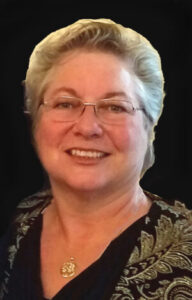
My current focus is Blood & Ice, the sequel to Blood & Wine, which continues following Michael Flaherty and Gracie Kim on their journey together.

I’m also planning to attend as many events as possible this year, including ABQ Collective events, Southwest Comic & Creators Con, Bubonicon (if accepted), and local bookstore signings. I’ve already held a signing at Books on the Bosque and have two scheduled in April 2026—April 25th at COAS Bookstore in Las Cruces, New Mexico and April 26th at Avalon Bookstore in Silver City, New Mexico.


KLWagoner150_2KL Wagoner loves creating worlds of fantasy and science fiction. Her current work in progress is The Last Bonekeeper fantasy trilogy and short stories in the same universe. A member of SouthWest Writers since 2006, Kat has worked as the organization’s secretary, newsletter editor, website manager, and author interview coordinator. Kat is also a veteran, a martial art student, and a grandmother. Visit her at klwagoner.com.


In Archive