by Dodici Azpadu
 As writers, we can be lulled by careless speech into thinking that what we hear is correct on paper.
The reason the Yankees lost the series was because of their pitching.Sounds correct,
…

by Dodici Azpadu
As writers, we can be lulled by careless speech into thinking that what we hear is correct on paper.
The reason the Yankees lost the series was because of their pitching.Sounds correct,
…
by Olive Balla

The current economy has become a tough sparring partner for those of us who dream of seeing our stories in print. Many budding writers, after having been rejected for the umpteenth time,
…
by Robyn Mackenzie
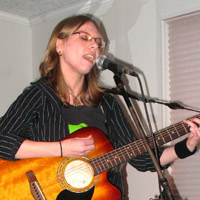
So you want to write songs? Awesome! Music is a powerful and accessible medium with the ability to reach audiences of all ages. Sometimes, though, it’s hard to know where to start.
…
Lee Higbie is a past president of SouthWest Writers and co-founder/author liaison of Scribl, a new e-publishing company. A former computer engineer, he now writes fiction under the pen name BJ Creighton.
…
by Bentley Clark

I have a confession to make: I don’t know what to write. Now, I don’t mean that I don’t know what to write for this column—although that is a monthly challenge and the source of much teeth gnashing.
…
by Chris Eboch
So many things demand our time—job, spouse, children, volunteer work, housework. It’s tempting to say, I’ll write during vacation, or when the kids are back in school, or when the kids leave home,
…
by Kirt Hickman
You’ve heard it before: Never tell something you can show. This is a difficult concept for many new writers, but it’s crucial. It lurks beneath a multitude of self editing sins: problems ranging from passive voice to information dumps and narrative summary,
…

Next to the originator of a good sentence is the first quoter of it. I hate quotations. Tell me what you know.
~ Emerson
What better writing advice than that given by a published author?
…
by Melody Groves

And why aren’t you writing for magazines? I can list the reasons if you can’t come up with your own. No new ideas. Don’t know which magazine would take my article. No clue how to begin.
…
Parris Afton Bonds is the cofounder and first vice president of Romance Writers of America, as well as a cofounder of SouthWest Writers. A New York Times best-selling author, she has published over 40 novels and volunteers to teach creative writing to grade school students and female inmates.
…