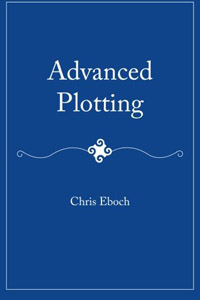
by Chris Eboch
Many writers treat theme as something that just happens, so they don’t try to control it. But this can lead to a story with a confusing theme, or even one that accidentally contradicts the author’s beliefs.
…
by Chris Eboch
Many writers treat theme as something that just happens, so they don’t try to control it. But this can lead to a story with a confusing theme, or even one that accidentally contradicts the author’s beliefs.
…
by Kirt Hickman
Your characters must not be automatons. Your reader must buy into them as real people with real goals, real motivations, real relationships, and real emotions. They must have flaws as well as virtues. They must face internal struggles and external conflict.
…
Author and artist Susan C. Cooper worked as an environmental engineer for 17 years after earning a BS in biology, MS degrees in physiology and geological engineering, and a Ph.D. in physiology and biochemistry. Born and raised in Milwaukee,
…
by Keith Pyeatt
Suspense is an emotion. It’s that feeling when you don’t know what’s going to happen next…but you want to. Using that definition, it’s easy to see why creating suspense is an effective way to keep readers turning pages.
…
by Olive Balla
This past week I was whining to a friend about the query-and-wait-query-again-wait-again process. I complained that at my age, the length of time involved in that whole thing is a real issue. According to my high school website,
…
by Sherri Burr
Tony Hillerman, the author who exposed the Navajo way to millions of people, passed away on October 26, 2008. After moving to New Mexico in 1988, I mentioned to a University of New Mexico colleague that I was looking for a writer to speak to my class the following spring.
…
Shirley Raye Redmond is an award-winning author of dozens of nonfiction children’s books, several historical romance novels, and over 450 articles. Two of her children’s titles have sold more than 200,000 copies each. Her newest release, Viper’s Nest,
…
by Bentley Clark
Every November, in addition to working my day job, shopping for the holidays and baking pies, cookies and other autumn goodies, I write a novel.
A fool’s errand? Perhaps, but I am only one fool amongst many.
…
by Chris Eboch
Authors dream of having their books made into movies. But even if your story never hits the big screen, you can make your work better by thinking like a scriptwriter. Apply these screenwriting tricks to writing your novel and breathe new life into your work.
…
by Kirt Hickman
Realistic dialogue is one of the most important things to achieve in your writing. It’s also one of the most difficult. When people talk, they ramble, they pause, they repeat themselves—they say all sorts of unnecessary things.
…